REVIEW · BELFAST
A History of Terror – Belfast City Centre Walking Tour
Book on Viator →Operated by DC Tours · Bookable on Viator
Belfast can feel loud in your head. This walking tour turns ordinary streets into a clear timeline of The Troubles, from early tensions to the hard moments of 1971 and the long road to peace. You’ll move through central spots like the Cathedral Quarter and end by the river at the Beacon of Hope, with a guide who explains not just what happened, but why it mattered.
Two things I really liked: the local perspective and the way the stories are told. Guides including James and Mylie are praised for being engaging, emotional when it counts, and clear about the political background without turning it into fear-mongering. The use of headsets also helps a lot on a walking tour where you’re not always close enough to hear.
One consideration: this is history with real tragedy, and you’ll stand at key locations tied to violence and loss of life. It’s handled sensitively, but it’s still a heavy topic, and you should go in ready for that tone rather than expecting a casual sightseeing stroll.
In This Review
- Key highlights to plan around
- Enter Belfast City Hall: Where The Troubles Are Put in Context
- Donegall Place and the Ring of Steel: 1971 Comes Into Focus
- Castle Lane: When a Pedestrian Street Holds Real Memories
- The Spirit of Belfast (Onion Rings) and the Moment Escalation Sparked
- Cathedral Quarter: Regeneration You Can Actually See
- Ann Street and the Police Station: Policing, Change, and Border Questions
- Beacon of Hope on the River Lagan: A Future-Facing Ending
- How the 2.5 Hours Works in Real Life (Walking, Listening, and Group Size)
- Price and Value: What You’re Paying For
- Who Should Book This Belfast Troubles Tour (and Who Might Skip It)
- Should You Book A History of Terror Belfast City Centre Walking Tour?
- FAQ
- How long is the A History of Terror Belfast City Centre Walking Tour?
- Where does the tour start and end?
- What’s the price per person?
- Is the tour offered in English?
- Is there a minimum age?
- What should I know about weather?
Key highlights to plan around
- Headsets for clarity: you can hear the guide even when the group spreads out.
- Central stops on a flat route: about 1.5 miles with no hills or steps.
- The Troubles explained with street-level context: you connect politics to specific places like Donegall Place.
- Cathedral Quarter storytelling: regeneration and street art framed against 1970s memories.
- An ending that looks forward: the Beacon of Hope is where the tour compares then and now.
Enter Belfast City Hall: Where The Troubles Are Put in Context
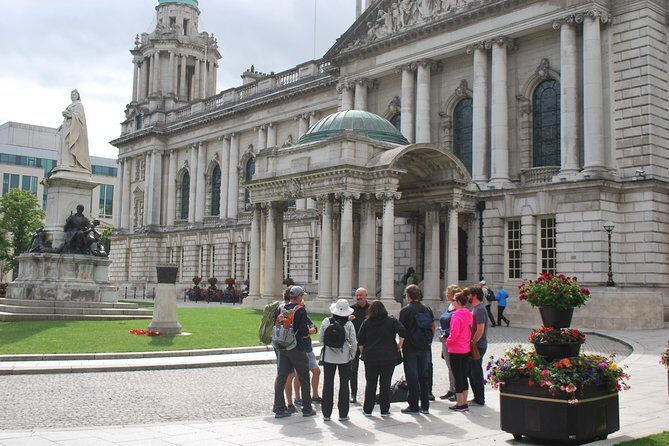
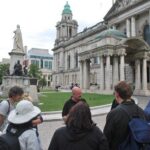
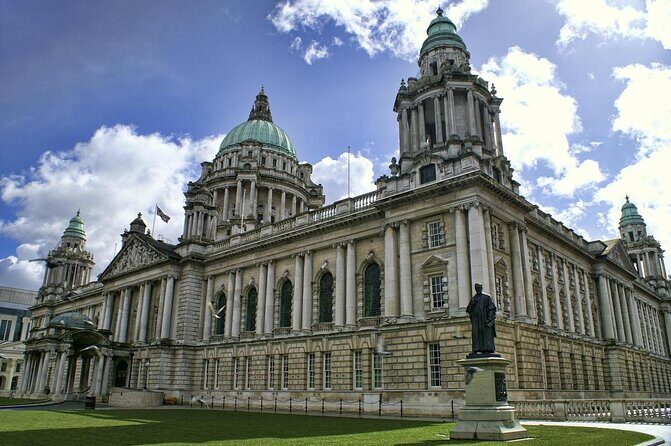
You start at Belfast City Hall, in the grounds, where your guide sets the scene before you even step onto the route. This opening matters. If you’ve only heard bits and pieces about The Troubles, the tour helps you line them up into a timeline—why British-Irish relationships were tense for centuries, and how the conflict in Northern Ireland escalated in the late 1960s.
Think of it like getting your bearings fast. City Hall is a fitting start point because it’s tied to civic life, and your guide uses that contrast to explain how politics spills into everyday places. You’ll get a focused introduction, then you’re off toward streets where the story turns from background to specific events.
I also like that the tour uses a measured approach. Guides such as Anne, Róisín, and Chris are repeatedly described as delivering the subject with care and balance, so you’re not just collecting headlines—you’re learning the framework that helps you make sense of what you see next.
Other Troubles & political tours we've reviewed in Belfast
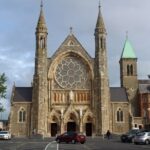
Donegall Place and the Ring of Steel: 1971 Comes Into Focus
Next is Donegall Place, today’s main shopping street. It’s the kind of place that can look completely normal at first glance—until your guide points out what’s hidden in the history.
Here, the focus is on a nightclub bomb attack in 1971 and the tragic events that followed. You’ll also hear about what became known as the Ring of Steel. That phrase matters because it’s not just a nickname. Your guide connects it to the feeling of being watched and controlled, and how security measures shaped daily life during the most volatile years.
This stop is only around 15 minutes, but it packs a lot. If you tend to skip quickly past “important-sounding” facts, don’t. Donegall Place is the kind of street where you can easily miss the relevance without a narrator. With a guide, you start seeing the built environment as part of the story.
One practical point: because this is a commercial area, it can be busy. Headsets help keep you oriented, and you’ll want comfortable shoes so you’re not rushing just to stay with the group.
Castle Lane: When a Pedestrian Street Holds Real Memories
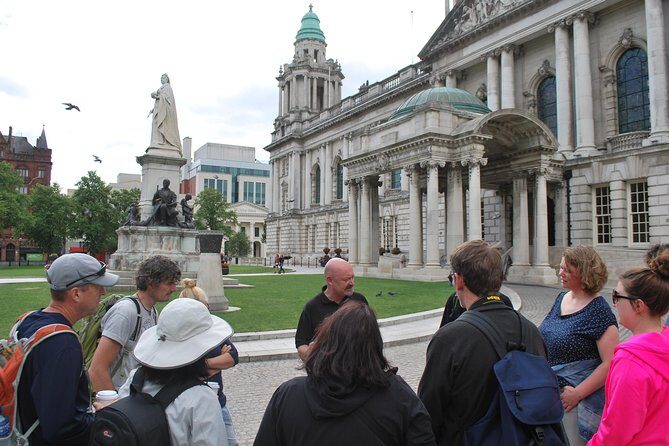
Then you move to Castle Lane, in the heart of the pedestrian precinct. This is where the tour shifts from event-based history into lived experience.
Your guide highlights the realities of life at the height of the Troubles, and talks through details of an event that stays prominent in people’s minds. The pace stays steady, and the short duration keeps it moving, but the emotional impact can land hard. You’re not walking through a museum corridor—you’re walking through a street that people still use today.
I like that the tour doesn’t treat the subject like a distant chapter. The guide’s storytelling helps you understand how violence affects routine: where people go, how they move, and what daily life feels like under threat. That’s the value of doing this as a walking tour rather than a static talk.
If you’re someone who likes to ask questions, this is often the kind of stop where your brain starts to fire off, because you can look around and think: how could this become normal after something so terrible?
The Spirit of Belfast (Onion Rings) and the Moment Escalation Sparked
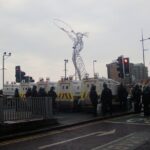
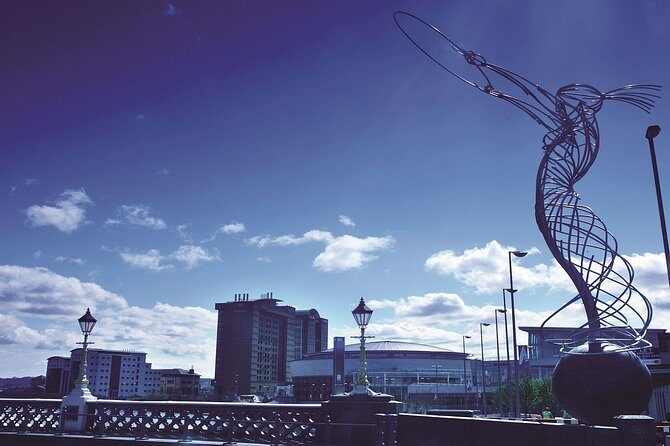
At the next stop you’ll see the Spirit of Belfast, an artwork meant to evoke resilience. Most people seem to call it the Onion Rings, and the nickname sticks because it looks exactly like what your brain expects from the name.
Standing in its shadow, you’ll hear how a series of events started in a bar nearby in 1971. Your guide frames this as a catalyst—something that helped propel Northern Ireland into a rapidly escalating spiral of violence.
I found this moment useful because it moves you from the blunt facts of an attack to the slower, complicated logic of escalation. Conflicts don’t grow in one straight line. Your guide explains how one chain of events can pull other people, other groups, and other fears into the next round.
This stop also gives you a breather. You’re still learning, but the setting is more visual and symbolic. It helps you remember that the tour isn’t only about destruction—it’s also about what people built afterward.
Cathedral Quarter: Regeneration You Can Actually See
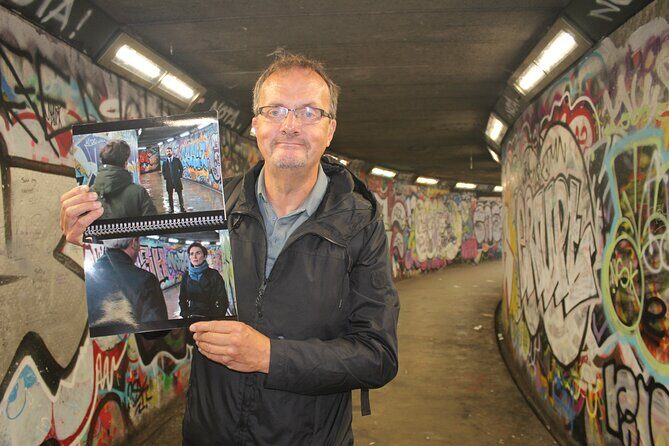
Now you head into the Cathedral Quarter, a regenerated part of Belfast that’s known for nightlife and culture. Your guide brings you through it with a “then and now” mindset, introducing stories tied to significant events while also discussing the beginnings of the path to peace.
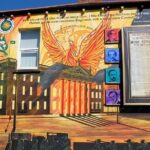
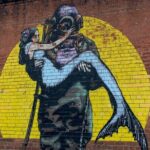
Today, you’ll likely notice street art, plus the energy of bars and nightspots. With your guide’s narration, those modern features don’t feel like decoration. They start to feel like evidence—evidence that the city changed, even if the scars never fully disappeared.
This is one of the stops where the tour’s balance shows. Instead of ending with only tragedy, the guide connects the hard history to the choices that supported peace building. You’re walking in a place that exists now, and your guide helps you understand how that present came to be.
If you’re visiting Belfast for a short time, this stop is a strong use of your hours. It gives you a sense of the city beyond the headlines, while still staying honest about the cost of getting to this point.
Other Belfast city & sightseeing tours we've reviewed



Ann Street and the Police Station: Policing, Change, and Border Questions
Next up is Ann Street, beside the largest police station in Belfast. This portion of the walk is a shift: you move from events and street memory into how society was organized during the Troubles, including how it was policed.
Your guide explains how policing changed since the peace agreement, and you’ll also hear about a potential impact of Brexit on borders. That part doesn’t get treated like a throwaway news topic. It’s framed as something that can still affect real life—identity, movement, and political tension—long after the worst years of violence ended.
This stop is only about 15 minutes, but it’s a useful one if you want more than a story of the past. It helps you see how history continues to matter in the present, especially in Northern Ireland where politics and geography are tightly connected.
If you have limited time in Belfast, this is a good place to pay close attention. Policing and borders are often the pieces visitors don’t know how to fit into the larger story, and your guide helps you do that.
Beacon of Hope on the River Lagan: A Future-Facing Ending
The tour ends at the Waterfront on the banks of the River Lagan, at the Beacon of Hope. This is a favorite piece of public art for the guide, because it’s designed to champion resilience and regeneration.
As you stand here, your guide compares Belfast today with one of the darkest days in its history. You’ll talk about how the fragile peace was achieved, then shift into what the future might hold.
I like endings like this because they don’t pretend the past was simple or that all problems vanished. Instead, the tour leaves you with a more grounded feeling: Belfast is still dealing with complicated questions, but it has shown it can move forward without repeating the worst outcomes.
From the end point, it’s about a five-minute walk back to city hall. That’s a nice touch because it makes it easy to keep exploring afterward, whether you want coffee in the city center or to head toward other parts of Belfast.
How the 2.5 Hours Works in Real Life (Walking, Listening, and Group Size)
This tour is about 2 hours 30 minutes and covers around 1.5 miles. The route is completely flat, so you’re not fighting hills or steps. That’s a big deal in practice. You’ll be able to focus on the narration rather than your legs.
You’ll also use headsets, which is one of the most important quality-of-life features on any walking tour with history. When the sound is working well, it means you can stay in the group and still catch every detail. Many guides—like James, Mylie, and Róisín—are specifically praised for delivery, but the headset makes it easier to enjoy that delivery without strain.
Group size tops out at 25 people, which keeps things from feeling chaotic. It still requires basic patience: you’ll stop, you’ll listen, you’ll move on. The pace is built for a central-city walking route rather than a long hiking expedition.
One small warning from a practical perspective: in a small number of cases, audio equipment has had problems mid-tour. That’s not the norm, but it’s enough to take seriously. If you notice poor sound, tell the guide right away so they can adjust or help.
Price and Value: What You’re Paying For
The price is $36.06 per person for a 2.5-hour guided experience. That’s not just paying for a walk. You’re paying for two things that are hard to replicate on your own:
1) A guide who can connect political background to specific streets and landmarks.
2) A structured route that takes you to places you might not understand without context—like the Ring of Steel discussion and the escalation story tied to 1971.
There’s also a practical value element: the tour includes headsets, and the stops listed are admission ticket free. In other words, the cost is mostly for the guide and narration, not for stacking separate entrance fees.
If you’re planning a first visit to Belfast, I think this is a strong value because it saves you time. Instead of spending your limited hours piecing together The Troubles from scattered sources, the tour gives you a clear path through the city’s story.
Who Should Book This Belfast Troubles Tour (and Who Might Skip It)
This tour is ideal if you want a guided, balanced, neutral-toned explanation of The Troubles and how Belfast moved from violence toward peace.
It also suits you if you like city walks that teach you something concrete. You’ll see the Cathedral Quarter, pass key civic and policing-related sites, and end at a meaningful public-art location by the river. You’re not just hearing history—you’re pairing it with real geography.
Consider skipping if:
- You want a purely light, social walking tour.
- You get overwhelmed easily by stories involving loss of life and violence.
- You prefer unstructured free time more than scheduled stops.
If you do book, plan your day so you’re not rushing afterward. This experience can stick with you. Give yourself space for reflection, then you can still enjoy Belfast’s modern streets.
Should You Book A History of Terror Belfast City Centre Walking Tour?
Yes, I’d book it if your goal is to understand Belfast instead of just taking photos. It’s a straightforward 2.5-hour walk, flat and manageable, with headsets and a route that actually tracks The Troubles through real locations.
I’d especially recommend it for a first visit, because it gives you context quickly. Guides like James, Mylie, Anne, Róisín, and Chris are repeatedly praised for storytelling that balances emotion with factual clarity. Even with the heavy subject matter, the tour is designed to leave you with understanding and a sense of where things stand now.
If you’re sensitive to heavy history, go in prepared. Dress warmly if it’s chilly, wear comfortable shoes, and treat it like a serious learning experience, not a casual sightseeing detour.
FAQ
How long is the A History of Terror Belfast City Centre Walking Tour?
It’s approximately 2 hours 30 minutes.
Where does the tour start and end?
It starts at Belfast City Hall (Donegall Square N, Belfast BT1 5GS) and ends at Oxford Street (Beacon of Hope, Belfast BT1 3NB). The end point is about a 5-minute walk back to city hall.
What’s the price per person?
The price is $36.06 per person.
Is the tour offered in English?
Yes, it’s offered in English.
Is there a minimum age?
The minimum age is 12 years.
What should I know about weather?
The tour will take place regardless of the weather, and you should check the forecast and dress accordingly. The experience requires good weather, and if it’s canceled due to poor weather you’ll be offered a different date or a full refund.