Walls here have a way of talking. This private walking tour in Belfast connects big, eye-catching landmarks with the real places where the Troubles shaped daily life, and it does it with a Belfast native guide telling stories from lived experience.
I also like how it mixes the heavy parts with clear context and city sights that broaden your view. You get architecture like Belfast City Hall’s stunning dome and marble interior, then street-level Belfast moments like the Peace Walls and the Cathedral Quarter in the same walk.
The main thing to plan for is tone: this is a graphic-content tour with a minimum age of 14, so it’s not aimed at kids.
In This Review
- Key highlights to plan around
- Why this Belfast walking tour feels different from a bus version
- Starting at Belfast City Hall: marble, the dome, and a first wow
- Dan George’s Big Fish and the pause before the harder streets
- Divis Street murals: understanding context before the Peace Wall
- The Peace Wall up close: what 16 meters of separation looks like
- Albert Memorial Clock Tower: the leaning landmark and the film connection
- Cathedral Quarter: new Belfast energy on cobbled streets
- First Presbyterian Church (1783): faith, shape, and freedom beyond stereotypes
- Belfast Entries: the hidden passageways that change how you see the city
- Price ($33.29) and pacing: what you get for a 2h40 to 3-hour walk
- Who should book this Belfast Troubles Tour, and who should skip it
- Should you book Belfast Troubles Tour: Walls and Bridges?
- FAQ
- How long is the Belfast Troubles Tour: Walls and Bridges?
- How much does the tour cost?
- Where do I meet, and where does the tour end?
- Is this a private tour, and how many people are on it?
- What language is the tour offered in?
- What’s the minimum age, and is there graphic content?
- What’s included in the ticket price?
- Can I cancel for a full refund?
Key highlights to plan around
- Private guide attention (max 16 people): you get room to ask questions without feeling rushed.
- Peace Wall on foot: you’ll photograph and examine the wall up close, with detailed explanation as you go.
- Iconic Belfast landmarks: City Hall, the Peace Walls, and the Albert Memorial Clock Tower are all on the route.
- A human-sized route: instead of a bus tour, you walk the city and pick up details you’d miss from a window.
- Hope and future talk: the tour aims to end on a forward-looking note, not just the past.
Why this Belfast walking tour feels different from a bus version
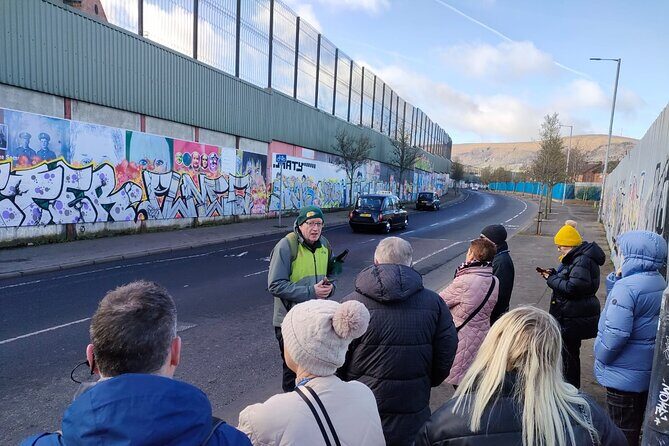
The Troubles in Belfast can sound like a headline. This tour makes it feel like a place: streets, buildings, angles, and the way people move through a city that had long-running division baked into it.
I like that the guide brings balance. The goal is understanding, not shouting slogans. Expect humor in the mix too, even when the topics are tough, because Belfast life includes everyday moments alongside hard history.
You should also know what kind of pace you’re signing up for. It’s about 2 hours 40 minutes to 3 hours of walking with a moderate fitness level requirement, so wear comfortable shoes and plan to stay engaged for the whole stretch.
Other Troubles & political tours we've reviewed in Belfast
Starting at Belfast City Hall: marble, the dome, and a first wow
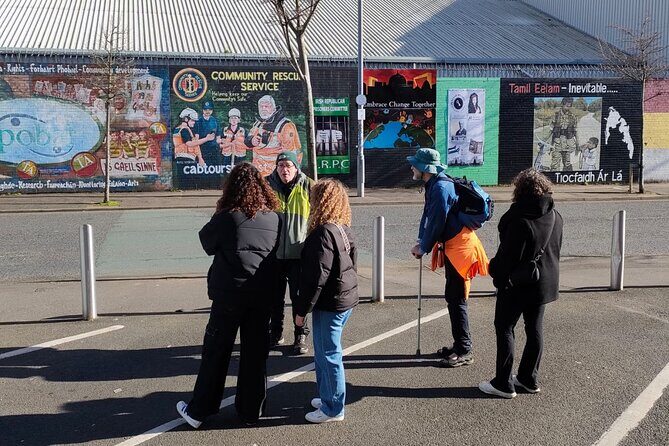
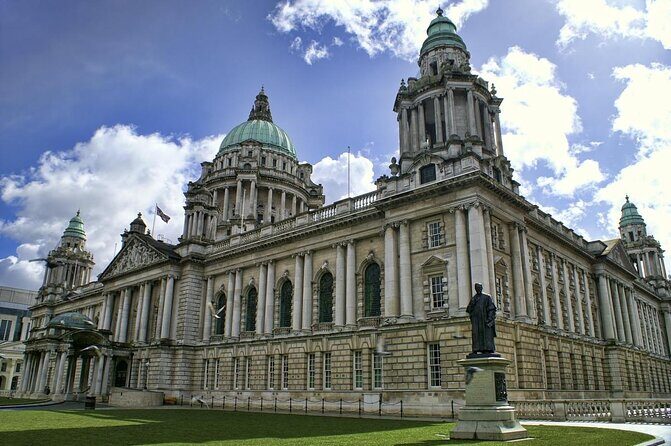
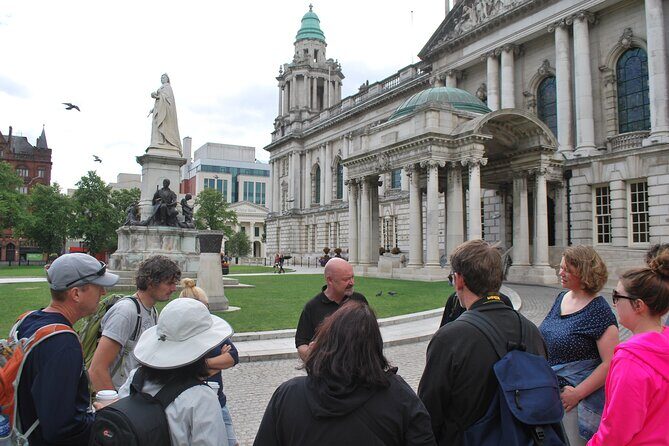
You begin at Belfast City Hall, one of the most impressive buildings in the center. The dome is about 174 feet, and the interior is famous for a mix of materials—three types of Italian marble, including Cippilino marble from Greece, plus stained glass windows that give the whole space a dramatic feel.
This first stop matters because it gives you a reference point for the city’s public face—what Belfast looks like when it wants to project confidence. The guide doesn’t just list facts here; the framing helps you understand what the Troubles did to the public mood and identity over time.
If you’re short on time later in your trip, this stop is still worth it. You get a big visual payoff early, and then you shift gradually into the harder streets.
Dan George’s Big Fish and the pause before the harder streets
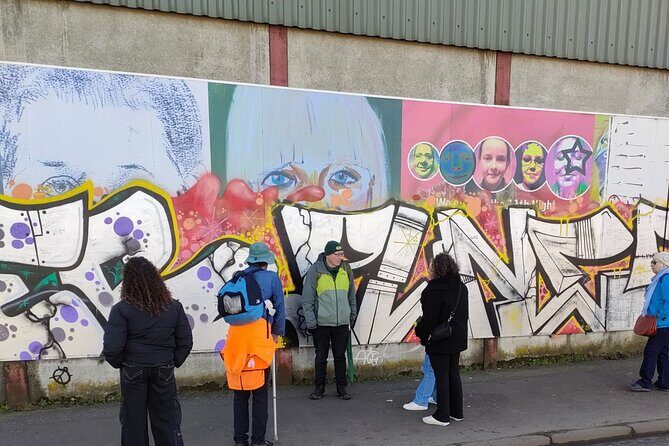
Right after City Hall, you’ll pass a modern sculpture by Dan George set in the city center. It uses traditional Celtic design and connects to themes of engineering, industry, and communities in Belfast.
This is a nice reset point. After the formal grandeur of City Hall, the Big Fish-style public art helps you read the city like a living place—creative, working, and layered—not just a set of historical sites with sad labels.
Divis Street murals: understanding context before the Peace Wall
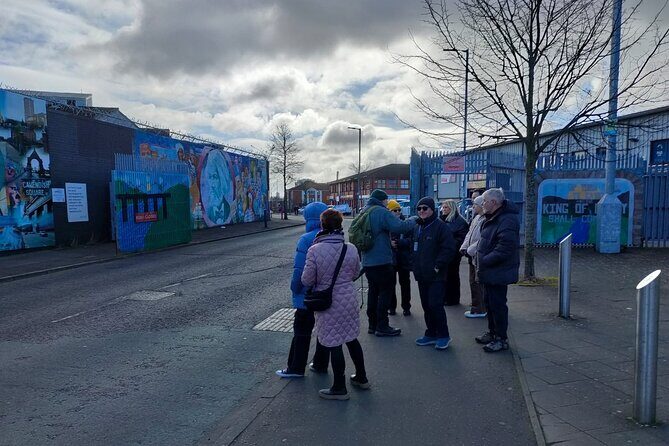
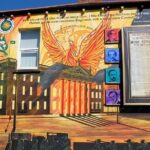
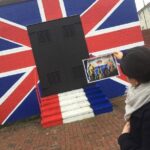
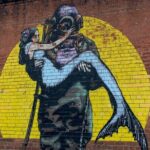
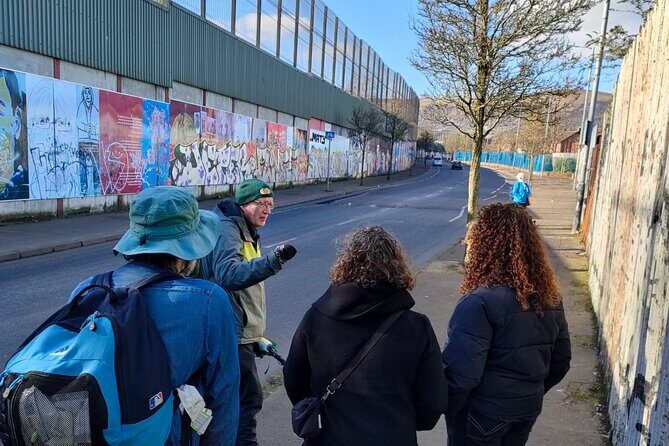
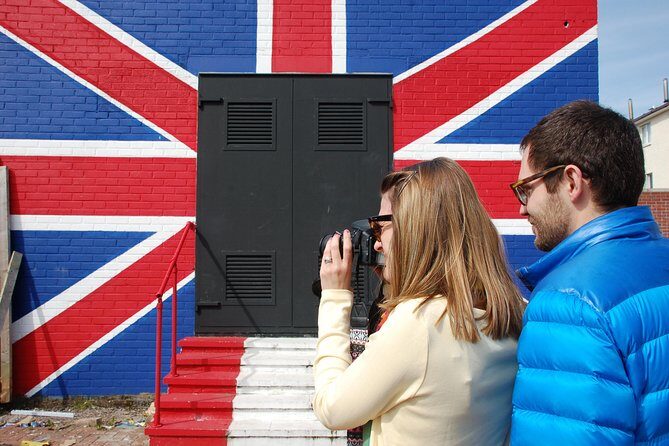
The next real “Belfast on the street” moment is the International Wall of Murals near the Peace Walls, connected with Divis Street. You’ll spend time looking at the murals as part of the larger International Wall of Murals concept that sits close to the Peace Walls corridor.
These murals help you understand something important before you reach the wall itself: Belfast’s story is told in paint as well as policy. You’ll get explanations tied to why the artwork is there and how it connects to the wider landscape of division and community identity.
Practical tip: bring your eyes for details. Murals can look like background when you’re focused on the next stop, but the guide’s commentary makes you notice the “why” behind the imagery.
The Peace Wall up close: what 16 meters of separation looks like
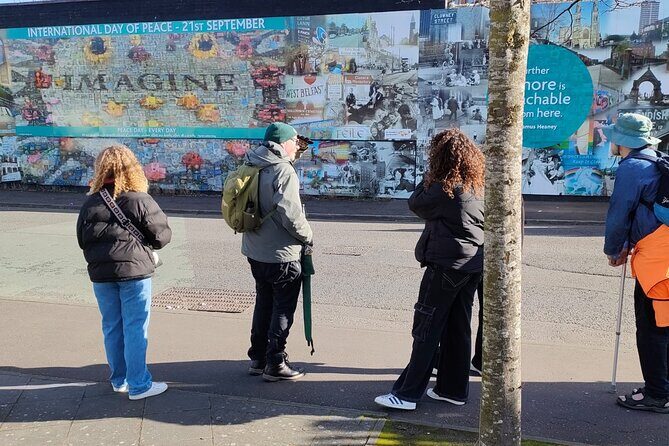
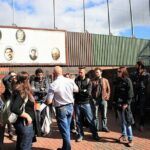
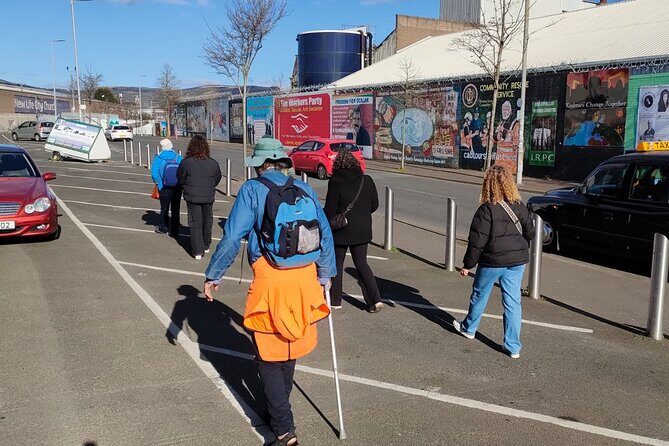
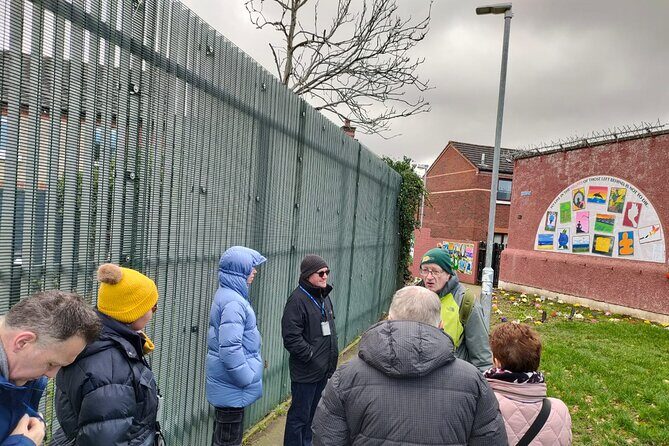
Then you reach the point many people come for: the Peace Wall. It divides the two communities in Belfast, and it’s about 16 metres high, topped with mesh designed to stop petrol bombs.
You’ll have time to photograph and examine the wall closely, not just pass by it. The guide’s explanations are the key part here—how this structure changed movement, daily life, and the feeling of safety and control for people living alongside it.
A helpful mindset going in: treat this as more than a photo stop. The wall is physical evidence of conflict logic. Watching it in person makes it harder to reduce the Troubles to slogans or simplified blame.
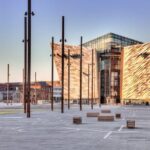
- Titanic Belfast Entrance Ticket: Titanic Visitor Experience Including SS Nomadic
★ 4.5 · 3,698 reviews

Albert Memorial Clock Tower: the leaning landmark and the film connection
From the wall area you move toward the Albert Memorial Clock Tower, Belfast’s own leaning clock tower and a landmark tied to the city’s founding point. It stands around 113 feet tall and leans about 4 feet off perpendicular.
Here, the tour also gives you a cultural connection: the tower was used in the film noir Odd Man Out, starring James Mason. That matters because it shows how Belfast’s identity—its streets, angles, and atmosphere—has been shaped into story on screen, not just history books.
And yes, the tilt is the kind of detail your brain won’t let you forget once you’ve seen it. It helps you carry the theme of “things are never perfectly lined up here”—a visual metaphor that matches the tour’s larger point about broken alignment between communities.
Cathedral Quarter: new Belfast energy on cobbled streets
Next you’ll walk through the Cathedral Quarter, described as a vibrant new heart of the city with colourful murals, entryways, and lots of pubs and restaurants. You’ll also notice cobbled stones that bring back an older Belfast feel.
This stop does two jobs at once. First, it gives you contrast: after the Peace Wall’s seriousness, the Cathedral Quarter feels like Belfast’s present and social life. Second, it connects you to cultural scenes—this is where significant rock events took place.
Look around during this part. The tour helps you see how cities recover and rebrand without wiping the past clean. That’s the kind of nuance you’ll appreciate if you’re trying to understand the Troubles without turning it into a dead-end story.
First Presbyterian Church (1783): faith, shape, and freedom beyond stereotypes
A major “don’t miss” stop is First Presbyterian Church, dated from 1783. You’ll enter and feel like you’ve stepped back into the late 1700s, partly because the building’s elliptical shape is unusual and visually striking.
The tour also highlights John Wesley preaching from the pulpit, which adds an extra layer to the usual simplified narrative people expect when they hear the word religion in Belfast history. The guide ties the church to civil and religious freedom too, which pushes you to think beyond division-as-default.
You’ll have time to explore and take photographs, and you’ll be finishing relatively close to where you started—this works well as a closing chapter after walking through walls and street-level tension.
Belfast Entries: the hidden passageways that change how you see the city
To wrap up, you’ll walk the Belfast Entries, historic passageways you wouldn’t naturally find unless someone shows you. These tight lanes create a different city feel—more intimate, more “you have to pay attention,” and easier for the guide to connect to stories of revolution, intrigue, and pubs.
This stop often becomes a mental reset. After seeing a wall built to block movement, walking narrow entries that invite movement feels like a deliberate contrast—how cities shape behavior and belief through space.
If you like street-level history, this is the part that sticks in your memory. It’s also where the tour’s theme of bridges over walls becomes tangible: understanding grows when you slow down and move through the places where people actually lived.
Price ($33.29) and pacing: what you get for a 2h40 to 3-hour walk
At $33.29 per person (roughly a three-hour experience), the value comes from the mix of places plus the guide access you get on a private route. You’re not paying for a list of landmarks; you’re paying for a local Belfast perspective that helps you read each site in context.
Key pacing point: the tour is long enough to build understanding, short enough to stay manageable. Reviews mention that the time flies when the guide is telling the story well, and that checks out with the structure: City Hall sets the tone, then you move through murals, walls, and landmark Belfast architecture, ending in the Entries and church area.
Group size also matters. With a maximum of 16 travelers, it’s big enough to feel social but small enough to keep your questions from getting swallowed.
Practical advice before you go:
- Bring layers. Belfast weather can shift during a walking tour.
- Expect some heavier subject matter, and plan your emotional energy accordingly.
- Have comfortable shoes ready. You’ll be on your feet for most of the tour.
Who should book this Belfast Troubles Tour, and who should skip it
Book this if you want more than a quick overview. This tour works well for first-time visitors who want context that’s hard to pull from signs alone. It’s also a strong fit if you appreciate walking tours that connect architecture and street life to political and social history.
It’s not a fit if you’re looking for a kid-friendly sightseeing route. The minimum age is 14 and there is graphic content, so keep that in mind if you’re traveling with younger teens or families.
If you’re the type who can handle difficult topics but wants a guide who stays balanced and focused on understanding, you’ll likely find this one of the best use-of-time experiences in Belfast. Many people also highlight that guides inject humor and personal perspective while staying straightforward, which helps when the story gets dark.
Should you book Belfast Troubles Tour: Walls and Bridges?
I’d book it if your goal is understanding Belfast rather than just checking boxes. The route is packed with major visual landmarks—City Hall, murals near Divis Street, the Peace Wall, the leaning Albert Clock Tower, Cathedral Quarter, and the Belfast Entries—and the private format keeps it human.
I’d skip it if graphic content would be a dealbreaker for you, or if you want an easy-going, all-sunshine city walk. This tour deals with real division and real fear, and it doesn’t pretend those things were abstract.
One more practical note: if you’re trying to fit Belfast into a tight schedule, this is the kind of tour that gives you context early and helps your other sightseeing make sense afterward.
FAQ
How long is the Belfast Troubles Tour: Walls and Bridges?
It runs about 2 hours 40 minutes to 3 hours.
How much does the tour cost?
The price is $33.29 per person.
Where do I meet, and where does the tour end?
You meet at Belfast City Hall (BT1 5GS) and end on Rosemary St (BT1 1QB), near First Presbyterian Church.
Is this a private tour, and how many people are on it?
Yes, it’s a private tour with a maximum of 16 travelers.
What language is the tour offered in?
The tour is offered in English.
What’s the minimum age, and is there graphic content?
The minimum age is 14 years, and the tour includes graphic content. It is not aimed at children.
What’s included in the ticket price?
You get a local guide and a professional guide, and it’s a private tour. Admission tickets listed for stops are free, and First Presbyterian Church is included.
Can I cancel for a full refund?
Yes. You can cancel up to 24 hours in advance for a full refund. If you cancel less than 24 hours before the start time, the amount paid is not refunded.
You Might Also Enjoy
More Tours in Belfast


More Tour Reviews in Belfast
- Titanic Belfast Entrance Ticket: Titanic Visitor Experience Including SS Nomadic
★ 4.5 · 3,698 reviews