REVIEW · BELFAST
Best of Belfast Walking Tour
Book on Viator →Operated by DC Tours · Bookable on Viator
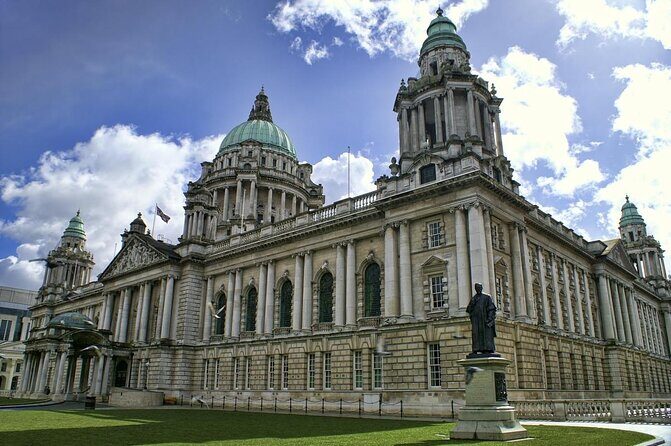
Belfast gets personal on a walking tour. This one strings together major landmarks and street-level stories, with headsets so you can actually hear the guide outdoors. I like that it starts at the iconic Belfast City Hall and then keeps moving through the city center’s older layers, from churches and cathedrals to riverside industry and public art.
Two things I especially like: you get a licensed local guide who ties today’s Belfast to what came before, and the route includes both the famous stops and the small details (grottoes, leaning towers, cobbled lanes, and river sculptures) that usually get missed. The main drawback is simple: it’s a solid 3-hour walk, and at least one mobility-focused review flagged that it may not suit everyone.
In This Review
- Key Highlights at a Glance
- Why This Best of Belfast Walking Tour Feels Like a Proper Orientation
- Price and Pace: What Your $36.05 Buys in Real Time
- Stop by Stop: From Belfast City Hall to Titanic Memorial Garden
- Stop 1: Belfast City Hall
- Stop 2: St Mary’s Roman Catholic Church (Bank Square) and the grotto story
- Stop 3: Belfast Cathedral (Cathedral Church of St. Anne) and the Cathedral Quarter
- Stop 4: Cathedral Quarter and Hill Street cobbles—street art and punk in Belfast
- Stop 5: Customs House—Speaker’s Corner and an old pub nearby
- Stop 6: Big Fish on the River Lagan—Harland & Wolff, Titanic, and public art legends
- Stop 7: Albert Memorial Clock Tower—why it leans, and why Belfast got its name
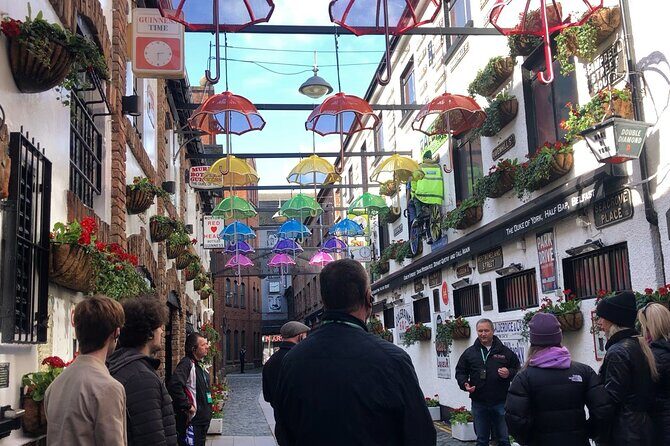
- Stop 8: The Belfast Entries—an outdoor art gallery in the old core
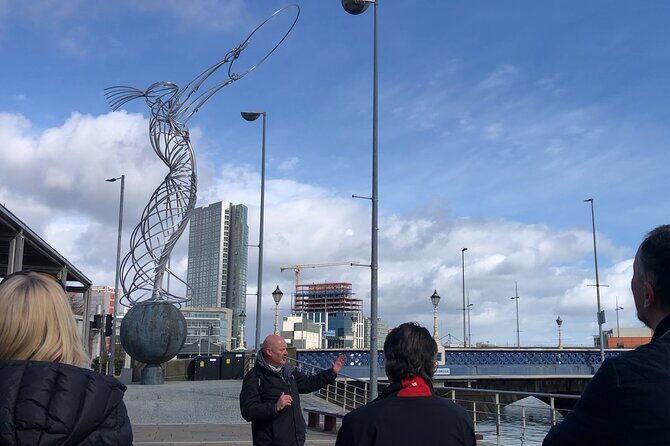
- Stop 9: Spirit of Belfast—quirky public art and surrounding building stories
- Stop 10: Titanic Memorial Garden—closing the loop back at City Hall
- The Guide Factor: What Works Best (and How to Get It Right)
- Practical Tips That Make the Walk Easier
- Who This Tour Is Best For
- Should You Book This Best of Belfast Walking Tour?
Key Highlights at a Glance
- Headsets included, so you won’t miss the story while walking outside
- Licensed local guide with a city-center route that connects places to events
- City Hall to Titanic Memorial Garden end-point that makes the Titanic theme feel earned
- Cathedral Quarter + street art, with plenty of photo moments along cobbled Hill Street
- River Lagan stops that lead you to Harland & Wolff and Belfast’s shipbuilding legacy
- Public art like Big Fish and Spirit of Belfast, plus “Entries” streets turned into an outdoor gallery
Why This Best of Belfast Walking Tour Feels Like a Proper Orientation
If you’re short on time, you want the kind of tour that gives you bearings fast. This one does that by starting in the civic heart (Belfast City Hall) and then guiding you through several of the city’s most recognizable “chapters” in one morning: old institutions, religious landmarks, the Cathedral Quarter’s creative edge, and the Titanic-era storyline.
You also get something that matters in practice: a guide who can explain why these buildings and streets matter, not just where they are. When the group stops, you’re not trapped in a classroom. You’re standing right where the story happened, looking at the scale, the angles, and the urban layout that make Belfast feel like itself.
The best part for first-time visitors is that the tour doesn’t only chase the famous names. It threads in local textures: cobbles, murals, public art, and the little civic jokes Belfast is famous for. It’s a quick way to learn what to do next after your walk—bars, restaurants, and areas worth a return visit—without guessing.
Other Belfast walking tours we've reviewed

Price and Pace: What Your $36.05 Buys in Real Time
At $36.05 per person for about 3 hours, this is priced like a “high value” city orientation tour—especially because it includes a local guide and headsets. You’re paying for someone to: (1) compress a lot of context into a walking format, (2) keep the group moving without feeling rushed, and (3) make outdoor explanations audible.
The pace is described as relaxed and easy to maintain, but it is still a walk. One review called out that it’s not suitable for someone with mobility issues, and that matches what the route implies: multiple stops, cobbled streets, and time outdoors.
Practical tip: wear comfortable shoes and give yourself a little buffer. Even with a moderate pace, 3 hours in the city center adds up.
Stop by Stop: From Belfast City Hall to Titanic Memorial Garden
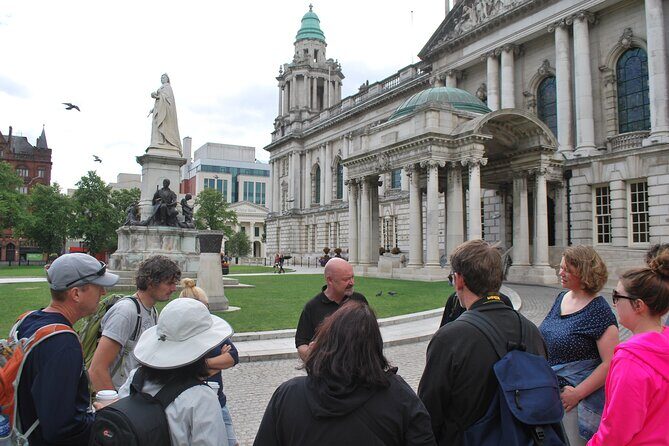
This is the core of the experience. I love walking tours that feel like a story with chapters, not a random checklist. Here’s how each stop supports the bigger picture of Belfast—what you’ll see, why it matters, and what to keep in mind.
Stop 1: Belfast City Hall
You begin at the front gates of Belfast City Hall. The guide sets the tone right away with a quick intro to the city and how the places you’ll visit connect to Belfast’s bigger shifts over time.
Why this works: City Hall is a natural “anchor point.” It gives you a civic reference point early, so later stops—churches, cathedrals, industrial relics, and public art—feel like they’re part of one connected city, not disconnected tourist stops.
What to watch for: look up and around. Civic buildings tell you a lot about priorities, power, and pride in the way they’re designed and where they’re positioned.
Stop 2: St Mary’s Roman Catholic Church (Bank Square) and the grotto story
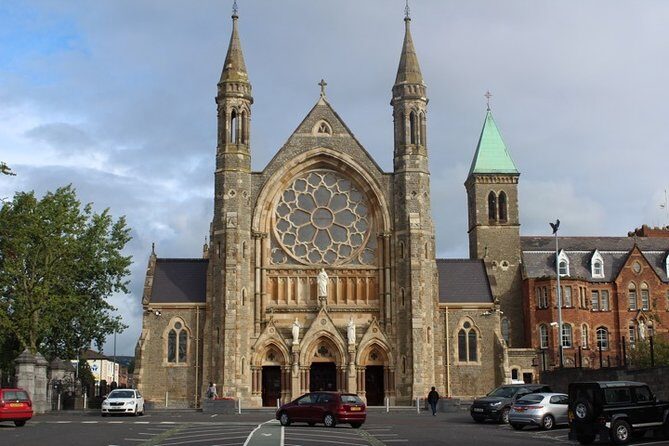
Next is St Mary’s Roman Catholic Church in Bank Square, where you’ll hear about the church’s history and its unique grotto, plus the mention of the original Belfast Castle that once stood nearby.
Why it’s special: This is the kind of stop that feels “local” fast. A grotto isn’t just a quirky detail; it’s a clue about how faith, community, and identity show up in everyday city spaces. You also get a reminder that Belfast’s oldest layers don’t always survive intact—sometimes they’re replaced, repurposed, or only remembered through stories.
Possible drawback: this is more talk-focused than photo-focused. If you’re chasing quick visuals, be ready to listen.
Other walking tours we've reviewed in Belfast






Stop 3: Belfast Cathedral (Cathedral Church of St. Anne) and the Cathedral Quarter
As you reach the Cathedral Quarter, the guide brings in the history and stories of the United Irishmen and their role in Belfast’s development.
Why you’ll like it: the Cathedral Quarter is one of those areas where culture, creativity, and old buildings sit side by side. Learning the United Irishmen angle helps you understand why this neighborhood matters beyond its bars and nightlife.
Practical tip: if you’re sensitive to political or historical topics, you’ll still be fine—but you may want to ask the guide to slow down on any part that gets emotional or intense.
Stop 4: Cathedral Quarter and Hill Street cobbles—street art and punk in Belfast
Then you walk along Hill Street, noted for being one of the last cobbled streets in Belfast. Here the tour connects street art, recommendations for where to eat and drink, and the story of punk in Belfast and why it mattered during the Troubles.
Why this part is great: you get variety. It’s not only serious history; it’s the “how Belfast expresses itself” section—through art, music, and streets that feel lived-in.
What to watch for: bring your phone, but keep your place in the group. Cobblestones can be slick, and the guide moves at a walking-tour rhythm.
Stop 5: Customs House—Speaker’s Corner and an old pub nearby
At Customs House, you’ll hear about how the building was connected to Speaker’s Corner, plus stories about orators who stood there. The stop also points you toward one of the oldest pubs in Belfast that’s still standing nearby.
Why it’s worth stopping: this is Belfast as an argument—people speaking up, demanding attention, shaping public life. If you want context for why the city got so loud, this stop helps.
Small consideration: this is another story-heavy moment. If you’re tired, use the sound of your headset and take quick mental notes for later.
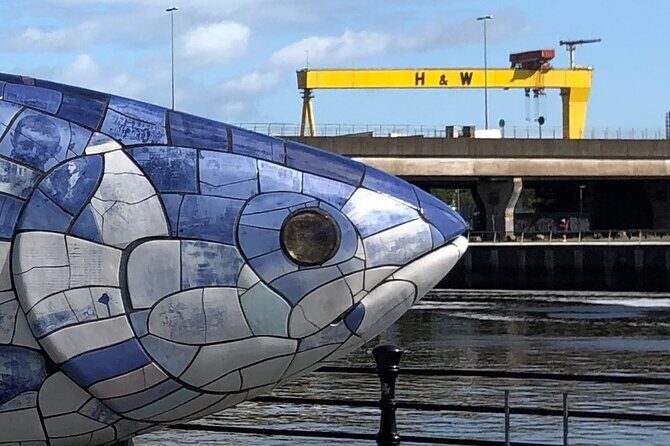
Stop 6: Big Fish on the River Lagan—Harland & Wolff, Titanic, and public art legends
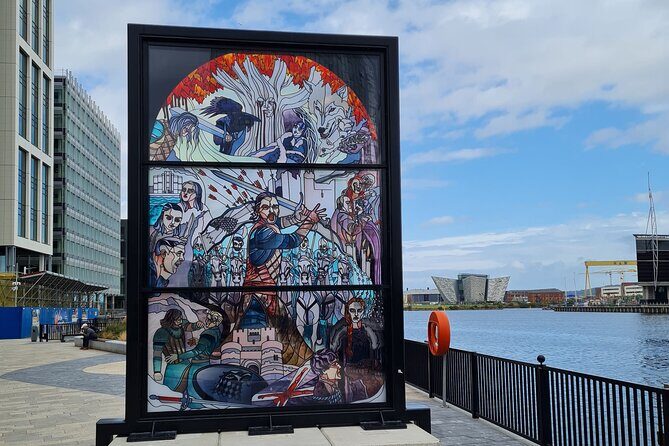
You head toward the river and arrive at Big Fish. From here, you look across toward the Harland & Wolff shipyard, tied to Titanic’s construction. You’ll also hear the legend behind the public sculpture Salmon of Knowledge and visit Beacon of Hope, described as a symbol of resilience and regeneration.
Why this is a highlight: the river viewpoint makes the industrial scale click. You’re not looking at a museum photo—you’re seeing how the waterfront lines up with the place where ships were built. Belfast’s transformation story also gets a physical marker through Beacon of Hope.
If you time it right: morning light often makes the riverside sculptures and signage pop for photos.
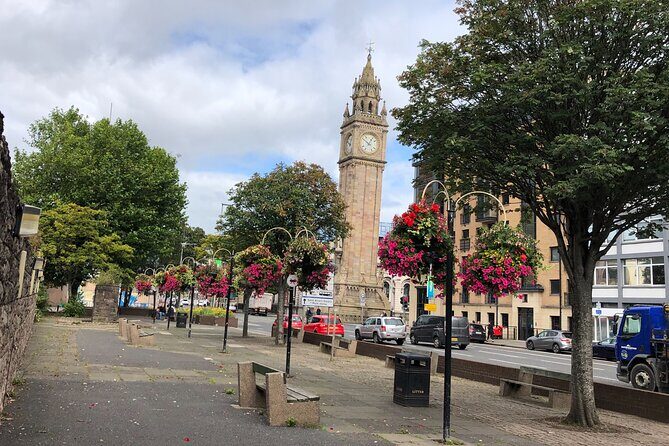
Stop 7: Albert Memorial Clock Tower—why it leans, and why Belfast got its name
Next is the Albert Memorial Clock Tower, often called Belfast’s own leaning tower. The guide explains why it’s angled and also connects it to how Belfast got its name, plus a nod to a famous footballer’s favorite pub.
Why this stop feels fun: it’s a break from the heavy topics while still staying on-theme—Belfast identity through symbols, names, and local humor.
Practical tip: take a second to orient yourself here. After this, you’re heading into the oldest parts of the city, and a quick sense of direction makes the rest easier to follow.
Stop 8: The Belfast Entries—an outdoor art gallery in the old core
Now you reach the Belfast Entries, at the center of the oldest part of town. These lanes have been turned into an outdoor art gallery, with dozens of pieces and stories behind them, plus an explanation of the area’s long life and the people who lived there across centuries.
Why you’ll enjoy it: this is the stop that turns Belfast from “landmarks” into “place.” Narrow lanes and unexpected art change how you feel about the city center. It also slows the tour down emotionally, because you’re walking through a scale that feels older than the big buildings.
Possible drawback: the Entries are close quarters. If you don’t like tight walking spaces, just stay aware of the group and keep your breathing easy.
Stop 9: Spirit of Belfast—quirky public art and surrounding building stories
In the pedestrian heart of the city, you find Spirit of Belfast, with stories about its meaning and its alternative name, plus background on historic buildings around it.
Why it matters: public art is often where cities hide their personality. This stop helps you read Belfast as a place that talks back to its own past—through sculpture, names, and urban symbolism.
Stop 10: Titanic Memorial Garden—closing the loop back at City Hall
The tour ends at the Titanic Memorial Garden back near City Hall, where you hear the story of Titanic and some of the people who sailed on her. The guide also wraps up with tales of famous Belfast citizens whose statues are found in the grounds, and their contributions to society.
Why closing here is smart: you began with Belfast City Hall and ended at a garden designed to hold Titanic’s memory. That gives the Titanic theme a full emotional arc instead of leaving it as a single standalone attraction.
If you still want more: after the tour, you’ll know what areas to return to first—especially the Cathedral Quarter and the waterfront zones.
The Guide Factor: What Works Best (and How to Get It Right)
One reason this tour earns strong marks is that guides consistently bring it down to human scale. You’ll hear names like Mark, Colin, Paul, Jim, Steve, Chris, and James associated with this walk. Different personalities, same mission: make Belfast’s timeline understandable without turning it into a lecture.
Here’s how to get the most out of any guide, even if their storytelling style doesn’t match yours perfectly:
- Ask at stops where you feel unclear. If a topic like the Troubles feels too jumpy, you can ask the guide to connect causes and outcomes in plain terms.
- Use the headset even if you think you hear fine. Outdoor sound bounces, and headsets keep the story clear.
- Pay attention to the guide’s practical tips for where to go next. The tour is designed to orient you, not just entertain you for 3 hours.
One note for balance: one lower rating pointed to a history format that felt jumpy and lacking context, and it also mentioned incorrect information. That’s not the pattern you should expect, but it’s a reminder that history discussions are hard, and guides differ. If something doesn’t feel right, asking questions is always fair.
Practical Tips That Make the Walk Easier
This is one of those “small things matter” tours.
- Bring comfortable shoes. Cobblestones and uneven pavement show up in the route.
- Dress for all weather. The experience runs in all weather, so plan for rain or chill if needed.
- Take the halfway break seriously. Multiple guides build in a coffee/restroom pause around halfway through, which is a smart move when you’ve got a few miles underfoot.
- Go into it with curiosity. Belfast’s story has moments that can feel heavy. If you want context, engage your questions early rather than saving them for the end.
Who This Tour Is Best For
This tour is a strong fit if you want a compact, city-center education that still feels like a walk.
You’ll probably love it if:
- it’s your first time in Belfast and you want a quick, reliable orientation
- you enjoy mixing architecture, street art, and real-world history
- you want to understand the city’s identity through everyday sights like churches, cathedrals, sculptures, and lanes
You might want to think twice if:
- you need very limited walking or lots of seated time, since the route involves a fair amount of walking
- you dislike any discussion of political history, since the guide covers periods tied to the Troubles and related movements
Should You Book This Best of Belfast Walking Tour?
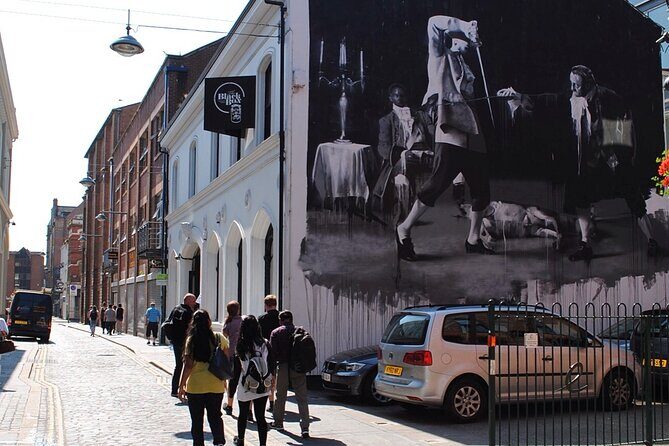
If you want a straightforward way to understand Belfast in a few hours, I’d book it. The big reason is value: headsets, a licensed local guide, and a route that covers both “big sights” and the details that make the city feel human. It’s also a smart first-plan activity because it tells you what to do next—where to return, where to eat, and what neighborhoods actually connect.
My call: book this if you’re comfortable with a solid walk and you’re open to learning how Belfast’s past shaped its streets. If you’re mobility-limited, double-check whether the route pace and cobbled sections will work for you. And if politics-heavy history makes you uncomfortable, consider bringing a list of questions so you can steer the conversation toward the context you want.
You Might Also Enjoy
More Tours in Belfast





More Tour Reviews in Belfast
- Titanic Belfast Entrance Ticket: Titanic Visitor Experience Including SS Nomadic
★ 4.5 · 3,698 reviews