REVIEW · BELFAST
Belfast Eclectic Walking City Center Experience, The Marti Way
Book on Viator →Operated by belfastology walking tours · Bookable on Viator
Belfast clicks into place on foot. This Belfast Eclectic Walking City Center experience is a story-driven city-center walk that links Belfast City Hall, Titanic-era landmarks, and the street-level life you see now. Marti’s approach is built around making the city’s past feel personal without turning your day into a lecture.
I especially like the small-group size (max 8). You get real conversation, plus quick context for why each stop matters, from linen-era Belfast to the emotional weight of the Troubles and the push toward reconciliation.
One thing to consider: it’s a moderate-fitness, good-weather walk. Expect real city wandering for about 3 hours, and you’ll be outside most of the time, so wear shoes you trust.
In This Review
- Key highlights I’d plan around
- How this Belfast walk turns landmarks into a real story
- Starting at Belfast City Hall: the timeline lesson on your feet
- Titanic Memorial Garden: a short stop with heavy meaning
- St. Malachy’s Parish and the linen-to-Markets shift
- St. George’s Market: history outside the museum walls
- The Spirit of Belfast sculpture and the Belfast Entries lanes
- Victoria Square to Beacon of Hope: symbols along the Lagan
- Big Fish: reading a public art joke as a city story
- Cathedral Quarter: street art, peace, and St. Anne’s details
- Finish at St. Anne’s Square and The MAC10: a smart ending point
- Price and value: what $36.05 buys you here
- Who should book this walk
- Should you book Belfastology’s Marti Way?
- FAQ
- How long is the Belfast Eclectic Walking City Center Experience?
- What is the group size limit?
- Where do I meet and where does the tour end?
- Is the tour offered in English, and do I get a mobile ticket?
- Is the tour dependent on weather?
- What is the cancellation window for a full refund?
Key highlights I’d plan around

- A city-center route that’s timed for your first day out: City Hall to Cathedral Quarter without backtracking.
- Titanic and linen history in the same breath: you’ll move from the Titanic Memorial Garden toward the Markets area.
- Street art that explains Belfast’s story: especially in and around the Belfast Entries and Cathedral Quarter.
- Iconic photo moments: Big Fish, Beacon of Hope, and the Sculpture spots along the Lagan route.
- Local food and drink pointers: you’ll pick up suggestions for places to wine and dine around the areas you walk through.
- A guide who adjusts: Marti is the kind of host who asks what you want to focus on and then steers the walk accordingly.
How this Belfast walk turns landmarks into a real story
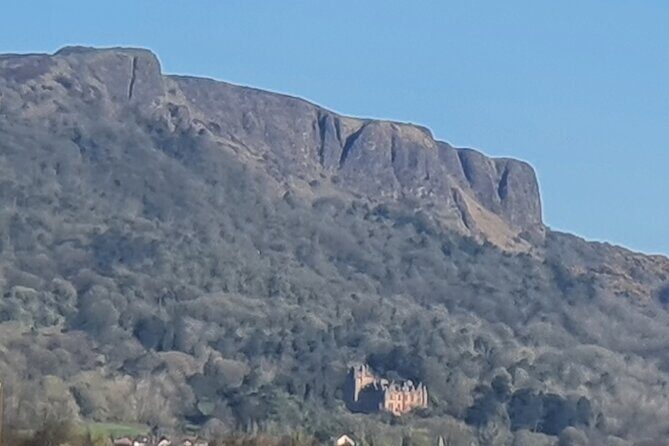
If you’ve ever felt like Belfast’s history is hard to picture from a distance, this walk helps. The pacing is built for moving—between major landmarks, you get the “why” behind them, so things start to connect. You’ll hear how Belfast’s early growth and industries fed the city’s identity, then how the period known as the Troubles shaped daily life and how the city carries that history forward.
I also like the way the tour mixes emotions with practical next steps. It doesn’t just point at sights; it nudges you toward neighborhoods to explore later, and it gives you context for what you’re actually seeing on the street. That matters in Belfast, where architecture, murals, and street layouts often tell you more than a single plaque ever will.
Finally, the small-group format is part of the value. With a capped group of up to 8, the guide can respond to questions and keep the day from feeling like a rush-hour bus.
Other Belfast walking tours we've reviewed

Starting at Belfast City Hall: the timeline lesson on your feet
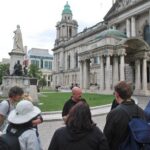
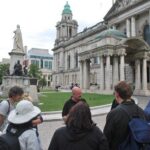
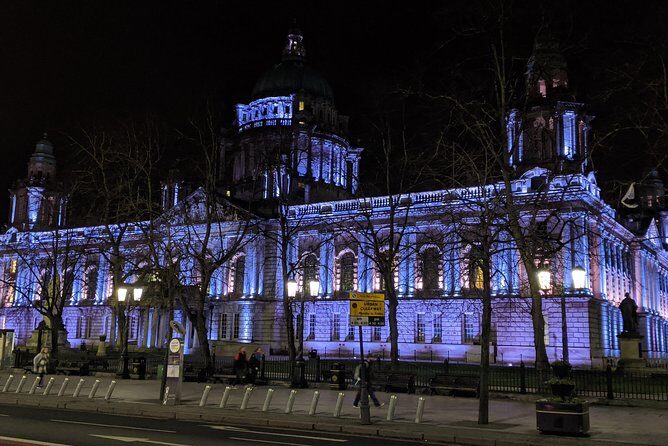
Your walk begins at Belfast City Hall (City Hall, Belfast BT1 5GS). This is a strong start point because it anchors the whole day in the center of civic life. Right after meeting, you’ll get an introduction that acts like your map for everything that follows.
You’ll hear:
- how Belfast grew and what “places to wine and dine” look like when you understand the city’s layout
- the longer arc of Belfast’s history, including how the Troubles became part of the city’s modern story
- how Belfast is now working on redevelopment and the future
Then you set off toward the Titanic Memorial Garden, which is a smart move because it gives you a tangible link fast. That helps your brain hold onto the larger history as you walk.
Practical tip: City Hall can be busy. If you’re the early type, arrive a few minutes before start time so you’re not doing last-minute coordination when the group is forming.
Titanic Memorial Garden: a short stop with heavy meaning
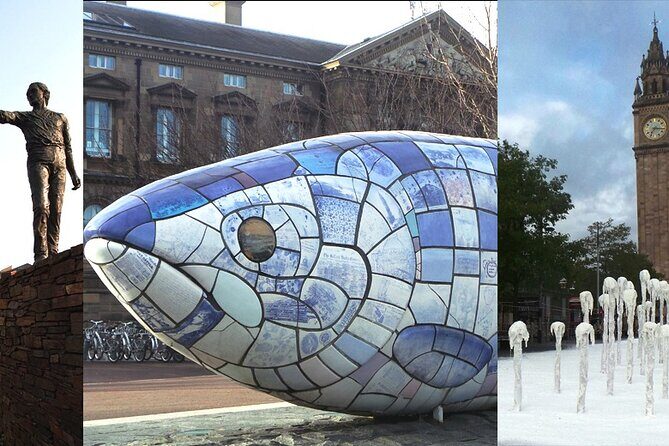
The Titanic Memorial Garden is your next quick arrival. Even with a brief stop, it lands because the route is telling you something: Belfast isn’t only about one chapter. It’s about multiple eras overlapping—industry, ambition, loss, and the way memory lives on in public spaces.
This part of the walk is also designed to reset you. After the city-center context, you get a calmer pause where you can process what you’re learning. And because it’s a free-access stop as described on the route, it’s easy to treat it as a moment you really look at, not just a place you pass through while checking boxes.
St. Malachy’s Parish and the linen-to-Markets shift
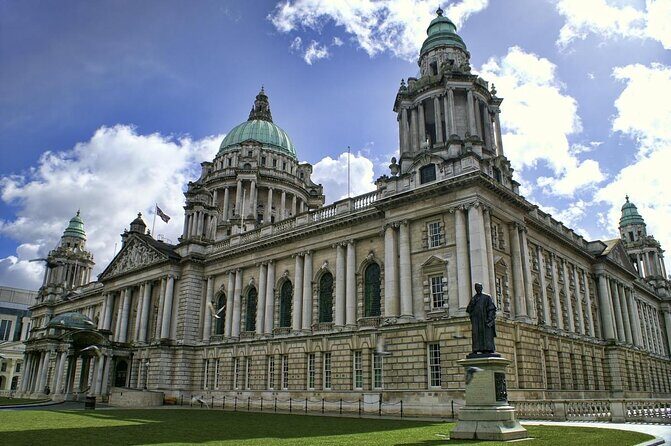
Next you head toward the area connected with the development of Belfast through the linen industry. The walk passes St. Malachy’s Parish, and this is one of the better “buildings-with-a-purpose” moments on the route. Churches like this often show you how communities built identity—religion, work, and neighborhood life all stitched together in stone and street proximity.
Then you move into the Markets area, where the tour helps you understand how Belfast’s commercial life evolved. This part matters because the Markets are not just a tourist stop. They’re a working piece of the city, and once you know a little about how Belfast developed, you’ll read the neighborhood differently.
St. George’s Market: history outside the museum walls
At St. George’s Market, you’ll get the story behind what you’re seeing and how the area has developed over time. The best thing about this stop is that it feels like the kind of place you’d want to return to even if you weren’t on a guided walk. Markets are where cities reveal their everyday rhythm.
If you like walking tours that give you both context and usable “where to go” advice, this is one of the stops that delivers. You’ll likely end up with ideas for lunch or a coffee later based on what you learn right here in the center.
Small consideration: if it’s raining, Market-area walking can feel slick and stop-and-go. Keep an eye on shoes and plan to slow your steps in the transition streets.
Other walking tours we've reviewed in Belfast




The Spirit of Belfast sculpture and the Belfast Entries lanes
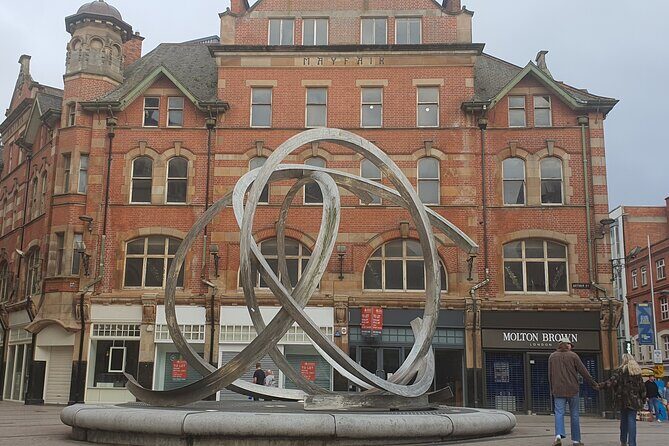
As you move along, you’ll pass the Spirit of Belfast sculpture. It’s not the kind of landmark you can really understand without the human story the tour adds, and the guide uses it as a bridge toward the tighter streets.
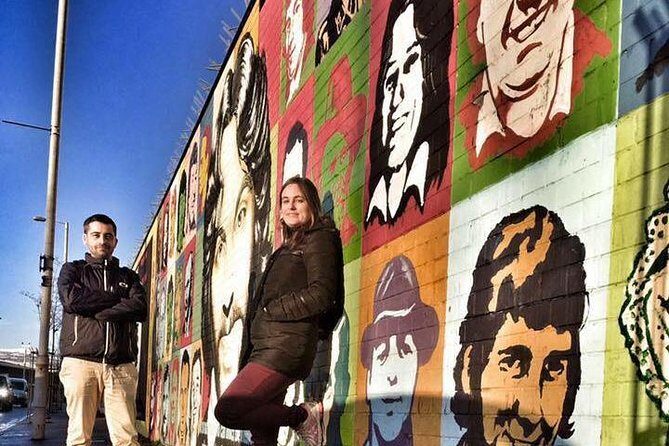
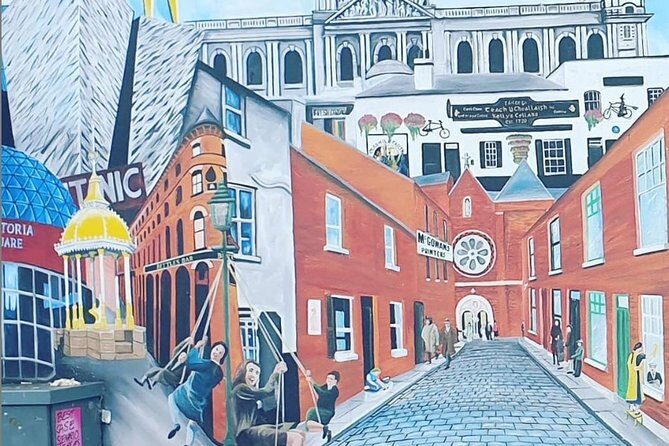
Then comes one of the most memorable segments: the Belfast Entries. This is where the tour leans into street-level history and street art, and where Belfast feels most like itself. You’ll walk narrow lanes where the city’s identity developed, and you’ll hear about the United Irishmen and other rebellious locals in the context of how Belfast became Belfast.
What I like here is the mix:
- historical context that doesn’t feel like a wall of dates
- street art that visually tells you what words alone can’t
- a present-day vibe, because the Entries are also where locals and visitors mingle in restaurants and gastro bars
If you want photos, this is where you’ll start noticing compositions. The guide also tends to point out where to stand for better shots, which saves you time later.
Victoria Square to Beacon of Hope: symbols along the Lagan
Now you move away from the tighter lanes and toward broader viewpoints. Leaving the River Lagan behind for a stretch, you reach Victoria Square to hear about past, present, and future changes in the area. This is useful because it shows Belfast as a working city, not only a site of remembrance.
Then you reach Beacon of Hope. It’s a short stop, but it carries weight. You’ll hear the meaning of the sculpture and what’s further down the river—specifically references to landmarks that connect to the Titanic Quarter, including the Big Fish and a gateway-style idea for reaching that part of town.
This stretch is also where the tour becomes good at “vision.” You start to see Belfast as a set of lines and connections: center to quarter, river to redeveloped spaces, memory to forward motion.
Big Fish: reading a public art joke as a city story
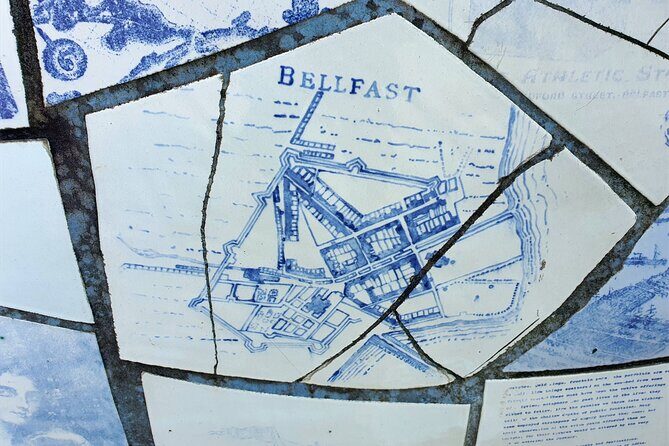
Next is the Big Fish. The tour frames it as a landmark with history written into its details—like the story is literally on the surface. Even if you’ve seen it in photos already, it’s more fun in person when the guide gives you the narrative hook.
Then you’re set up for an easy reach across toward the Titanic Quarter and the Cathedral Quarter area on the other side of the river. Even if you don’t cross the river immediately, this part helps you plan the rest of your day with confidence.
Cathedral Quarter: street art, peace, and St. Anne’s details
In the Cathedral Quarter, you’ll view more local and international street art and hear how Belfast and its people are moving toward peace and reconciliation. This matters because the city’s art isn’t only decoration here; it’s part of communication across generations.
You’ll then reach Belfast Cathedral – The Cathedral Church of St. Anne. The walk around the cathedral focuses on construction and what’s happening in the area now. This is a nice counterbalance to the street-art segment, because you can go from visual storytelling on walls to tangible storytelling in architecture.
Practical note: if you’re tired, this is a good moment to steady yourself. You’ll still be moving, but you can shift into a more contemplative pace while the guide points out what to look for.
Finish at St. Anne’s Square and The MAC10: a smart ending point
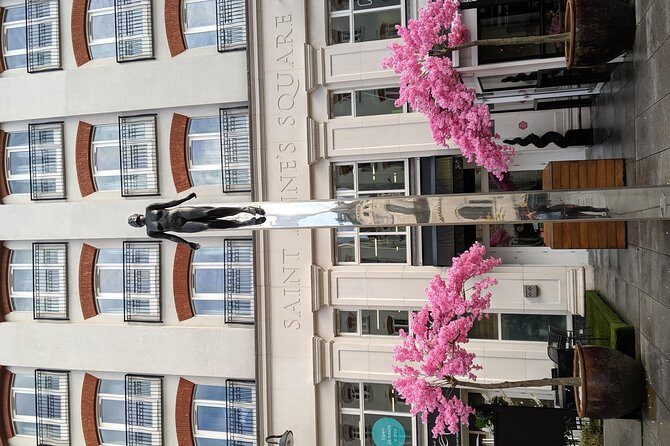
You finish in St. Anne’s Square, by the statue of Anne, near The MAC10 Exchange St, West (the tour’s end location). I like this ending because it lands you in a square that’s built for lingering: restaurants nearby, and an easy way to continue your Belfast day without needing to map your next steps from scratch.
If you’ve taken tours in other cities, you know how often a walk dumps you somewhere random. This one ends in a spot where you can actually use what you’ve learned—grab food, talk about what you saw, or head out for a second neighborhood wander.
Price and value: what $36.05 buys you here
At $36.05 per person for about 3 hours, the value comes from the mix of:
- multiple city-center landmarks
- a guided narrative connecting them
- a small group cap of 8, which helps the conversation stay personal
- practical food-and-drink direction while you’re already in the right neighborhoods
In practical terms, you’re paying for time and context. Belfast is a city where the “what” is easy to see, but the “why” takes help. If you only do a quick self-guided loop, you might miss the links between the Troubles era, redevelopment, and today’s street-level culture. This tour gives you that bridge—without dragging you into a single-theme specialty.
Also, booking tends to happen about 27 days in advance on average. If you’re traveling during a busier time, it’s smart to lock in early so you can pick a morning or early afternoon slot that matches your energy.
Who should book this walk
This experience is a great match if you want:
- a first-time introduction to Belfast with clear context
- street art and city-center neighborhoods that feel alive, not staged
- a guide who can handle questions and adjust the walk based on what you care about
- a mix of history and present-day Belfast culture
It’s less ideal if you prefer tours that avoid emotion and politics entirely. The tour treats the Troubles with sensitivity in the narrative, and that can be moving for some people.
And if you like “variety” (Titanic links, linen-era connections, Markets, Entries, river landmarks, Cathedral Quarter), the route keeps changing scenery without changing pace too sharply.
Should you book Belfastology’s Marti Way?
Yes—if you want a smart, city-center walk that helps you understand Belfast in plain human terms. The best reason to book is the combination of route choice and guide style: you’ll cover major landmarks and the tighter lanes where Belfast’s identity shows up most clearly, and you’ll leave with ideas for where to eat and where to look next.
If you’re short on time or you’re nervous about doing self-guided history while walking in busy areas, this is a confident way to get oriented. Just go in with good shoes, a little patience for rain (Belfast weather happens), and an open mind.
FAQ
How long is the Belfast Eclectic Walking City Center Experience?
The tour is about 3 hours.
What is the group size limit?
The tour has a maximum of 8 travelers.
Where do I meet and where does the tour end?
You start at Belfast City Hall (BT1 5GS) and the tour ends at The MAC10 Exchange St, West, Belfast BT1 2NJ, finishing in St. Anne’s Square by the statue of Anne.
Is the tour offered in English, and do I get a mobile ticket?
Yes. It’s offered in English and you receive a mobile ticket.
Is the tour dependent on weather?
Yes, it requires good weather. If it’s canceled due to poor weather, you’ll be offered a different date or a full refund.
What is the cancellation window for a full refund?
You can cancel up to 24 hours in advance for a full refund. Less than 24 hours before the start time is not refundable.
You Might Also Enjoy

More Walking Tours in Belfast
More Tour Reviews in Belfast
- Titanic Belfast Entrance Ticket: Titanic Visitor Experience Including SS Nomadic
★ 4.5 · 3,698 reviews