REVIEW · BELFAST
Belfast history of terror & mural 1 hr express private taxi tour
Book on Viator →Operated by Belfast famous black taxi tours · Bookable on Viator
Belfast’s murals hit harder from a black cab. This private taxi tour rolls through the streets shaped by The Troubles, with a driver-guide who lived that daily reality as Belfast moved from violence toward peace.
I really like two things. First, you get a clear sense of the Bobby Sands mural and why the Falls Road matters, even if you know very little about Northern Ireland history. Second, the route pairs republican and loyalist areas in a way that helps you read the peace wall and murals as local messages, not just scary pictures.
One consideration: the subject matter can feel heavy and intense, even when the tour keeps it factual. And while the schedule is about an hour, the guide may run longer if you’re asking questions.
In This Review
- Key things you should know before you go
- What This 1-Hour Belfast Black Taxi Tour Actually Does
- Price and Logistics: What You’re Paying For
- Falls Road and the Bobby Sands Mural: Where Street Names Become Politics
- Peace Lines: The Barriers That Explain Belfast’s Divisions
- Shankill Road: Loyalist Belfast and One of the Oldest Roads
- Divis Flats and Divis Street: When the Military Era Shows Up in Brick
- Italian Craft, Peace Talks, and a Building With Secrets
- A Jail Built in the 1800s: Escapes, Prisoners, and Long Shadows
- The Real Star: Driver-Guides Like Danny and Tony
- Who This Tour Fits Best
- Should You Book This Belfast History of Terror and Mural Tour?
- FAQ
- How long is the Belfast history of terror & mural taxi tour?
- Is this tour private or shared?
- Do you offer pickup from Belfast city center?
- Are the mural and wall stops included in the price?
- What ticket do I receive?
- Can children join the tour?
- What is the cancellation policy?
Key things you should know before you go
- Private black taxi time focused on the interface streets people talk about for years.
- Falls Road and Shankill Road contrast explained in plain terms, not speeches.
- Peace lines with a purpose: what they separate and why they were built.
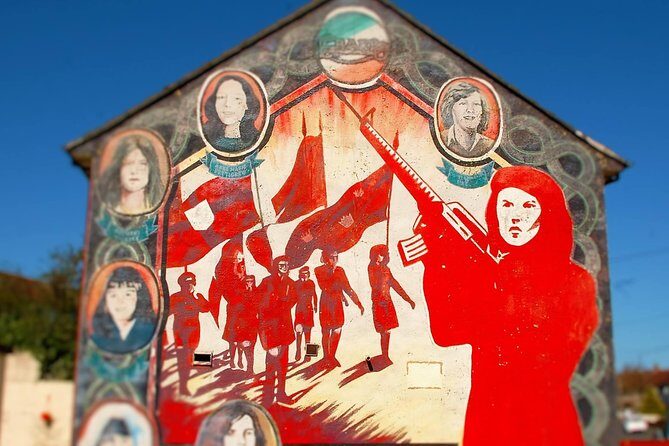
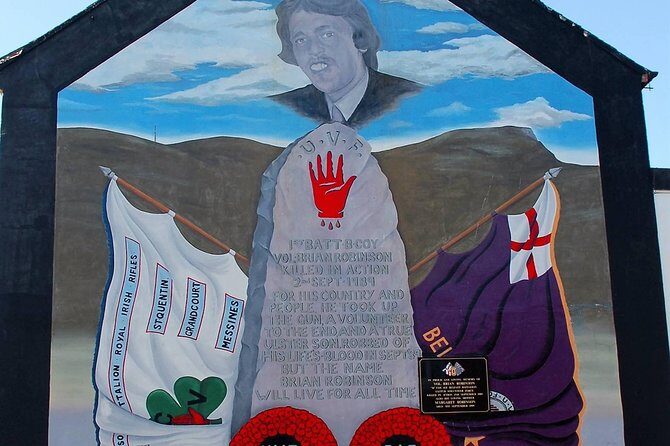
- Murals as political wayfinding across IRA and UVF territory markers.
- Stops like Divis Flats that show how the military era still shaped the streetscape.
- Street-level guides like Danny and Tony, who balance history with answers.
What This 1-Hour Belfast Black Taxi Tour Actually Does
This is not a museum-style tour. It’s a black cab ride through real neighborhoods where murals, walls, and barriers still shape how people move. The guide is usually older—think 50s or more—and that matters. You’re not getting a lecture from a guide who only studied the topic. You’re riding with someone who had to survive living with it.
I like that the pacing stays tight. In about an hour, you hit multiple high-impact stops: a Falls Road mural tied to Bobby Sands, the peace wall, Shankill Road, and the Divis area. It’s the kind of route that helps you understand Belfast quickly without trying to stitch together information from five different sites.
One reason this tour feels worth it is the human layer. The driver-guide can explain what you’re seeing as you see it—like why one street feels different from the next, even if they’re only a few minutes apart by cab.
Other black taxi & cab tours in Belfast we've reviewed

Price and Logistics: What You’re Paying For
The price is $164.24 per person for a private taxi tour lasting about one hour. That’s not a budget fare. But you are buying a few specific things at once: a private driver, local context, and transportation between interface areas.
Here’s the practical part. You get pickup from Belfast city center within a 1 km radius of Belfast City Hall. If you’re coming from an airport, train station, or cruise port, pickup is not included and there’s a surcharge payable in cash on the day. Also, you use a mobile ticket, which is convenient if you prefer not to manage paper.
A real-world note from the way this tour runs: even when it’s scheduled for an hour, you may end up out longer. Some guides go into overtime when you keep asking questions or when a stop needs extra explanation. If you’re on a tight dinner plan, keep some slack.
Falls Road and the Bobby Sands Mural: Where Street Names Become Politics
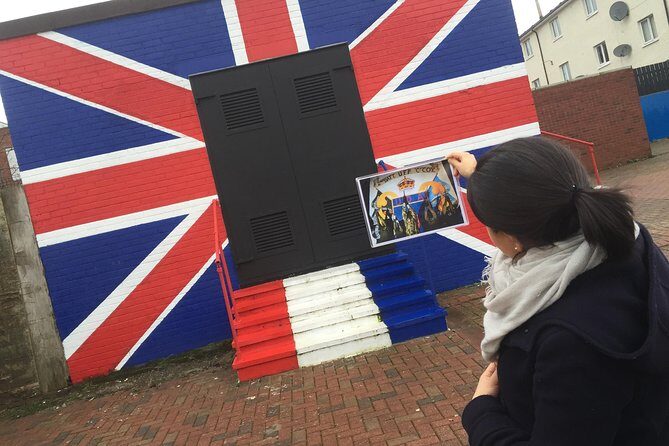
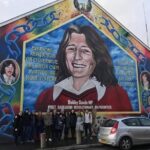
Your first stop centers on the Falls Road area, including a stop at the Bobby Sands mural. Falls Road is more than a street. It’s tied to the republican community’s identity in West Belfast, stretching from Divis Street in the city center out toward Andersonstown.
The name itself is loaded. Falls Road is linked to the Irish term túath na bhFál, which translates roughly as territory of the enclosures. That’s the kind of detail that helps you understand why locals repeat these names with such meaning—this isn’t just geography, it’s memory and belonging.
What I like about starting here is that it sets up the core theme of the whole tour. Belfast’s neighborhoods aren’t just next to each other; they have histories that shaped who lived where, how communities organized, and how violence echoed through daily life. From the cab, you’re able to see how murals sit within streets people actually use, not only on postcard backgrounds.
Peace Lines: The Barriers That Explain Belfast’s Divisions
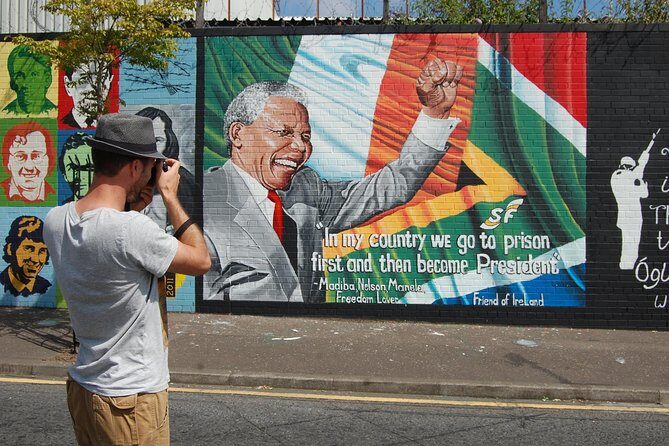
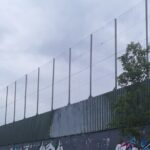
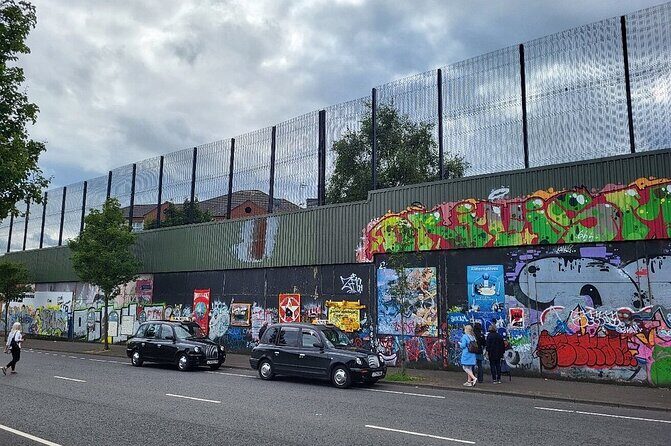
Then you move to the Peace Wall, a system of separation barriers built at urban interface areas across Belfast and other Northern Ireland cities. The purpose, stated simply, is to reduce inter-communal violence between Catholic nationalist communities and Protestant unionist communities.
You’ll hear the idea behind peace lines in a way that makes sense for visitors. They vary in length—some are just a few hundred yards, others stretch to over three miles. In other words, these aren’t symbolic fences. They shape the routes people take and how neighborhoods experience one another.
What makes this stop work on a short tour is how it connects murals to real-world consequences. The wall doesn’t just show conflict. It shows how long-term segregation was treated as a practical measure—then later, how it became part of the tourist landscape as people tried to understand what happened here.
This is also a good moment to slow down mentally. Even if you’re curious, you should be ready for visuals and stories that feel unsettling.
Shankill Road: Loyalist Belfast and One of the Oldest Roads
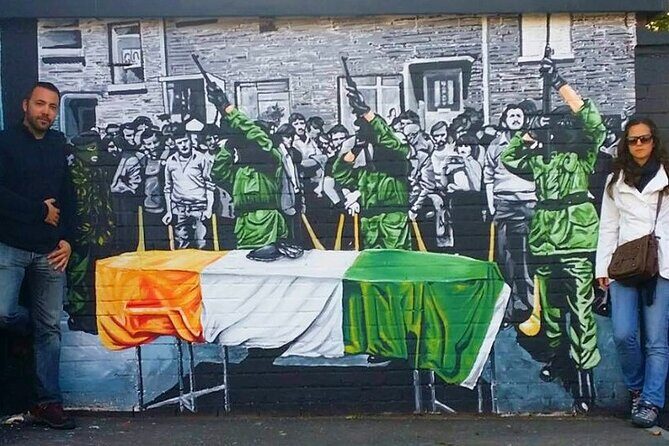
Next comes Shankill Road, the loyalist heart of the city’s west side. Your guide connects what you’re seeing with the neighborhood’s formation and the broader story of Northern Ireland. Shankill Road is described as dating back to 455 AD, which is a reminder that Belfast’s identity wasn’t invented in the 20th century. The Troubles overlay earlier routes and communities.
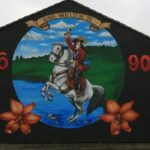
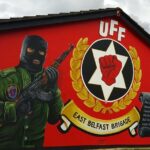
You’ll also hear about its role as a birthplace for loyalist groups like the UVF and the UFF. That’s where murals and street-level cues become easier to interpret. One side’s murals can reflect republican narratives; the other side’s murals often carry a different political message. From the cab, you can see how those messages function as territorial markers.
A key advantage of having this explained by the driver-guide is balance. Good tours can either oversimplify or get preachy. A solid guide does neither. They explain why each community sees its own history as essential, and they answer your questions instead of steering you away from them.
Other Troubles & political tours we've reviewed in Belfast

Divis Flats and Divis Street: When the Military Era Shows Up in Brick
After the main contrast stops, you reach the Divis area and Divis Street. This part of the route is known for being linked with The Troubles, including gun battles.
The description of Divis flats is stark: it’s notorious in Troubles-era stories, and the area saw the British Army occupy the tower block starting in the 1970s, with the top three floors being occupied until 2007. That detail matters because it shows how conflict didn’t only happen in headlines. It changed the buildings people lived beside, and it lasted long enough to become part of the skyline.
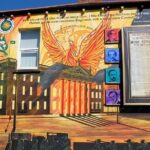
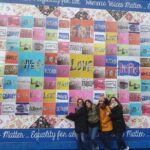
Your tour can also include a stop at the International Mural Wall on Divis Street. This huge wall features murals of different countries with stories about injustice and struggles for freedom. The examples mentioned include Palestine and Cuba.
That international angle is useful. It helps you see that Belfast’s murals aren’t only about local identities. They also respond to global political narratives. You’ll start to notice how mural art can function like public messaging, framed in the language of solidarity and resistance.
Italian Craft, Peace Talks, and a Building With Secrets
One of the most interesting pauses in the tour is a place created by Italians and local men with craftsmanship built over 100 years ago. This stop is described as the start of secret peace talks between Gerry Adams of Sinn Féin and John Hume of the SDLP.
Even if you don’t know those names, this stop gives you context fast: negotiations didn’t appear out of nowhere. They were shaped by people who carried political leadership while communities kept living with the consequences of violence.
You can also ask your guide to stop and show you inside if you like. That’s a small detail, but it’s the kind that turns a mural-and-wall tour into something more human. A room where talks began changes how you think about what came next.
A Jail Built in the 1800s: Escapes, Prisoners, and Long Shadows
The route also includes a jail built in the 1800s. During The Troubles, it held some of the famous prisoners of the era, and it’s also described as a site where successful escapes happened.
There’s another detail that stays with you: it was a hanging jail into the 1960s. That single line makes the timeline feel closer and more real. You’re not only hearing about conflict from one narrow decade. You’re looking at a system that extended far beyond what many visitors expect.
If you’re sensitive to harsh topics, approach this stop with care. But even if you’re not, it’s a powerful way to understand how justice, punishment, and political conflict overlapped for a long time.
The Real Star: Driver-Guides Like Danny and Tony
The biggest strength here is the guide. In the provided descriptions, the driver-guide is often presented as someone who lived through The Troubles and whose daily survival depended on it. That street-level credibility is hard to replace.
One guide named Danny (no surname given) is described as being very knowledgeable and informative and as someone who had lived through the Troubles. Another guide, Tony, is praised for balancing Belfast history and politics while answering lots of questions. That balance is exactly what you want in a tour like this, because the topics are emotionally loaded and facts can get tangled fast.
A practical tip: bring questions. Not just big ones, but small ones like how locals use certain street names or what a particular mural is trying to communicate. The best tours of Belfast aren’t about racing from stop to stop. They’re about using the ride time to ask and get clear answers.
Who This Tour Fits Best
This tour suits you if you want a fast, focused way to understand Belfast after 30 years of conflict. It’s especially good if you:
- prefer conversation and context over reading plaques
- want to see both republican and loyalist areas in one route
- are interested in how murals and barriers work as messages in everyday life
It’s also a solid match for first-time visitors who don’t want to plan bus routes between Falls Road, Shankill Road, and the Divis area on their own.
If you’re expecting a light, feel-good photo walk, this won’t feel like that. The visuals and stories deal with real harm. But if you go in with the right mindset, it’s one of the most direct ways to understand what Belfast is still carrying.
Should You Book This Belfast History of Terror and Mural Tour?
I’d book it if your priority is meaning over scenery. The route hits the key elements that explain Belfast today: murals, peace lines, and the street-level versions of republican and loyalist history. For the price, you’re paying for private cab time plus a guide who can interpret what you see without turning it into a lecture.
Skip it if your schedule is ultra tight and you can’t handle overtime, since guides may run longer when you’re engaged. Also skip it if you know you’re not up for intense themes, even when presented clearly.
If you’re on the fence, this is the kind of tour where the guide can make the difference. Choose it when you want a guided understanding, not just a checklist of stops.
FAQ
How long is the Belfast history of terror & mural taxi tour?
It’s listed as about 1 hour.
Is this tour private or shared?
It’s a private tour/activity, meaning only your group participates.
Do you offer pickup from Belfast city center?
Yes. Pickup is offered from within a 1 km radius of Belfast City Hall. Pickup from airports, train stations, and cruise ship ports has a surcharge paid in cash on the day.
Are the mural and wall stops included in the price?
The stops listed include free admission tickets (for example, the Bobby Sands mural and the other mural/wall stops). Any inside access that’s requested is not described with specific admission details.
What ticket do I receive?
You receive a mobile ticket.
Can children join the tour?
Children must be accompanied by an adult.
What is the cancellation policy?
You can cancel for a full refund if you cancel up to 24 hours in advance of the experience start time. If you cancel less than 24 hours before, the amount paid is not refunded.