REVIEW · BELFAST
2 hours Belfast Original Drivers The Troubles Black Taxi Tour
Book on Viator →Operated by Belfast famous black taxi tours · Bookable on Viator
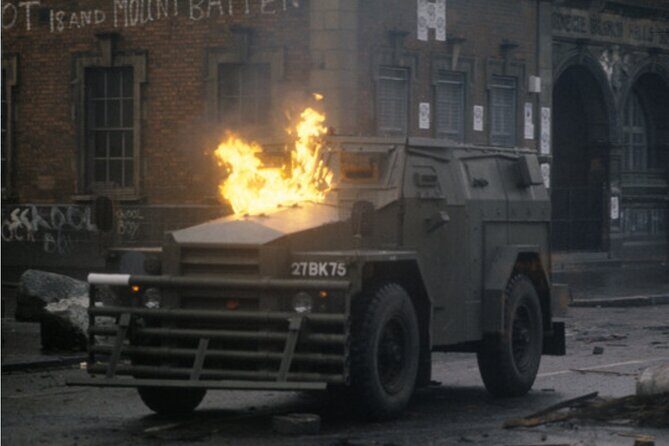
Belfast’s Troubles taught the walls to speak. In this 2-hour black taxi tour, you move fast between key areas and hear how neighborhoods, murals, and barriers connect to the conflict. You also get a smart photo window for places like the Peace Walls, without needing to figure out the routes yourself.
I love how the taxi lets you see more than a walking loop, while still stopping long enough to read the message in the murals. I also love the guidance style, especially with drivers such as Ricky and Sean, who combine local context with clear explanation and answer questions without getting awkward.
One thing to consider: the subject is sensitive, and the audio experience matters. If the taxi loudspeaker is glitchy, it can be hard to hear over a Belfast accent, so I’d ask to test audio early.
In This Review
- Key highlights
- Why a black taxi covers The Troubles better than walking
- Stop 1 on Shankill Road: from 1690 to the end of The Troubles
- The Loyalist murals: how to read them without missing the point
- Stop 2 at the Peace Wall: separation lines that turned permanent
- Bobby Sands on the Falls Road: murals tied to hunger strike history
- The guides: why Ricky, Sean, Brendan, Davy, and others change the whole experience
- Timing and pacing: what fits in 2 hours without feeling rushed
- Price and value: what $101.21 buys you here
- How to get the most from your stops (and your questions)
- Should you book this Belfast Black Taxi Troubles tour?
- FAQ
- How long is the Belfast Original Drivers The Troubles Black Taxi Tour?
- Is this a private tour?
- Do they offer pickup in Belfast?
- What is included in the tour price?
- Which stops do you visit?
- Is admission charged at the stops?
- What if weather is bad or I need to cancel?
Key highlights
- Black taxi transport covers distance you would struggle to reach on foot in only 2 hours
- Shankill Road to the Peace Walls gives you the Loyalist side of the story and the timeline leading to the 1998 agreement
- Peace Walls context explains why the separation lines began and why they lasted
- Falls Road and Bobby Sands connect the murals to real events, including the H Blocks hunger strike
- Local drivers like Ricky, Brendan, Davy, Kevin, Stevie, and Padraic bring first-hand neighborhood perspective
Why a black taxi covers The Troubles better than walking
Belfast is compact, but The Troubles geography is not. A lot of what you need to understand sits in different corners of the city, and the streets between key sites are part of the meaning. That is where the black taxi format earns its keep.
You get an air-conditioned vehicle and a guide who can reposition quickly as the story shifts from one community to another. You are not just looking at murals as street art. You’re seeing them as signals, arguments, memorials, and reminders that shaped everyday life.
The tone also helps. Guides often explain things in a way that is respectful and grounded, not like a lecture. Ricky is described as an Irish historian, while Sean, Brendan, and others are portrayed as locals with direct family or neighborhood connection. That combination matters because the conflict is emotional, and context changes how you interpret what you see on the walls.
Other black taxi & cab tours in Belfast we've reviewed

Stop 1 on Shankill Road: from 1690 to the end of The Troubles
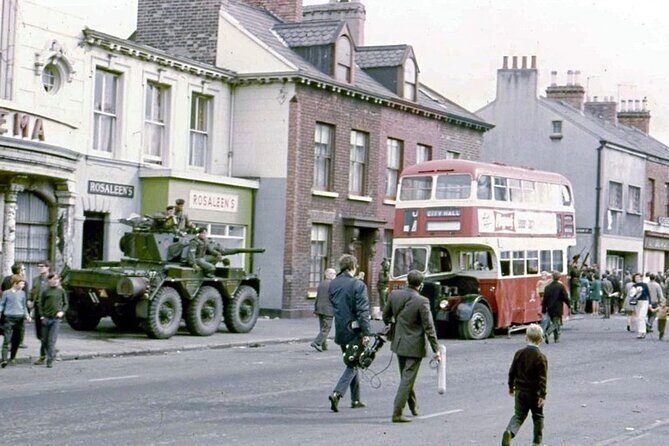
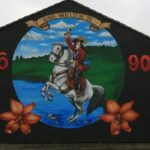
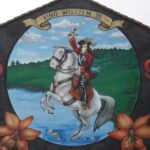
Your first major stop is the Shankill Road area, where the tour starts with a broad historical setup and then narrows into the years of conflict. You begin with context going back to 1690, when King William the III arrived in Ireland to defeat King James the II at the Battle of the Boyne. It is not random trivia. It frames why identities hardened over time, and why communities developed distinct political and cultural narratives.
Then the guide brings it forward to the Troubles period, which you are told began in 1969 and is commonly described as ending when the peace agreement was signed in 1998. In a short tour, that kind of timeline is a big deal because it prevents the murals from floating in midair. You understand what came before and what came after, even when details are necessarily condensed.
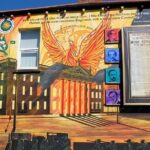
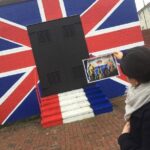
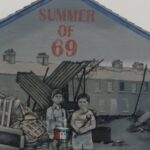
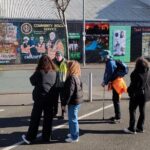
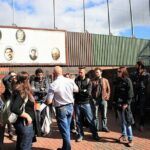
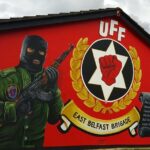
What makes this stop especially useful is the walk-through feel around the Loyalist side. You get guided explanation of loyalist wall murals and what they depict, plus time to take your own photos. The practical angle is simple: you learn what to look for before you lift your phone.
A small consideration: Shankill Road and the wider area can feel intense. If you are sensitive to conflict imagery, pace yourself. The guide usually gives breaks in the flow so you can absorb without being rushed.
The Loyalist murals: how to read them without missing the point
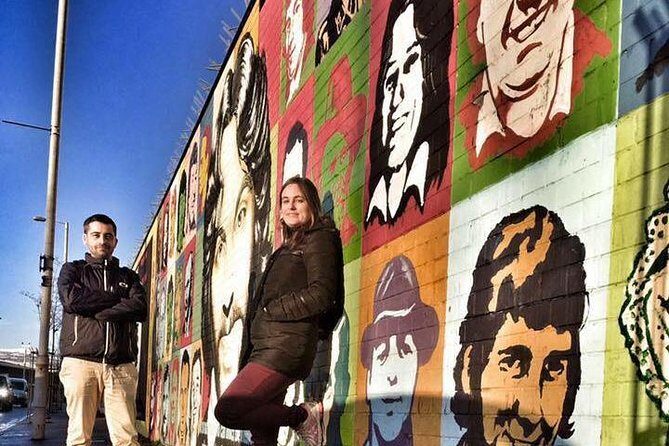
Murals here are not just decoration. They often function like public statements. Some are memorials. Some are political messaging. Some are a way of showing identity under pressure.
When the guide points out what a mural depicts, you start noticing patterns: symbols, names, dates, and slogans. You also begin to connect murals to the neighborhoods they represent, rather than treating them like random street art. That makes the experience feel more grounded, and it also reduces the risk of misreading what you are seeing.
Photo time matters too. Getting permission to photograph and knowing the story behind what you frame means your photos actually mean something later. I’d treat this stop like a set-up for the rest of the tour: learn the visual language first, then the Peace Walls and Bobby Sands mural will click faster.
Stop 2 at the Peace Wall: separation lines that turned permanent
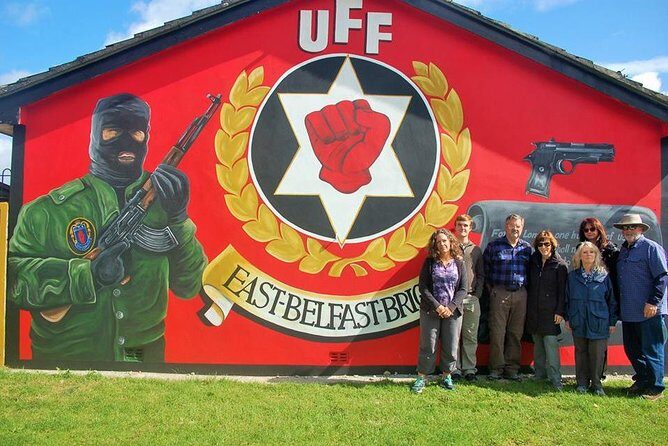
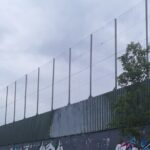
Next you head to the Peace Wall, one of the most recognizable features in Belfast when you’re trying to understand how the city managed division. The basic idea you’ll hear is clear: these walls were designed to separate Catholic (Republicans) and Protestant (Loyalist) populations.
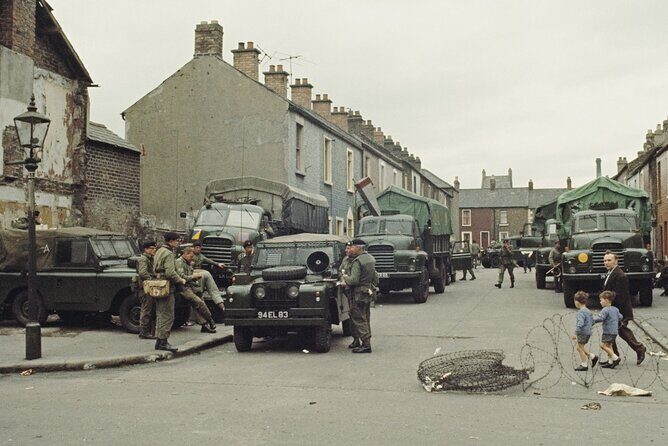
You are also told how the peace lines began. They were first erected following the outbreak of war in 1969, during the period often called The Troubles. They were originally built as temporary structures, intended to last only six months. Because they were effective, they grew taller and longer and were eventually made permanent.
That temporary-to-permanent shift is one of the most sobering parts of the tour. It gives you a reality check: even when people hope for short-term measures, the infrastructure of separation can outlive the moment that justified it.
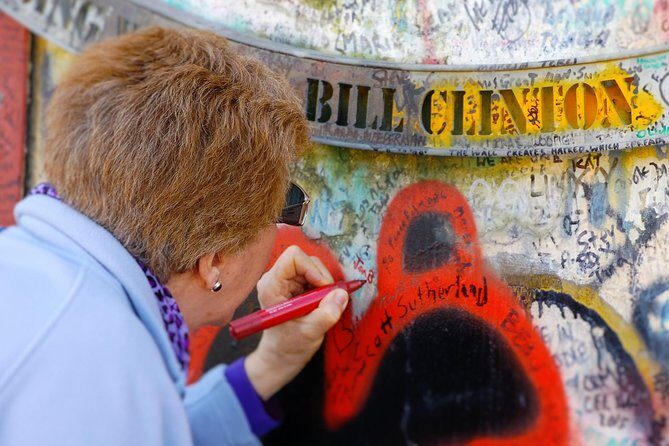
Today, the walls carry art and messages of hope aimed at visitors. It’s not meant to erase the conflict. Instead, it shows how people used the same surfaces to signal endurance, reflection, and desire for a better future.
Photo tip: expect you’ll want a few angles, but also expect the guide may steer you into the safer, more meaningful viewing positions. If you want the best pictures, ask where to stand before you start shooting.
Bobby Sands on the Falls Road: murals tied to hunger strike history
The final stretch shifts to the Falls Road area, where the tour focuses on murals linked to Irish republican history and the Provisional IRA. You’re told this road is the birth place of the Provisional IRA, and the guide explains why specific sections of the road and political murals exist.
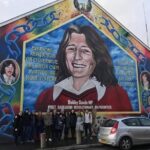
Then you move to the Sinn Fein press office and see the site associated with the famous Bobby Sands mural. This is where the tour turns from neighborhood identity and barriers into a person-centered story connected to prison history.
You hear about the Irish hunger strike in 1981 and the H Blocks prison context linked to Bobby Sands. Even if you’ve read a little before, hearing it in this location helps your brain connect dates to faces and slogans to real-world consequences.
This stop is powerful, but it also depends on your guide’s ability to keep the discussion grounded. That’s why many people rate the experience highly for tone and balance, not just information. When guides create space for questions and keep language respectful, it helps you process the emotional weight without feeling pushed.
If you’re a first-time visitor to Belfast, this is often the moment that turns your understanding from background into understanding with texture.
Other Troubles & political tours we've reviewed in Belfast

The guides: why Ricky, Sean, Brendan, Davy, and others change the whole experience
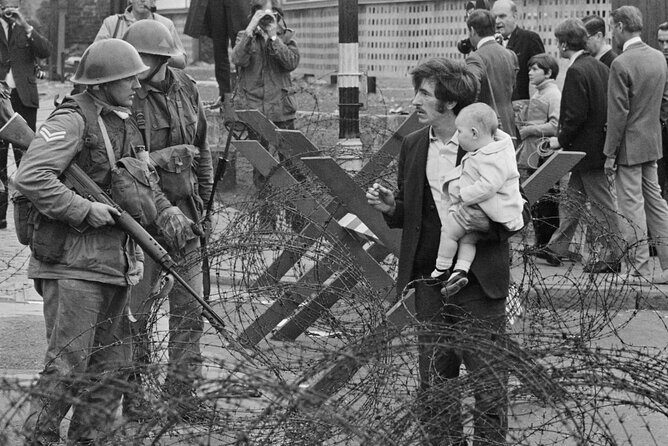
This tour lives or dies by the driver. And here, the driver is not just a driver. Many of the names attached to great experiences are local storytellers.
Ricky is repeatedly described as an Irish historian, with the ability to explain complex history with clarity and context. Sean is mentioned as a local contact who confirms pick up and then guides from lived neighborhood experience. Davy is praised for family experience of growing up during The Troubles. Brendan and Kevin are described as asking questions and sharing history from an Irish perspective.
You’ll also see names like Stevie and Padraic, with emphasis on seeing events from different angles. That can matter because The Troubles is not one clean story. It is competing memories, community narratives, and political claims. A good guide helps you hold multiple truths at once without turning the tour into a shouting match.
Here’s the practical upside for you: a strong guide will pace the conversation. You won’t just be bombarded with dates. You’ll be given enough breathing room to ask what you actually want to know.
Timing and pacing: what fits in 2 hours without feeling rushed
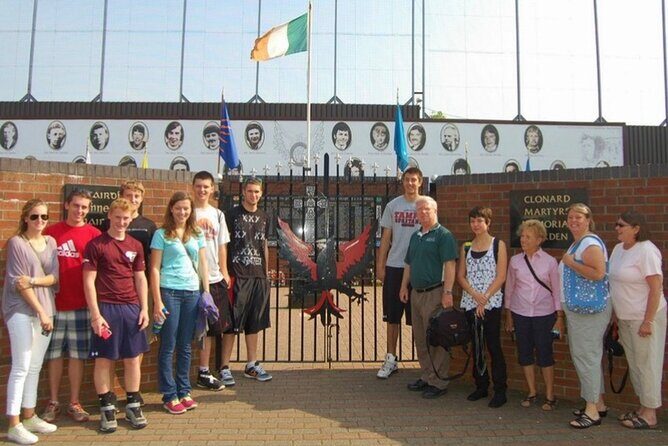
The tour is listed at about 2 hours, and the stops are timed enough to avoid the classic problem of taxi tours that feel like constant driving. You’ll generally spend:
- about 45 minutes at Shankill Road (with explanation and photo time)
- about 30 minutes at the Peace Wall
- about 45 minutes on the Falls Road and Bobby Sands area
That adds up neatly for a structured narrative. It also means you are not stuck at one location for a full hour while the rest of Belfast sits outside your window.
A nice detail is that your guide can slow down if you’re asking good questions. People often praise that the tour does not feel rushed, which tells you the operator values interaction, not just ticking off stops.
One small consideration: if you rely heavily on audio, keep an eye on whether the taxi speaker system is working properly. There’s at least one reported instance where the loudspeaker did not work, which made it hard to hear inside the taxi. Outside, you can often converse normally, but I’d still ask to confirm audio at the start.
Price and value: what $101.21 buys you here
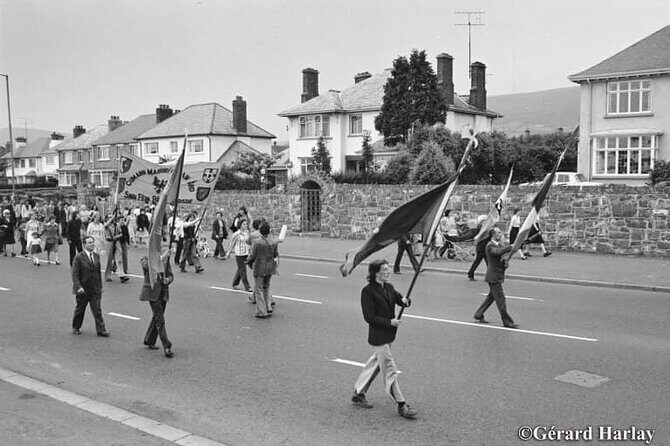
At about $101.21 per person for roughly 2 hours, this is not a casual bargain tour. But it is also not pricing you out of a local experience. Here’s where the value comes from.
First, it’s built around transportation plus guidance. You’re not paying just for a ride. You’re paying for someone who can interpret what you’re seeing in real time.
Second, the stops you’re visiting have free admission tickets noted for the key sites on your route. That means you’re not getting hit with hidden entry costs as you go.
Third, it’s private. The experience is set up so only your group participates, which often makes it easier to ask questions and shape the pace around your interests.
Finally, the taxi format saves time. In Belfast, time is the real currency for first-timers. If you tried to do this as a solo walking and transit plan, you’d spend more energy figuring out logistics than absorbing meaning.
What you’ll need to budget for separately: drinks and snacks, if you decide to stop. The guidance notes indicate British pounds are required for those kinds of on-the-spot purchases, so it’s smart to carry some cash.
How to get the most from your stops (and your questions)
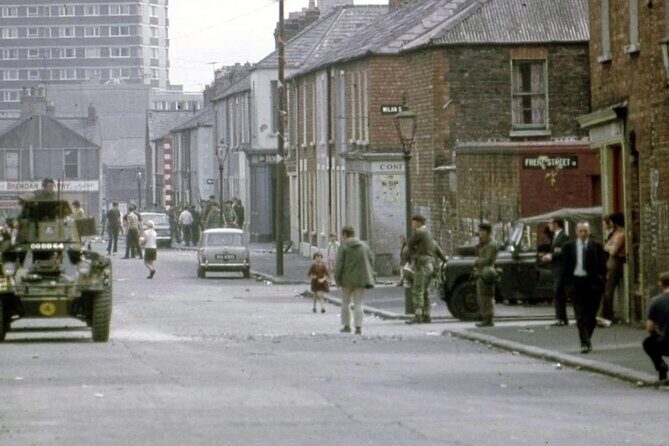
If you want this to feel less like memorizing history and more like understanding Belfast, ask in a way that matches what you see.
A good approach:
- At the murals, ask what symbols or names mean and how people interpret them today.
- At the Peace Wall, ask how temporary measures became permanent and what that did to daily life.
- At the Bobby Sands mural, ask how the hunger strike story shows up in public memory and why it still matters.
Because guides often encourage questions, you’ll usually get thoughtful answers rather than a quick, polite stop. Guides like Ricky and Brendan are specifically praised for being accessible and respectful, even when discussing sensitive topics.
And for photos: don’t just aim for a nice shot. Frame for meaning. If the guide explains a detail, try to capture it so it matches what you learned.
Should you book this Belfast Black Taxi Troubles tour?
I think it’s a strong pick if you’re coming to Belfast for the first time and you want more than postcard sights. If you care about how murals, barriers, and neighborhoods connect to the Troubles, this format helps you connect the dots fast.
It’s also a great choice if you prefer a private setting and you like asking questions. A taxi tour gives you a controlled route and a local interpreter, which is exactly what you need for a subject that can be confusing on your own.
But don’t book it if you want a light, purely entertainment-style city tour. This is about conflict history and political symbolism, so you should be ready for serious material.
My practical recommendation: book it if you’re okay with sensitive themes, bring curiosity, and plan to ask at least a couple of questions. And when you arrive, quickly check the audio situation in the taxi so you don’t miss key parts of the story.
FAQ
How long is the Belfast Original Drivers The Troubles Black Taxi Tour?
The tour is listed as about 2 hours.
Is this a private tour?
Yes. It is described as a private tour/activity, with only your group participating.
Do they offer pickup in Belfast?
Pickup is offered for free at Belfast city centre hotels within 1 km of Belfast City Hall. There is also pickup for all Belfast city centre hotels listed as free (with the stated 1 km area detail).
What is included in the tour price?
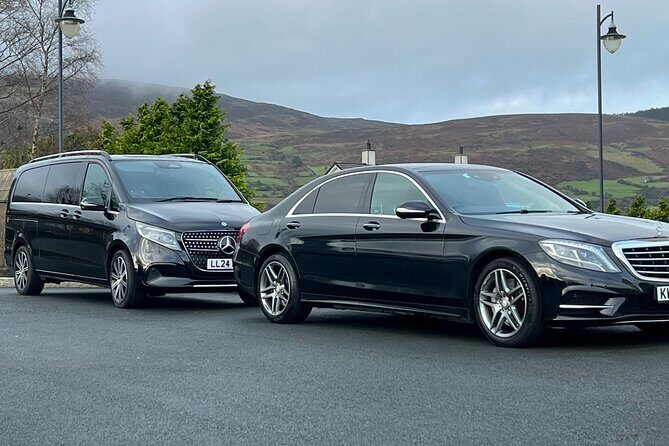
The tour includes an air-conditioned vehicle and a mobile ticket.
Which stops do you visit?
The route includes Shankill Road, the Peace Wall, and the Falls Road area linked to the Bobby Sands mural and the Sinn Fein press office.
Is admission charged at the stops?
The information provided lists admission tickets as free for Shankill Road, the Peace Wall, and the Bobby Sands mural area stops.
What if weather is bad or I need to cancel?
This experience requires good weather. If it is canceled due to poor weather, you’ll be offered another date or a full refund. Free cancellation is available up to 24 hours in advance for a full refund.
You Might Also Enjoy
More Tour Reviews in Belfast
- Titanic Belfast Entrance Ticket: Titanic Visitor Experience Including SS Nomadic
★ 4.5 · 3,698 reviews