REVIEW · BELFAST
2 Hour Private Belfast Taxi Cab Tour of Troubles & Peace walls
Book on Viator →Bookable on Viator
Belfast’s walls talk louder than you expect.
This private Black Taxi tour threads you through Belfast’s mural streets and the giant Peace Walls, with a local guide connecting what you see to the real moments of The Troubles. You’re not just looking at art on a wall. You’re learning why the paint, the slogans, and the borders matter.
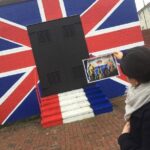
I especially like two things. First, the guide’s lived-in perspective makes the political story feel human, not abstract; guides like Harry, Sean, and Danny explain with patience and real context from growing up there. Second, you get tight, photo-ready stops so you can actually see the neighborhoods from the inside—Bobby Sands on Falls Road, Loyalist murals on Shankill Road, and the scale of the walls themselves.
One consideration: expect emotionally heavy subject matter. Even if you’re curious and open-minded, the conflict is still present in the street visuals, so this is not the sort of tour that feels light or breezy.
In This Review
- Key highlights at a glance
- Why a Black Taxi tour works so well for Belfast
- Price and value for a 2-hour private tour
- Where you meet: City Hall and easy starting points
- Falls Road: Bobby Sands and the mural that stops people in their tracks
- Shankill Road: Loyalism, murals, and learning without gloss
- Peace Walls: scale, symbolism, and a chance to write your own note
- International Mural Wall on Divis Street: how the city talks to the world
- Clonard Monastery: where the secret talks shaped the next chapter
- Bombay Street and the old hanging jail: conflict’s timeline in street form
- What the best guides do (and why names like Harry matter)
- Practical tips to make your 2 hours work
- Who should book this tour
- Should you book the Belfast Troubles & Peace Walls taxi tour?
- FAQ
- How long is the Belfast Black Taxi tour?
- Is this tour private?
- Where does the tour start and end?
- Do you offer pickup from the port or hotels?
- Is the tour offered in English?
- Are admission tickets included for stops like Falls Road Library and Shankill Road?
- Is there a choice of departure time?
- What is the cancellation policy?
Key highlights at a glance
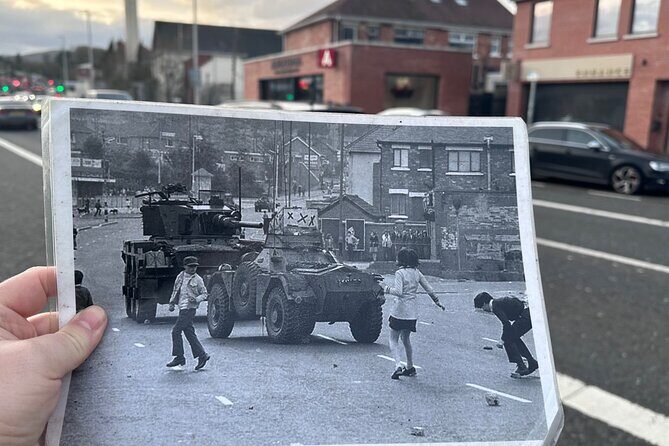
- A true black taxi ride through divided streets, not a quick bus drive-by
- Falls Road + Shankill Road stops that let you compare both sides of the murals
- Peace Wall photo-and-write moment, including the wall’s huge scale claim
- Clonard Monastery context, tied to the secret talks between Gerry Adams and John Hume
- Divis Street International Mural Wall, with 60-plus murals supported by other countries
- Bombay Street and the old hanging-jail era stop for the conflict’s timeline
Why a Black Taxi tour works so well for Belfast
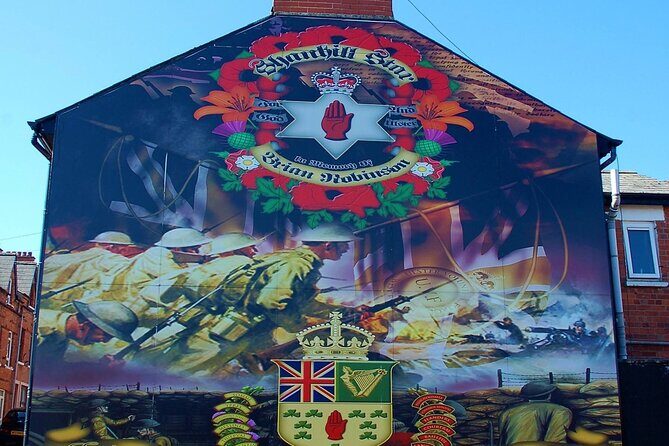
Belfast is one of those places where you understand more from the street than from a map. The taxi format matters because the driver can move you through tight, meaningful areas in a short time, then stop exactly where the story changes.
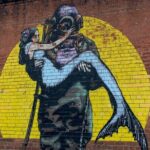
You’ll also get a local voice that turns slogans into people. In Belfast, murals are not decoration. They’re public messaging, memory, and identity, all layered on the same city blocks.
Other black taxi & cab tours in Belfast we've reviewed

Price and value for a 2-hour private tour
At $117.83 per person for about 2 hours, this isn’t a budget group tour. It’s priced for a private vehicle, direct pickup/drop-off, and a guide who can answer questions on the spot.
If you’re traveling with just a small group, the value tends to improve fast, because you’re paying for the experience of going neighborhood-to-neighborhood without waiting for a larger group schedule. With guides like Brendan and David described as patient and story-driven, you’re also paying for interpretation, not just transportation.
Where you meet: City Hall and easy starting points
The meeting point is Belfast City Hall, at Donegall Square North (BT1 5GS). You’ll return there at the end, so your day has a clean start and stop.
Pickup is offered for hotel and port locations. If you’re staying in Belfast city centre, pickup is free within the operator’s city-centre radius; beyond that, there’s a surcharge mentioned based on distance from City Hall. If you’re arriving by cruise, this matters because port logistics can be tricky, and it’s smart to plan extra time on arrival day.
Falls Road: Bobby Sands and the mural that stops people in their tracks
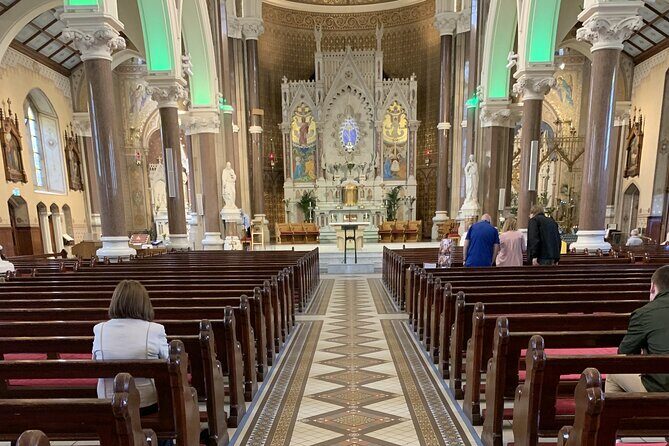
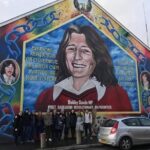
Your first major stop is on Falls Road, at the Falls Road Library area. This is where you’ll get a photo beside the well-known mural of Bobby Sands, tied to the IRA hunger striker and Sinn Féin leadership connections.
This stop is around 25 minutes, and it’s built for street-level viewing more than museum time. Admission tickets are not included here, so if you’re hoping to step inside a site, don’t assume it’s part of the ticket.
What makes Falls Road hit hard is contrast. The street visuals are direct and unmistakable, and they’re meant to be read. Your guide’s job here is to help you connect the images to the people and beliefs behind them, rather than treating them like random street art.
Shankill Road: Loyalism, murals, and learning without gloss
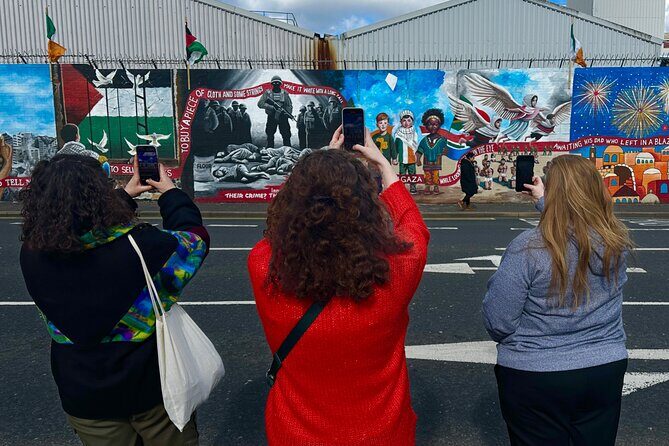
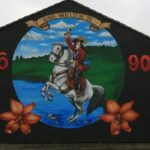
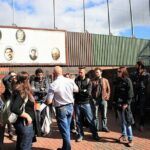
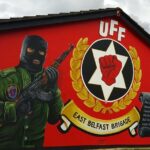
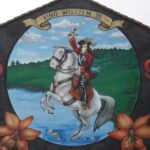
Next you head to Shankill Road, often described as the heart of Loyalism in Belfast’s divided story. Expect another 25-minute stop focused on murals and meaning, with a stop designed to help you see how symbols function in everyday life.
The tour description mentions learning about organizations connected to loyalist history (including the U.V.F and U.F.F) and experiencing the Troubles story from that side. Admission tickets are not included here as well, so the value is in the explanations and the conversations in and around the street murals.
A good guide makes this feel less like a lecture and more like guided observation. People in the guides you might get—like Sean (noted for thoughtful political context) or Joe (mentioned as open and direct)—tend to be the difference between skimming the walls and actually understanding them.
Other Troubles & political tours we've reviewed in Belfast

Peace Walls: scale, symbolism, and a chance to write your own note
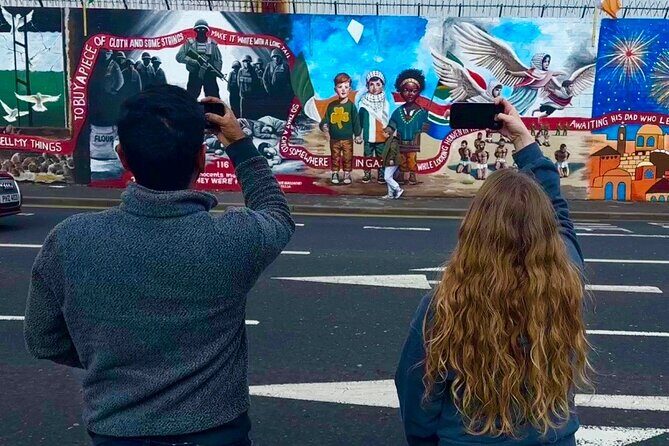
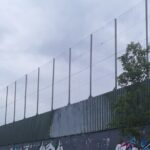
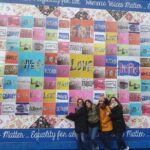
Then comes the heart of the visual division: the Peace Wall. You’ll spend about 15 minutes here, with time to take photos and see the scale up close.
The wall is described as stretching across a divided city and claimed to be five times bigger than the Berlin Wall in height. You’ll hear how those physical barriers became part of everyday life, and why their presence changes how people move, meet, and remember.
One of the most memorable parts is that you can write on a famous peace wall. The guide also references that well-known public figures have left quotes there, including Lady Gaga, Morgan Freeman, and President Clinton.
Important note: the tour description marks admission ticket not included for this stop too, so if you have questions about what’s provided versus what might require a fee, ask your guide on arrival. The writing opportunity is the draw; your time here should feel personal even if the theme is serious.
International Mural Wall on Divis Street: how the city talks to the world
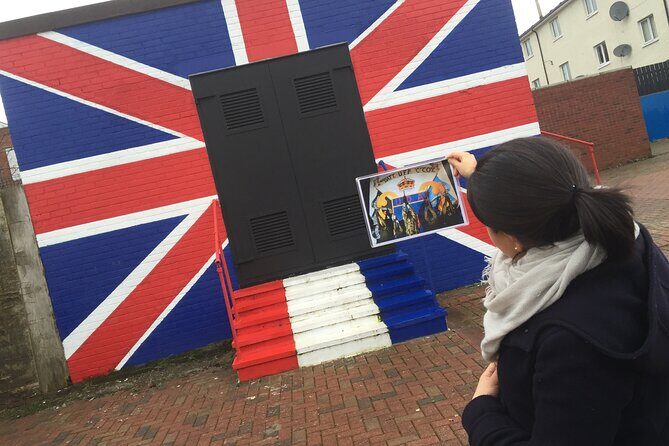
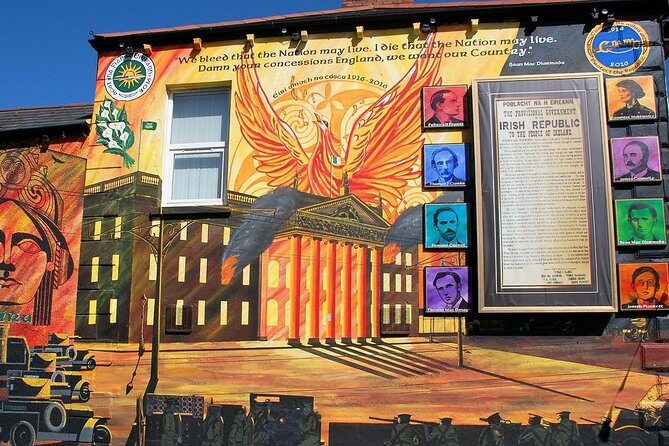
After the Peace Wall, you’ll head to the International Mural Wall on Divis Street. This is a shorter stop (about 10 minutes) but it adds range, because not every mural message is purely local.
The description says the wall has over 60 murals painted by local artists with support from other countries, including mentions of Cuba, Turkey, and Palestine. That matters because it shows Belfast as part of a broader global language of political art.
If you only do the city’s Troubles murals, you can come away thinking the message ended with the conflict. This stop helps you see how murals keep evolving as ideas travel—and as artists turn local memory into wider commentary.
Clonard Monastery: where the secret talks shaped the next chapter
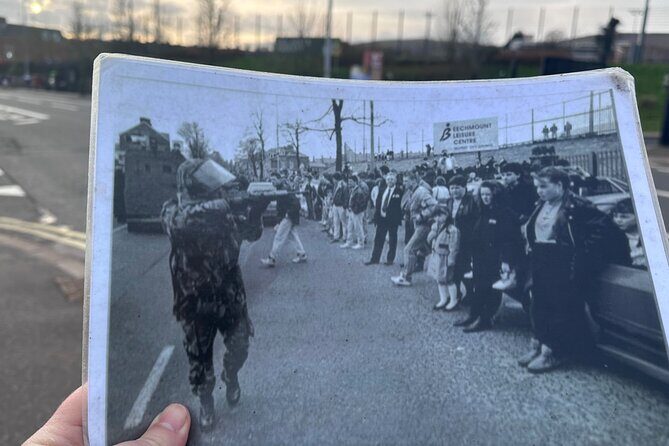
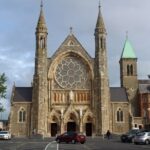
Next you’ll stop at Clonard Monastery on/near the Falls Road area. You’ll get about 10 minutes here, and the big point is the connection to the secret talks between Gerry Adams and John Hume.
That one fact can change the way you read everything else you saw earlier. Before, the murals and walls feel like hard, fixed positions. After this stop, the city starts to make more sense as a place that was negotiating a way forward, even while division stayed visible.
Because this is a short visit, treat it as a meaning marker. Let your guide’s explanation put it into context with the murals you’ve already seen.
Bombay Street and the old hanging jail: conflict’s timeline in street form
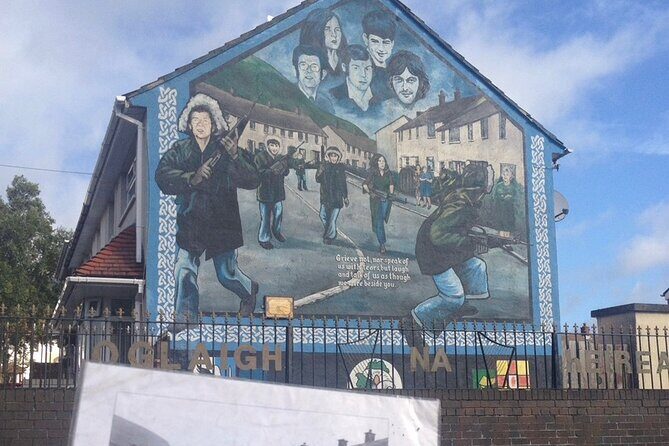
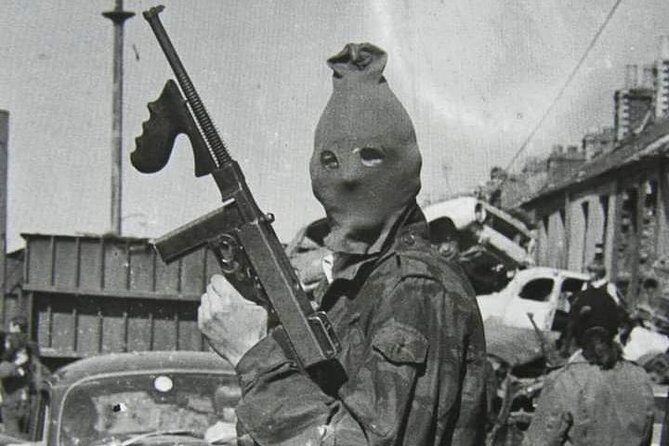
Your next stop is Bombay Street, with about 20 minutes here, and it’s described as a key birthplace location for the Provisional Irish Republican Army after community homes were burned in 1969. The tour also says you’ll hear about 800 years of British/Irish history and how the peace process fits into what they call the end game.
This stop is marked as admission ticket free, which is nice if you’re trying to keep the trip moving without extra fees.
Then there’s another major historical stop described as a building from the 1800s that served as a hanging jail up until the 1960s, housing famous prisoners linked to both loyalist and Republican sides and known for escapes. The exact site name isn’t provided, so don’t be surprised if your guide simply points out the building and tells you what happened there.
This is where the tour can feel most intense, because you’re not only seeing symbols. You’re seeing the physical place where punishment and escapes were part of the conflict’s mechanics.
What the best guides do (and why names like Harry matter)
The tour description makes it clear you’re getting a professional guide, but the reviews highlight something more personal: guides who grew up in Belfast and can answer questions without dodging the hard parts.
For example:
- Harry was praised for being knowledgeable and for turning what you see into a clear learning experience.
- Sean was singled out for explaining the wall’s history and politics, and for taking questions seriously.
- Danny was noted for personal experience of growing up there, which can make the story feel grounded.
- Brendan was praised for explanations with humor and for patience with questions.
- David was described as sharing life-and-history stories in a memorable way.
- Tommy and Joe were also praised for friendliness and openness.
If you want value from this kind of tour, ask questions early and keep them coming. The guide’s job isn’t just to drive. It’s to help you connect what you’re seeing to why people cared enough to paint, build barriers, and argue for years.
Practical tips to make your 2 hours work
This tour moves fast. You’ll be in and out of the car at multiple key points, and a few stops are short on purpose.
- Bring a fully charged phone and extra storage for photos. One review specifically pointed out that you’ll want plenty of room because the walls and murals are camera magnets.
- Dress for weather. The experience says it requires good weather, and it may get rescheduled if conditions are poor.
- Expect to feel something. Sadness, anger, pride, and frustration show up in the visuals. That’s normal. This isn’t just tourism; it’s a walking timeline.
Who should book this tour
Book it if you:
- Want a structured, short way to understand The Troubles through murals and physical division
- Like asking questions and want a private guide who can respond directly
- Are comfortable with sensitive political content and want context, not a sanitized story
You might consider a different style of tour if you:
- Want something strictly light and casual
- Get overwhelmed by heavy, conflict-related material presented through symbols and public messages
Should you book the Belfast Troubles & Peace Walls taxi tour?
Yes, if you’re coming to Belfast to understand the city rather than just pose for photos. This format is good value when you want a guided, local explanation in a tight 2-hour window, plus the chance to see murals and Peace Walls that are hard to interpret on your own.
If you’re only looking for a quick view, you might feel rushed. But if you’re curious, prepared with questions, and ready to take the story seriously, this is one of the best ways to get your bearings fast around Belfast’s divided neighborhoods.
FAQ
How long is the Belfast Black Taxi tour?
It’s about 2 hours.
Is this tour private?
Yes. It’s a private tour/activity, so only your group participates.
Where does the tour start and end?
It starts at Belfast City Hall, Donegall Square N (BT1 5GS), and ends back at the same meeting point.
Do you offer pickup from the port or hotels?
Yes. Hotel/port pickup and drop-off are included.
Is the tour offered in English?
Yes, it’s offered in English.
Are admission tickets included for stops like Falls Road Library and Shankill Road?
No. The tour description lists admission ticket not included for Falls Road Library and Shankill Road. It also lists admission ticket not included for the Peace Wall. Bombay Street is marked as free.
Is there a choice of departure time?
Yes. You can choose a morning or afternoon departure.
What is the cancellation policy?
You can cancel for a full refund up to 24 hours in advance. The experience also requires good weather, and if it’s canceled due to poor weather you’ll be offered a different date or a full refund.
You Might Also Enjoy

More Tour Reviews in Belfast
- Titanic Belfast Entrance Ticket: Titanic Visitor Experience Including SS Nomadic
★ 4.5 · 3,698 reviews