REVIEW · BELFAST
IRA Troubles Conflict Private Tour Museum Graves Murals and Political Analysis
Book on Viator →Operated by Giants Causeway Tours · Bookable on Viator
If you want Belfast to make sense, start here. This private tour links murals, graves, and a private museum with clear political context. It’s intense, but it’s also practical and question-friendly.
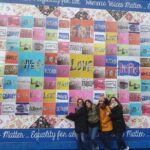
I especially like the up-close Peace Wall moments—yes, you can sign your name and write a message of peace. I also love how the guide uses living neighborhood geography to explain how the conflict shaped everyday life, street by street.
One heads-up: this is very much an Irish Republican lens, so if you want a fully balanced Loyalist argument, you may feel the emphasis is lopsided.
In This Review
- Key takeaways before you go
- A Belfast Troubles Tour That Gets Specific Fast
- How Private Pickup Makes a 3-Hour Route Actually Work
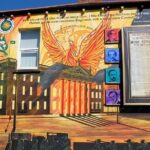
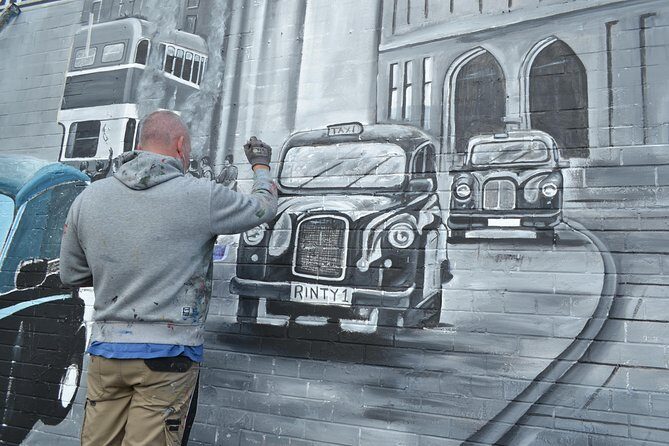
- Falls Road and Divis Street: Murals as Political Language
- Peace Walls: Signing Your Name Where Segregation Still Exists
- Shankill Road Murals and the Loyalist Paramilitary Story
- Clonard Martyrs Memorial Garden: Names, Dates, and the Cost of Conflict
- Milltown Cemetery and Bobby Sands: Hunger Strikes Still Matter
- D Company and the IRA Garden of Remembrance: Strategy Told Through Place
- Eileen Hickey Irish Republican History Museum: Private Access, Real Questions
- Clonard Monastery and Bombay Street 1969: Where Faith Meets Street Violence
- Divis Tower, Ballymurphy Road, and Peace Wall Drives: The “Map View”
- Price and Value: What You’re Paying For
- Who This Tour Suits Best
- Should you book this Belfast Troubles private tour?
- FAQ
- How long is the tour?
- What language is the tour offered in?
- Is this a private tour?
- Is pickup available?
- Are there any extra costs for pickup locations like the cruise port or museums?
- What’s included in the tour price?
- Is the Irish Republican History Museum always open?
- Can I visit both sides of the Peace Wall?
- Can I cancel for a full refund?
Key takeaways before you go
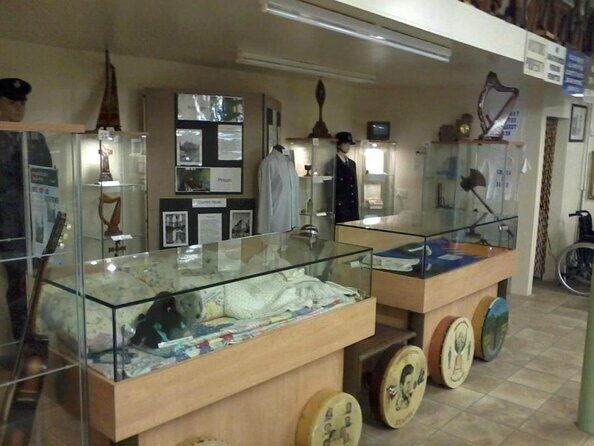
- Private access to an Irish Republican History Museum that’s not always open to the public
- Peace Walls on both sides, including the chance to write a name and message of peace
- Murals you can read like a map, from the Falls Road area to the Shankill Road
- Milltown Cemetery’s Republican plots, including the site connected to Bobby Sands
- A guide who can answer questions, with personal lived experience highlighted in multiple guide profiles
A Belfast Troubles Tour That Gets Specific Fast
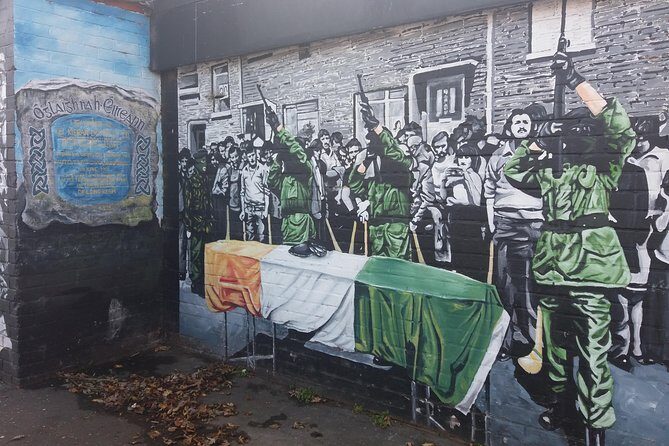
This is not the kind of tour where you glance at a plaque and move on. You’ll be driven through the parts of Belfast where the conflict still shows up—on walls, in street layouts, and in memorial gardens.
The biggest value is the way the tour connects big political ideas to very physical places. You’re shown the boundaries people lived behind, the symbols people painted, and the names people refused to forget. And because it’s private, you can ask follow-ups without getting shooed along.
That said, expect emotional material. Hunger strikes, violence, and commemorations are part of the story you’ll see in several stops.
Other Troubles & political tours we've reviewed in Belfast
How Private Pickup Makes a 3-Hour Route Actually Work
Three hours sounds short for all the places named in the experience. The trick is the format: private transportation with air-conditioned comfort, plus a driver who handles navigation so you can look out the window and listen.
You can also pick a convenient meeting point. There’s free pickup from the Leonardo hotel as the central option, while other locations can carry extra charges. If you’re staying around central Belfast, you’ll likely find it smooth and low-stress.
Because it’s priced per person and can include group discounts, it can be good value when you split cost with a partner or small group. Still, if you’re solo and want a lot of sites covered, $255.50 is a real spend—so you’ll want to be sure this topic matches your trip goals.
Falls Road and Divis Street: Murals as Political Language
You start with the International Mural Wall area near Divis Street. From there you head toward the Falls Road, where your guide frames the conflict from an Irish Republican perspective and brings the story through to the present-day peace process.
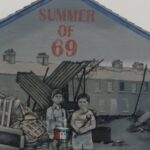
This part matters because it teaches you how to read murals as political messages, not just street art. The murals here are tied to community memory, prison history, and shifting strategy. The guide also points out that many of these images come from people directly connected to the conflict, including ex-prisoners.
You’ll also hear how the Peace Walls created long-term separation. The guide uses Belfast’s geography to show why certain neighborhoods felt like front lines for years.
Peace Walls: Signing Your Name Where Segregation Still Exists
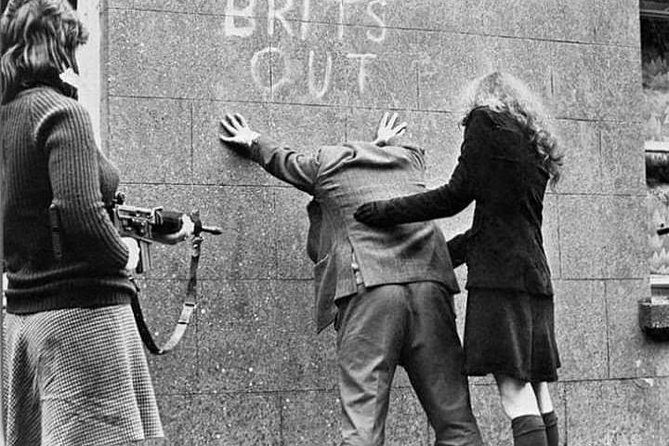
Next comes the Peace Wall stop, where you see separation barriers dividing largely Republican and Nationalist Catholic areas from Loyalist and Unionist Protestant areas.
What you’ll remember most is the feeling of scale and the fact that people still live with these lines. This is one of the rare moments on the tour where you do something active: you’ll visit both sides of the wall, and you can sign your name and write a message of peace.
That small action is more than a souvenir. It turns the tour from observation into participation. You’re standing in the exact place where communities stayed apart, and then you’re adding a personal note—like saying you understand the stakes even if you can’t change the history.
Shankill Road Murals and the Loyalist Paramilitary Story
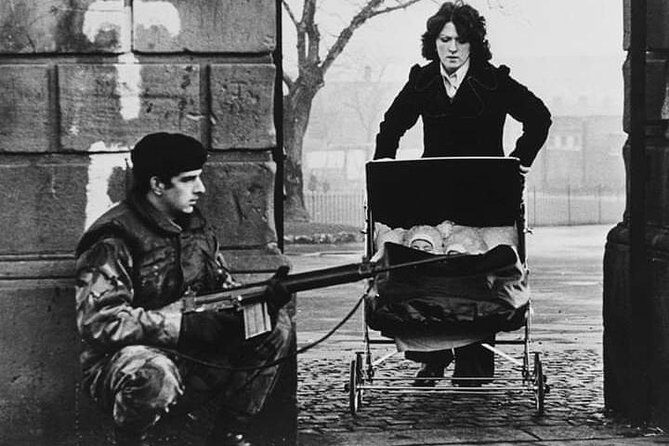
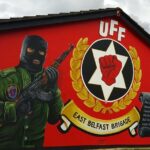
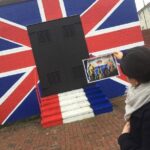
Then you move to the Shankill Road, described as the heartland of Ulster Loyalism. Here the guide focuses on Loyalist development and how groups such as the UDA/UFF and UVF evolved and played roles during the conflict.
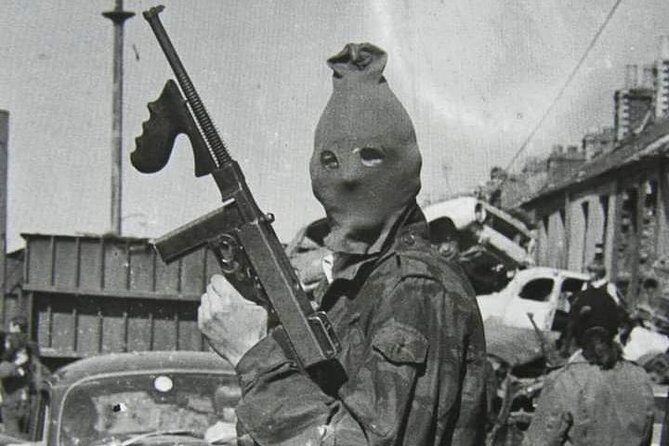
The murals are confrontational and visually heavy, including masked men portrayed with weapons. If your tolerance for blunt political imagery is low, this is where you’ll feel it.
At the same time, the practical benefit is clarity. You’ll understand that this tour isn’t trying to be neutral in tone—it’s trying to be direct about how each side’s narrative formed, using the street art as your visual evidence.
Other murals & street art tours in Belfast

Clonard Martyrs Memorial Garden: Names, Dates, and the Cost of Conflict
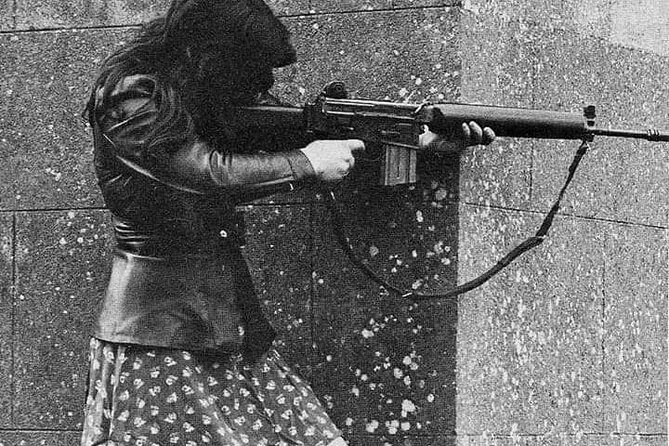
Clonard Martyrs is one of the most structured and specific stops. You’ll visit a memorial garden that commemorates fallen volunteers and also civilians affected in the Greater Clonard area.
This stop stands out because the memorial is built like an archive. You’ll see plaques, inscriptions, benches with names, and references covering long stretches of time from the early 1900s into the 1970s. The garden includes a central yard with a black and white Celtic cross and inscriptions that honor both volunteers and civilians.
If you’re the type of traveler who appreciates the hard facts—who died, when, and who commissioned the memorial—this is your moment. It’s also a reminder that memorial culture here isn’t vague. It’s organized, repeated yearly, and tied to community identity.
Milltown Cemetery and Bobby Sands: Hunger Strikes Still Matter
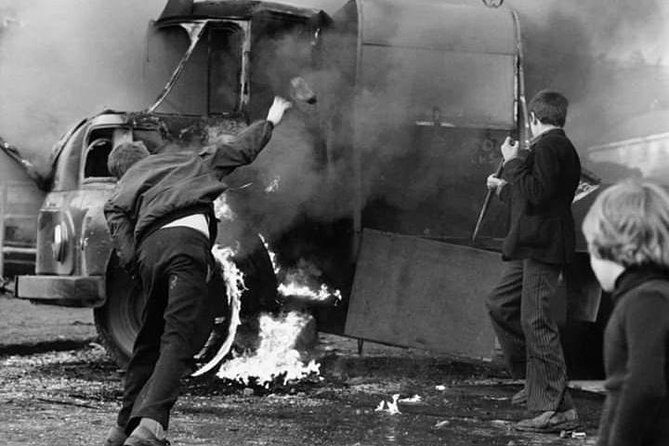
Milltown Cemetery includes the Republican plot, and this is where the story turns from murals and political boundaries to individual lives. The stop includes the burial ground for republican patriot dead, with the Red Hand used to mark the republican graves.
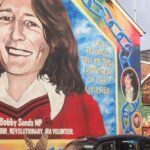
The highlight is the site connected to Robert Bobby Sands, who died on hunger strike after imprisonment at HM Prison Maze. The guide also brings in the broader hunger strike context from 1981, when protests pushed back against the removal of Special Category Status.
This is also where the tour’s emotional weight can spike. If you prefer action over solemnity, you might find the cemetery portion takes more time than you’d expect—there’s a small complaint in the information provided about time spent at the cemetery. If you’re sensitive, plan for a quieter mood afterward.
D Company and the IRA Garden of Remembrance: Strategy Told Through Place
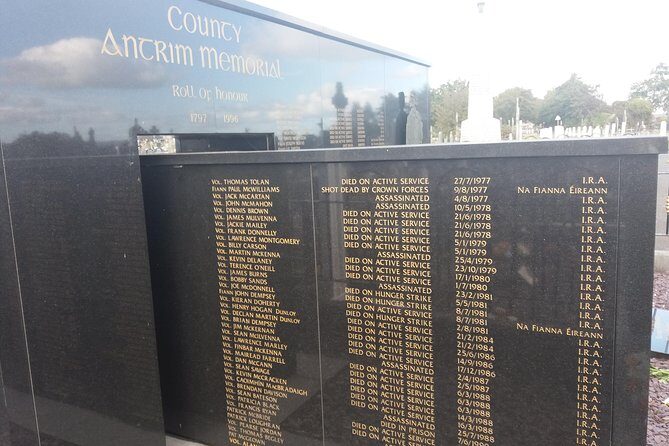
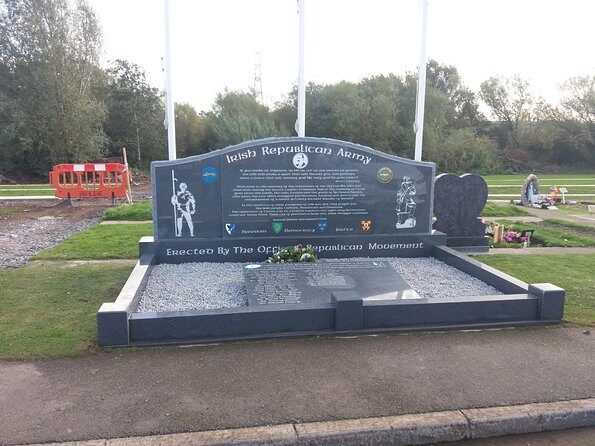
After Milltown, the tour shifts back toward “how the conflict worked” by visiting a Bobby Sands mural area and the 2nd Battalion IRA Garden of Remembrance, also known as D Company or The Dogs.
This stop focuses on the idea of a long guerrilla war against the British presence. The guide also references specific events in the Falls Road area, including the Battle of the Falls in 1970 and the Falls Road Massacre in 1920.
You’ll also be shown imagery connected to hunger strikers—12 of the 22 are referenced as part of what you’ll see here. Even if you already know the hunger strike facts, seeing how they’re represented in place helps the story stick.
Eileen Hickey Irish Republican History Museum: Private Access, Real Questions
One of the biggest practical perks is time inside a museum that’s not usually open to the general public in the same way. The Irish Republican History Museum—listed as the Eileen Hickey Irish Republican History Museum—sits at the center of this narrative.
Your guide is an Irish history specialist, and you can meet ex-prisoners of war who share experiences of the conflict. That’s not a typical “walk-through” museum vibe. It’s more like a guided conversation where objects connect to lived memory.
There’s also a key scheduling detail to know: the museum only opens 10-2 Tuesday through Saturday. If it’s closed on your day, the experience notes that the guide will show you around Ballymurphy instead. So check your travel dates and build in flexibility.
Clonard Monastery and Bombay Street 1969: Where Faith Meets Street Violence
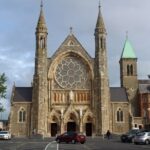
Clonard Monastery connects religion and community life to the conflict’s early days. The tour explains Clonard’s position in an interface area between the Falls Road and Shankill Road districts.
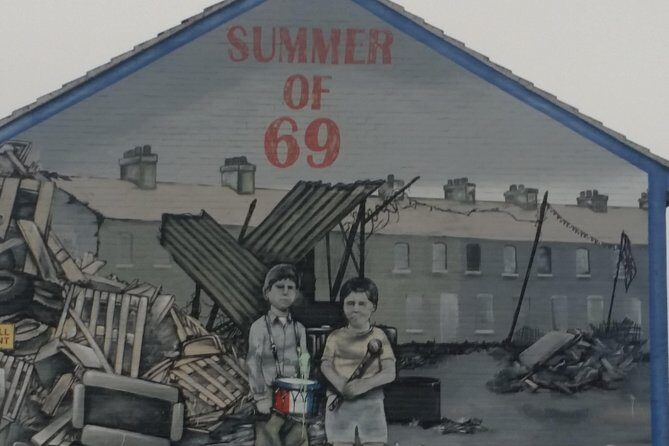
A major story here is the attacks starting 14 August 1969, when loyalist mobs from the Shankill Road launched attacks on houses owned by Catholics around Bombay Street and Cupar Street. Residents were forced to flee, and many houses—including the whole of Bombay Street—were burned.
Clonard’s priests are presented as active from the start in attempting to safeguard local residents. The tour names two clergy associated with peace work who lived there: Frs. Alec Reid and Gerry Reynolds.
You’ll also see how a church can function as more than a place of worship—here it becomes a community anchor in a zone where people felt trapped between sides.
Divis Tower, Ballymurphy Road, and Peace Wall Drives: The “Map View”
The latter part of the tour leans into views and fast photo-friendly stops: Divis Tower, Ballymurphy Road, Divis, and a drive-by look at the biggest Peace Wall.
At Divis Tower, you’ll get an elevated view over the Falls Republican stronghold, including references to a British Army snipers nest and spy post until 2005. You’ll also see names and murals connected to the first two victims of the Troubles.
In Ballymurphy Road, the focus turns to murals and neighborhood identity, including An Gorta Mor and local volunteers depicted in street art. The guide also references Jim Bryson and his Big Louie machine gun, tied to how it was used to terrify the British Army.
Then you’ll stop for the Welcome Wall area in Divis, plus a drive-by at the biggest Peace Wall in Belfast. Some of these are shorter stops, but they’re useful because they give you perspective on how wide separation is—and why it lasts.
Price and Value: What You’re Paying For
At $255.50 per person for about three hours, this isn’t a bargain-style history walk. You’re paying for three things that matter:
- Depth over speed, with a lot of politically charged sites packed into a tight schedule
- Private access to a museum tied to this narrative and the chance to ask questions
- Transportation and time saved, since the driver handles navigation and the route is built for maximum coverage
It can also be good value if you’re traveling as a couple or small group, since you’re sharing the same premium guide access.
The main “value risk” isn’t price—it’s fit. If you want a tour that treats the conflict as a single shared story from multiple angles, this one may feel one-directional. Even within the provided tour info, there’s a note from a lower-rating review that the Loyalist arguments weren’t emphasized. So you should book this with your expectations set: this experience centers Irish Republican history and analysis.
Who This Tour Suits Best
This is best for you if:
- You want to understand how the Troubles shaped Belfast, not just view landmarks
- You’re comfortable with political and memorial content
- You like asking questions and getting answers in real time
- You want a guided explanation tied to neighborhoods like the Falls Road, Shankill Road, Divis, and Ballymurphy
It may not be ideal if:
- You’re expecting a balanced two-sided debate tour only
- You have low tolerance for heavy subject matter at multiple stops
Should you book this Belfast Troubles private tour?
If your goal is to go beyond the postcard version of Belfast and grasp why the city still looks divided, I think this is a strong choice. The mix of Peace Walls, murals, Milltown Cemetery, and the Irish Republican History Museum gives you a full set of anchors: visual, political, personal, and memorial.
Book it if you want a sharp, direct Republican narrative with plenty of chances to ask questions. Skip it if you need a strictly even-handed Loyalist-and-British framing as the main event.
If you can, pick your day carefully so the museum opening window (10-2 Tuesday to Saturday) lines up with your plans. That single detail can change how complete your experience feels.
FAQ
How long is the tour?
It runs about 3 hours.
What language is the tour offered in?
The tour is offered in English.
Is this a private tour?
Yes. It’s a private tour/activity, so only your group participates.
Is pickup available?
Pickup is offered. Free pickup is available from the Leonardo hotel, with extra charges for other locations.
Are there any extra costs for pickup locations like the cruise port or museums?
Yes. Cruise ship pickup and drop-off is listed as an extra charge paid directly to your guide. Some other pickup/drop-off points like Queen’s University, the Botanical Gardens, and the Ulster Museum also have extra charges.
What’s included in the tour price?
Private transportation, air-conditioned vehicle, round-trip transfer from your hotel (with included details), admission tickets for stops, and multiple listed experiences such as Peace Wall signing, Milltown Cemetery, and visits connected to Bobby Sands.
Is the Irish Republican History Museum always open?
No. The museum only opens 10-2 Tuesday through Saturday. If it’s closed, the experience notes that the guide will show you around Ballymurphy instead.
Can I visit both sides of the Peace Wall?
Yes. The tour describes visiting both sides and includes signing your name and writing a message of peace.
Can I cancel for a full refund?
Yes. Free cancellation is available up to 24 hours in advance for a full refund. Canceling within 24 hours does not refund the amount paid.
You Might Also Enjoy

More Tour Reviews in Belfast
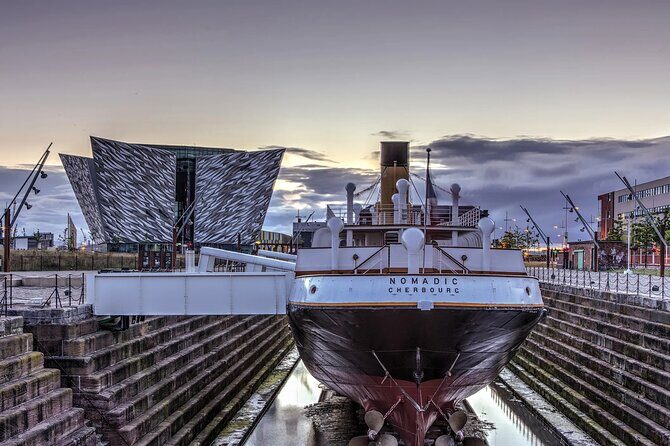
- Titanic Belfast Entrance Ticket: Titanic Visitor Experience Including SS Nomadic
★ 4.5 · 3,698 reviews