REVIEW · BELFAST
2 Hour Terror and Mural History Belfast taxi Private Tour
Book on Viator →Bookable on Viator
That street art looks like history—because it is. In two hours, this Belfast taxi tour strings together the key Troubles-era walls, murals, and memorial sites so you can connect names, places, and ideas fast. You’ll also get a balanced, fact-forward guide style that helps the whole picture make sense, even when the topic is tough.
I especially like that pickup is built in around Belfast City Hall, and that the tour uses a mobile ticket for an easy start. I also like the pace: short stops across West and North Belfast keep it moving without turning the experience into one long lecture.
One drawback to plan for: the subject matter is heavy. Even with a balanced approach, you’ll spend real time at sites tied to imprisonment, hunger strikes, and sectarian violence—so come prepared for emotional weight.
In This Review
- Key highlights you shouldn’t miss
- A 2-Hour Taxi Plan Through Belfast’s Troubles Sites
- Peace Walls: Nightly Gates, Murals, and Why They Exist
- Divis Flats and Fort Apache: Watching a Community Under Pressure
- Falls Road Murals: From International Wall to the Bobby Sands Mural
- Clonard Monastery and Martyrs Garden: Peace-Making in Real Places
- Crumlin Road Gaol: Trials, Hunger Strikes, and the Courthouse Tunnel
- Bombay Street and the Birthplace of the Provisional IRA
- Shankill Road Murals: Loyalist Perspective on the Same War
- Price and Time: What You’re Paying For (and What You’re Not)
- Who This Tour Fits Best—and Who Might Want Something Lighter
- Should You Book This Belfast Terror and Mural History Tour?
- FAQ
- Where does the tour start?
- Do they offer pickup?
- Can cruise ship passengers join?
- How long is the tour?
- What language is the tour in?
- Is there an admission fee included?
- How much does it cost?
- Do I need cash for parking?
- How big is the group?
- What’s the cancellation policy?
- FAQ
- Is a mobile ticket used?
- Are service animals allowed?
Key highlights you shouldn’t miss
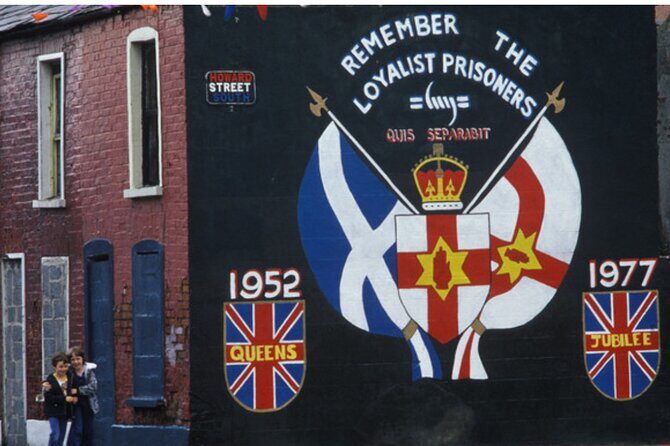
- Peace Walls with ticketed entry: See why the barriers were built, and why some gates still close at night.
- Divis Flats and Fort Apache: Understand how a rooftop British Army base shaped day-to-day life.
- Falls Road mural run: From the International Mural Wall to the Bobby Sands mural, it’s a fast history lesson on street-level symbolism.
- Clonard Monastery and the Good Friday Agreement link: Follow the peace-process story through Father Alec Reid’s role.
- Crumlin Road Gaol and Courthouse: A grim look at political and criminal detention, plus the jail-courthouse tunnel symbolism.
- Both sides of the Troubles in one route: From nationalist memorial sites to loyalist mural areas on Shankill Road.
A 2-Hour Taxi Plan Through Belfast’s Troubles Sites
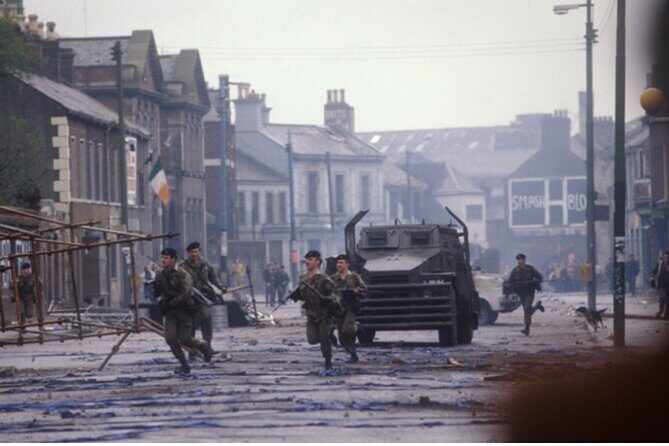
This is a 2-hour taxi tour that works like a route map for the Troubles. You’re not just stopping for photos; you’re moving between places where politics, religion, and daily survival collided. The “terror and mural history” angle makes sense here: murals are the city’s public memory, and the taxi helps you cover a lot without wasting time.
The group size is capped at 25, so you’re usually dealing with a manageable crowd rather than a big bus crush. It runs in English, and the tour uses a mobile ticket, which is handy on a short schedule.
Timing is tight by design. With multiple stops in West and North Belfast, you’ll want to keep your questions short and focused so the guide can hit the important context at each location.
Other Troubles & political tours we've reviewed in Belfast
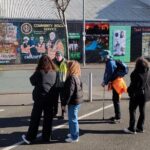
Peace Walls: Nightly Gates, Murals, and Why They Exist
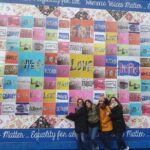
Your first stop is Belfast’s Peace Walls, the long barriers erected during the Troubles. Built in the late 1960s to separate Protestant and Catholic neighborhoods, they were meant to reduce sectarian violence. The murals and graffiti that cover them today aren’t just decoration; they’re commentary—what people want others to remember, what they refuse to forget.
What makes this stop especially useful is that it frames the Peace Walls as a story with an ending still in progress. Even though the war has changed form, the walls remain a physical reminder of division, and in some areas gates still close nightly.
You’ll also get 20 minutes with the Peace Wall admission ticket included. That matters because it keeps this stop from being a quick “walk-by.” You’re there long enough to take in the visuals and understand why the city still treats these walls as more than old structures.
Possible consideration: this is one of the most emotionally direct stops. If you’re the type who needs to mentally decompress after hard topics, build that into your overall day.
Divis Flats and Fort Apache: Watching a Community Under Pressure
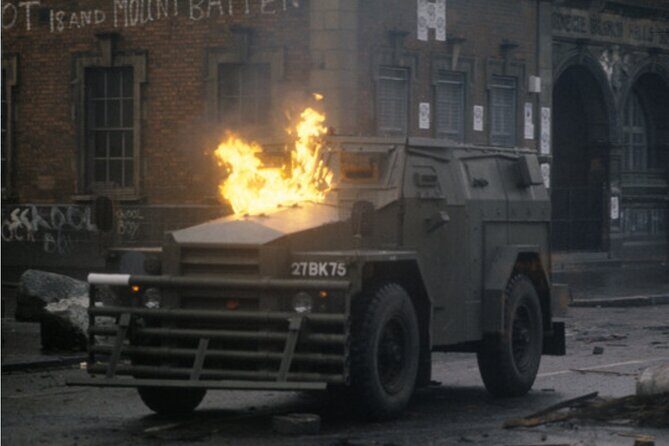
Next comes Divis Flats (in West Belfast). These high-rise buildings were constructed in the late 1960s and became a flashpoint for sectarian violence and civil unrest. The area was predominantly Catholic, and British security forces were a major presence—so the tension wasn’t abstract. It lived in the neighborhood.
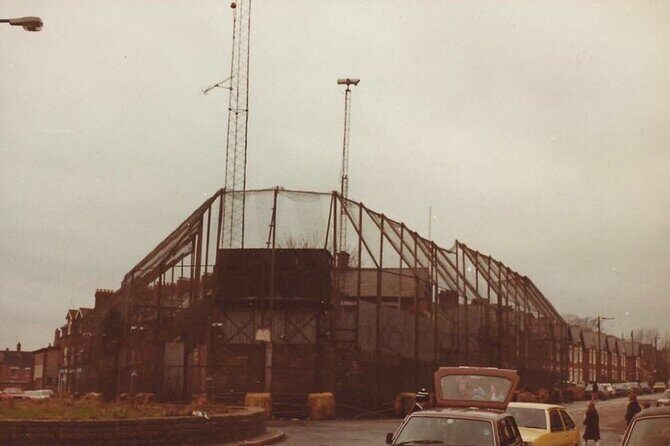
The key detail here is the British Army base established on the rooftop of the tallest building, nicknamed Fort Apache. That rooftop position gave a strategic vantage point, but it also turned the housing complex into a visible symbol of surveillance and conflict.
Now move past the Troubles and you get a different layer: Divis Flats today are presented as a testament to resilience. A guided narrative helps you see how residents survived the pressure while the city’s political situation evolved around them.
You’ll spend about 10 minutes, and this stop’s admission is free, so you’re using that time to understand the story rather than paying to access it.
One practical note: because this is a condensed route, you’ll want to listen carefully on the Divis story. It’s short, but it’s packed with cause-and-effect.
Falls Road Murals: From International Wall to the Bobby Sands Mural
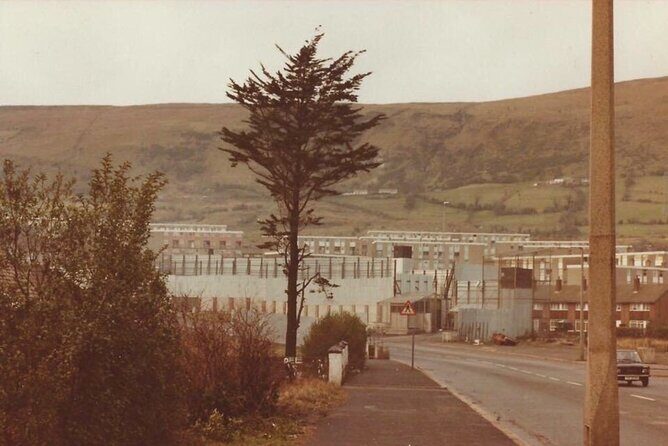
Falls Road is where Belfast turns street art into public history. You’ll cover several mural-linked stops on this side of the city, each with its own tone.
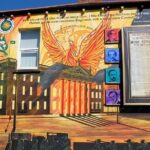
First is the International Mural Wall on Divis Street. Established in the 1980s, it’s described as an evolving canvas that talks about both local and global issues. The themes connect local events in the Troubles to broader human-rights struggles—so it doesn’t just tell Belfast’s story. It places Belfast’s story in a wider political conversation.
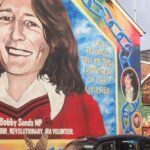
Then you’ll head to the Bobby Sands mural on Falls Road. This is one of the most iconic and emotionally loaded murals you’ll see on the route. It commemorates Bobby Sands, a member of the Provisional Irish Republican Army (IRA) who died during a hunger strike in 1981. He was also elected as a Member of Parliament during his strike, which is part of why his name carries weight far beyond local politics.
During the Troubles, the IRA was deeply active in the Falls Road area. This mural isn’t just a memorial; it’s presented as a symbol of the quest for freedom and justice from that community’s perspective.
Both these stops are about 10 minutes each, and both are listed as free admission. That makes them perfect for a short taxi route: you get the meaning fast, without turning the day into an all-day museum visit.
Clonard Monastery and Martyrs Garden: Peace-Making in Real Places
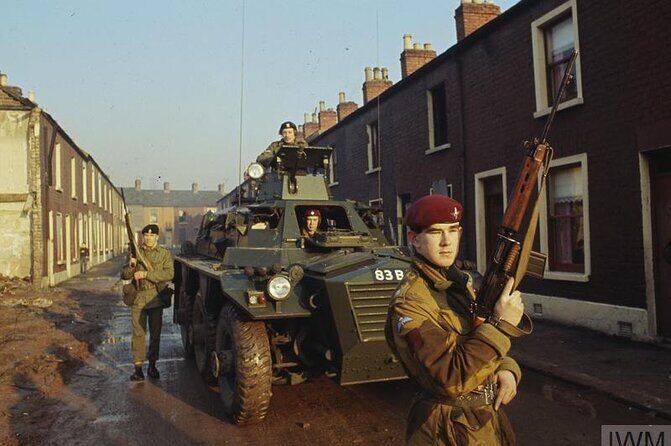
After the mural intensity, the route shifts toward the peace process at Clonard Monastery. Established in 1896, the monastery is red-brick and historically significant, but the real draw is its role during the Troubles. Priests from Clonard—especially Father Alec Reid—played a behind-the-scenes part in mediating between conflicting parties. The story here is tied directly to the Good Friday Agreement in 1998, even if you’re not a politics nerd. It’s the kind of context that makes modern headlines less abstract.
This stop gives you a quieter pace. You’re not meant to rush. You’re meant to understand how reconciliation efforts required relationships and credibility, not just speeches.
Next to it is the Clonard Martyrs Remembrance Garden, a reflective space that commemorates local lives lost during the Troubles. The garden has plaques and memorials, framed by greenery, and it’s built to encourage contemplation—how conflict breaks communities and how people carry memory forward.
This garden stop is longer at 15 minutes, and it’s free. If you’re the type who absorbs information better when you slow down, this is your chance.
Other murals & street art tours in Belfast

Crumlin Road Gaol: Trials, Hunger Strikes, and the Courthouse Tunnel
Then the tone turns even more stark at Crumlin Road Gaol and Courthouse. Built in the 19th century, it housed political and criminal prisoners, including members of the IRA and loyalist paramilitaries. That mix matters because it shows how the conflict blurred lines between categories people want to keep separate.
During the Troubles, it’s presented as a tense site marked by escapes, hunger strikes, and riots. The adjoining Courthouse saw high-profile trials connected to the conflict, and the tunnel connecting the jail to the courthouse is described as symbolizing the direct path many prisoners took to face justice.
Today, the restored site offers guided tours that focus on what detention meant in real life and how it affected Belfast society more broadly.
You’ll have about 10 minutes, and admission is listed as free. That’s enough time to get the key points and make sense of the larger Troubles story—just don’t expect an hour-long deep archive experience here.
If the gaol topic is tough for you, consider treating it like a “read the chapter, then move on” stop rather than something to emotionally process on-site.
Bombay Street and the Birthplace of the Provisional IRA
Back in West Belfast, the route reaches Bombay Street on the Peace Lines, described as the birthplace of the Provisional Irish Republican Army in 1969.
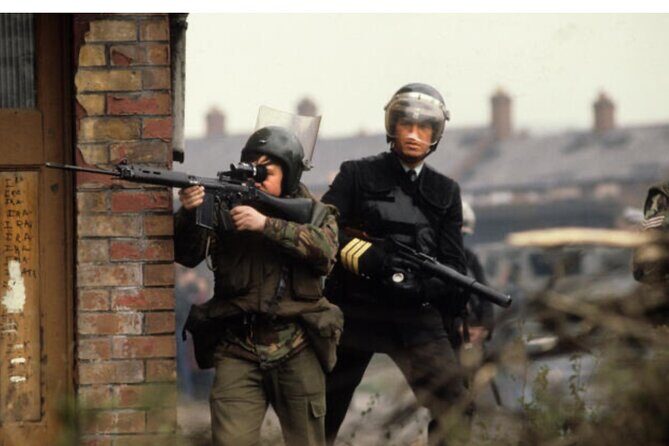
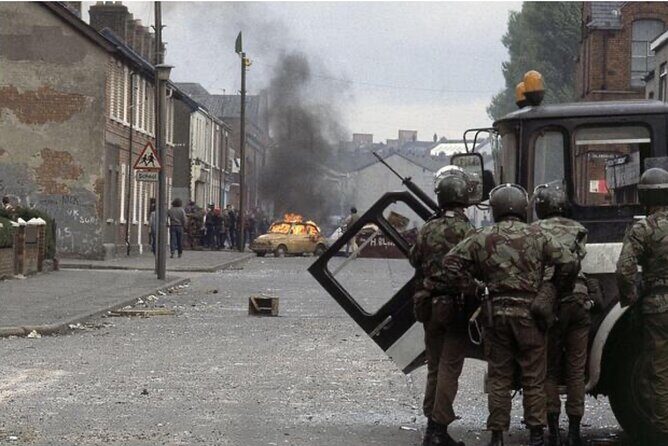
Here’s what makes this stop so important for understanding the turning point in the Troubles: in August 1969, intense sectarian riots led to widespread destruction of homes on Bombay Street. The violence displaced many Catholic families who felt abandoned by the state and existing IRA structures.
Then a faction broke away to form the Provisional IRA, with the stated goal of defending nationalist communities and pursuing Irish reunification through armed resistance. The aftermath is framed as influencing the Troubles trajectory going forward.
You’ll spend about 15 minutes, and admission is free. The route includes memorials and restored homes, so you can see how the area holds memory in physical form.
This stop is a good one if you want cause-and-effect, because it connects neighborhood violence to political reorganization quickly.
Shankill Road Murals: Loyalist Perspective on the Same War
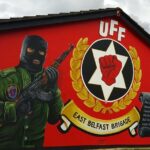
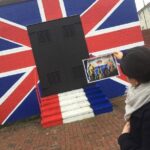
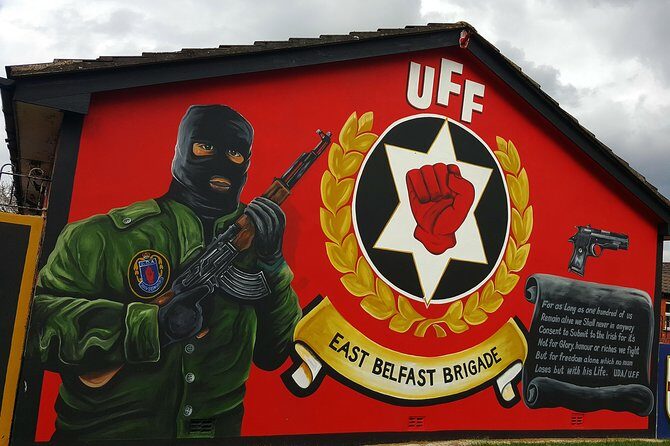
To keep the experience balanced, the route moves from nationalist-coded memorial stops to Shankill Road, tied to loyalist paramilitary history. It’s listed as the birthplace of the Ulster Volunteer Force (UVF) and the Ulster Freedom Fighters (UFF).
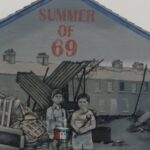
The UVF is described as formed in 1966, while the UFF is described as established in 1973 as a cover name for the Ulster Defence Association (UDA). The murals along Shankill Road then become your visual guide to loyalist perspective: key figures, events, and ideals connected to the loyalist cause.
Guided context is what helps here. Without it, murals can feel like slogans. With it, you can see what each image is claiming and why the community uses public art as historical evidence.
This stop runs about 20 minutes and is free admission. It’s also one of the longest stops on the second half of the route, which suggests it’s meant to carry real weight.
Price and Time: What You’re Paying For (and What You’re Not)
At $190.59 per person for about 2 hours, this isn’t a budget filler—and you shouldn’t treat it like one. The value comes from combining several things that would otherwise cost time and planning: a taxi route, pickup option near Belfast City Hall, and guided explanations across multiple Troubles-era sites.
Also, parking fees are included, which sounds small until you’re trying to avoid hassle in a city where parking isn’t always simple. The Peace Walls admission ticket is included, while the other listed stops are shown as free admission—so you’re not paying extra at every checkpoint just to keep moving.
This is best understood as a focused orientation tour. You’re not getting a full day of research across every street. Instead, you’re getting a curated sequence designed to help you build a working map of Belfast’s conflict story through visible reminders.
Who This Tour Fits Best—and Who Might Want Something Lighter
This taxi tour is ideal if you want a tight route that covers both murals and memorial sites, and you like learning through place-based storytelling. It’s also a strong fit if you care about modern politics, identity, and how public art keeps history in circulation.
It’s less ideal if you prefer upbeat sightseeing, because several stops are directly tied to death, detention, and sectarian violence. You should be comfortable with that tone before booking.
Because it supports service animals and is marked as suitable for most travelers, it’s generally accessible within the short time frame. Still, you’ll be getting in and out for brief visits at each stop, so plan for short periods on your feet.
Should You Book This Belfast Terror and Mural History Tour?
If you want to understand Belfast fast—through Peace Walls, Falls Road murals, Clonard’s peace-process connections, and the gaol—book it. The time is tight, but the route is built to connect stories rather than scatter them, and you’ll get context in English from a guide who aims for an equal, balanced view of the conflict.
If you’re sensitive to heavy subject matter, it might feel like too much in one sitting. But if you can handle serious history with respect, this is a smart way to see the city’s visible memory without spending days trying to assemble the route yourself.
FAQ
Where does the tour start?
The tour starts at Leonardo Hotel Belfast, Great Victoria St, Belfast BT1 6DY, UK.
Do they offer pickup?
Yes. They offer pickup around Belfast City Hall front gates, with a free pick up within a 1km radius. You’ll want to let them know if you’d like to be picked up at the City Hall front gates.
Can cruise ship passengers join?
They don’t pick up from cruise ships because it’s several miles outside Belfast city centre. The cruise ship shuttle bus leaves outside Visit Belfast, which is across the street from City Hall.
How long is the tour?
It’s listed as approximately 2 hours.
What language is the tour in?
The tour is offered in English.
Is there an admission fee included?
Peace Wall entry is included at Stop 1. The other listed stops are marked as free admission in the provided details.
How much does it cost?
The price is listed as $190.59 per person.
Do I need cash for parking?
Parking fees are included.
How big is the group?
The tour has a maximum of 25 travelers.
What’s the cancellation policy?
Free cancellation is available. You can cancel up to 24 hours in advance for a full refund; canceling less than 24 hours before start time is not refunded. Cut-off times follow the local time for the experience.
FAQ
Is a mobile ticket used?
Yes, a mobile ticket is included.
Are service animals allowed?
Yes, service animals are allowed.
You Might Also Enjoy

More Tour Reviews in Belfast
- Titanic Belfast Entrance Ticket: Titanic Visitor Experience Including SS Nomadic
★ 4.5 · 3,698 reviews