REVIEW · BELFAST
Belfast Famous Black Taxi Tour Political Murals & Peace Wall 2 Hr
Book on Viator →Bookable on Viator
Belfast’s street art has real teeth. This 2-hour black taxi ride takes you through political murals, the Peace Wall, and both sides of the city’s The Troubles story, with your driver narrating from the ground level. I love the number of stops built for photo moments, and I love how the tour keeps moving so you see neighborhoods—not just painted walls.
The main consideration is that this is not a casual hop-on sightseeing loop. Your driver may guide the conversation carefully around sensitive topics, and the story can feel sobering, even when it ends on hope.
In This Review
- Key things to know before you go
- Why a black taxi tour is the right way to see Belfast murals
- Price and time: what you’re really paying for
- Pickup in Belfast City Hall area: easy start, clear boundaries
- Stop-by-stop: how the route builds the story of Belfast
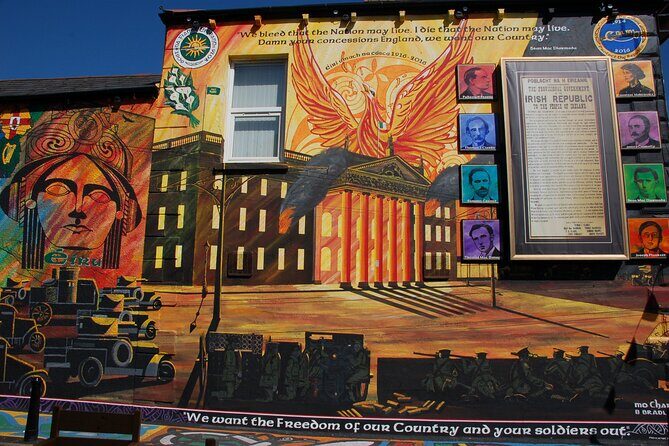
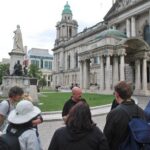
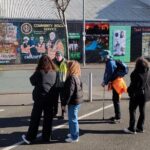
- Divis Flats and International Mural Wall: the Belfast “conflict in color” opening
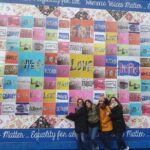
- Peace Wall: a wall you can write on, not just look at
- Clonard Monastery and the Falls Road architecture contrast
- Clonard Martyrs Memorial Garden: names, dates, and remembrance
- Saint Peter’s Cathedral: craft from the 1800s and a remembered song
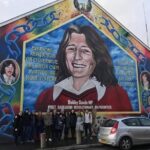
- Bobby Sands Mural: the Falls Road as a symbolic “heart”
- The old jail: a stark stop for the prison years
- Shankill Road: loyalist heart, long timeline
- Shankill Graveyard: painted support as public memory
- The driver stories: how to listen without stepping wrong
- Mural facts that make your photos better
- Getting value from a 2-hour schedule
- Who this tour suits best
- Should you book Belfast Famous Black Taxi Tour Political Murals & Peace Wall?
- FAQ
- How long is the Belfast black taxi tour?
- Where does pickup happen?
- Is this tour private?
- What’s included and what might cost extra?
- What language is the tour offered in?
- What’s the cancellation policy?
Key things to know before you go
- A true black taxi route through Belfast’s neighborhoods, not a bus crawl
- Peace Wall time includes a chance to write a message of hope
- Falls Road murals first, with plenty of stops for close-up photos
- Both communities shown through murals tied to nationalist and loyalist life
- Short, timed stops (mostly 10–15 minutes) that keep the pace brisk
- Respect-focused storytelling: your driver sets the tone early
Why a black taxi tour is the right way to see Belfast murals
If you want Belfast to make sense fast, a black taxi works. You feel the neighborhood scale in a way you don’t from a quick walking loop, and the driver can connect what you see on the wall to daily life on the street.
The best part is how the art isn’t treated like decoration. Murals in Belfast often act like public memory—points of pride, warnings, grief, and identity. You get an on-the-ground version of that, with stop after stop that lets you look closely before moving on.
And yes, it’s photogenic. But the photos matter more because the driver’s context helps you read what you’re looking at, especially around the most famous barriers and mural clusters.
Other black taxi & cab tours in Belfast we've reviewed

Price and time: what you’re really paying for
This tour costs $116.69 per person for about 2 hours. That’s not a budget price. But you’re paying for a private black taxi format, a driver who tells the story as you drive, and a tight route that hits multiple key mural areas without you figuring out transit and logistics.
In practical terms, the time efficiency is the value. Most people only have so many hours in Belfast, and this tour is built to pack the “big hits” into a short window—Divis and the mural walls, the Peace Wall, Falls Road landmarks, and Shankill Road sites.
If you’re the type who likes to read a little, ask questions, and then take photos with purpose, the price feels easier to justify. If you want a relaxed, light day with zero heavy context, you might find the subject matter more intense than you expected.
Pickup in Belfast City Hall area: easy start, clear boundaries
Pickup is offered within 1 km of Belfast City Hall. If you’re staying close by, you can likely start with fewer moving parts.
If you’re coming from cruise ships, there’s no direct cruise port pickup. Instead, there’s a free shuttle bus from Visit Belfast that drops you at the pickup point at Belfast City Hall. The same general idea applies to train and airport days: the tour includes a mention of a pickup surcharge for those situations, and that surcharge is paid in cash on the day.
Two quick tips that help:
- Have your phone ready for the mobile ticket confirmation you’ll receive.
- Plan for a short walk from the City Hall pickup area if your lodging is right near the edge of the radius.
Stop-by-stop: how the route builds the story of Belfast
This is a smooth, moving route. Most stops are around 10–15 minutes. That means you’ll want to decide in advance what you want to photograph most, because you’ll be stopping often, but not for long.
Divis Flats and International Mural Wall: the Belfast “conflict in color” opening
You start at Divis on the Falls Road side, including the Divis Flats area and a look at the International Mural Wall on Divis Street. The area is tied to the British Army presence in the past, and the tour frames the murals as living commentary on occupation, identity, and survival.
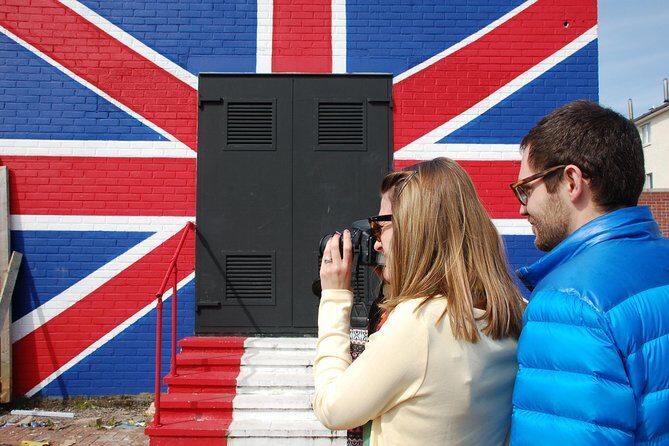
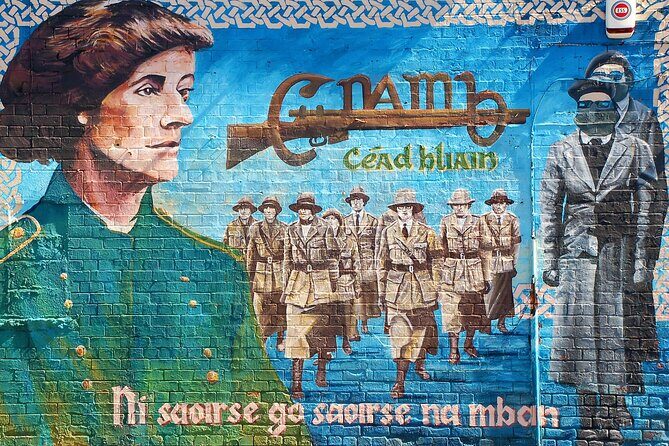
This opening stop is strong for two reasons. First, it sets the tone with a direct sense of place. Second, you get real time for close-up mural viewing and photos, including walls featuring themes from both nationalist and loyalist communities.
One practical consideration: the subject matter here can feel intense quickly. If you’re nervous about stepping into “politics territory,” you’ll still be okay, but keep an eye on your driver’s pacing and prompts.
Other Troubles & political tours we've reviewed in Belfast


Peace Wall: a wall you can write on, not just look at
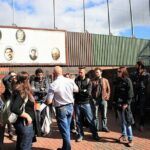
Next comes the Peace Wall, described as still dividing Belfast today. You’ll learn why it exists and how it fits into a broader pattern of peace walls across the city.
A unique detail to know ahead of time: there are over 40 peacewalls across Belfast, described as stretching about 20 miles. You also have a hands-on moment here—you can write your name and a message of hope on the wall. The tour also notes famous signatories including Bill Clinton and the Dalai Lama.
This stop is often the emotional center of the tour. The visuals are powerful, but it’s the meaning that sticks: the wall isn’t just a barrier—it’s a public statement that people wanted an end point, even if the city never fully became simple.
Clonard Monastery and the Falls Road architecture contrast
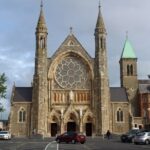
After Divis and the Peace Wall, you head to Clonard Monastery on the Falls Road. You’ll get a look at the monastery’s architecture and hear how it was built with local craft and the help of Italians.
This brief stop matters because it pulls you out of mural-only thinking. The conflict story isn’t only painted on walls—it’s connected to religious institutions, neighborhood landmarks, and how communities marked permanence.
Take your photos quickly here. You’re on a schedule, and the route keeps momentum.
Clonard Martyrs Memorial Garden: names, dates, and remembrance
Then you visit the Clonard Martyrs Memorial Garden, where you get historical grounding for how the conflict is described as beginning in 1969. The tour includes a specific focus on those commemorated there, including fallen volunteers from the C company area, civilian casualties from the Greater Clonard area, and deceased republican prisoners from the Greater Clonard area from 1916 to 1970.
This stop includes details that help the story feel concrete instead of abstract—like the memorial being commissioned by the Greater Clonard Ex-Prisoners’ Association, with an unveiling date of 20 August 2000 and plaques unveiled on 11 March 2001. There’s also mention of an annual march held around 11 March.
If you like history that includes names and dates, you’ll appreciate this stop. If you’re hoping for only street-art vibes, this is where the tour slows emotionally, even though the time on site is brief.
Saint Peter’s Cathedral: craft from the 1800s and a remembered song
Next is a look at Saint Peter’s Cathedral, noted for its 1800s craftsmanship. You’ll also hear it’s connected to the writing of a famous republican song by a Catholic priest.
This is another example of how the route connects art, religion, and identity. Even if you’re not here for music trivia, the point is clear: Belfast’s symbols show up in many forms, not just murals.
Bobby Sands Mural: the Falls Road as a symbolic “heart”
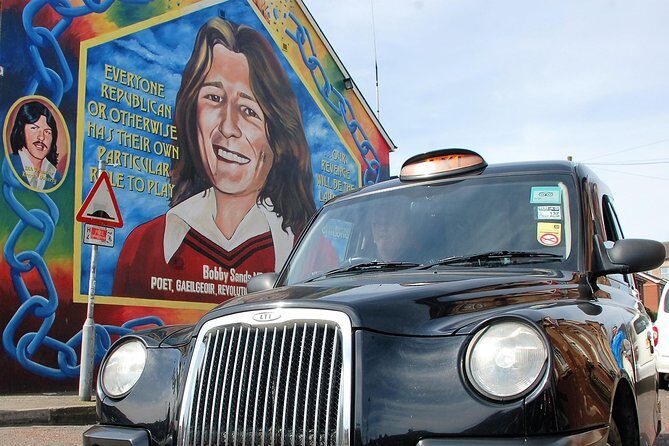
Then you stop at the Bobby Sands mural. If you’ve watched or read anything about The Troubles, the Falls Road comes up a lot—and the tour explains it as a birthplace and heart of the Provisional Irish Republican Army and Republicanism.
You’ll also get a longer historical framing that the guide describes as reaching back around 900 years to peace progress. Even if you don’t catch every detail, the takeaway is that the murals aren’t only about the 1970s and 1980s—they’re linked to older narratives about community, struggle, and belonging.
Photo-wise, this is a strong stop. Just be ready for the tone to stay serious.
The old jail: a stark stop for the prison years
The route includes a quick visit to what’s described as Belfast’s oldest jail area, which held many famous prisoners and had a hanging gaol use into the 1960s. It’s one of those places where you don’t need a guide to imagine the atmosphere—you just need time to let it land.
Because the stop is short, treat it like a moment to absorb rather than to research. If you care deeply about the prison history, you can always follow up on your own afterward.
Shankill Road: loyalist heart, long timeline
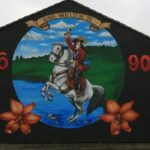
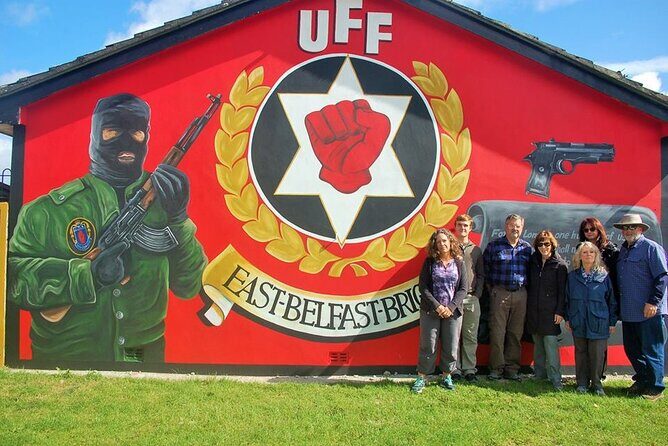
On the other side of the city comes Shankill Road, described as the heart of loyalism. The tour notes that Shankill Road dates back over 500 years and is described as the birthplace of the UVF and UFF, with the guide explaining British history of the protest people and their fight against Republicanism.
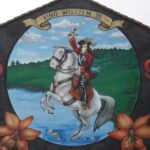
This stop is where you see the “other half” of the mural language. You’ll spot artwork and messages that reflect support for the crown and loyalist identity.
If you’re trying to keep your understanding balanced, this is one of the most important stops. It helps you see that the story is not one straight line—it’s a set of competing narratives that shaped streets, walls, and communities.
Shankill Graveyard: painted support as public memory
Finally, you have time at the Shankill graveyard along Shankill Road. The tour gives you a chance to take photos of painted works of art created by locals depicting support of the crown.
This is the “read the details” stop. Unlike the biggest wall murals, this kind of artwork can feel quieter and more personal, but it still fits the larger theme: public art as identity.
Keep it respectful with your camera. Aim, shoot, move on. The point is the meaning, not a photo marathon.
The driver stories: how to listen without stepping wrong
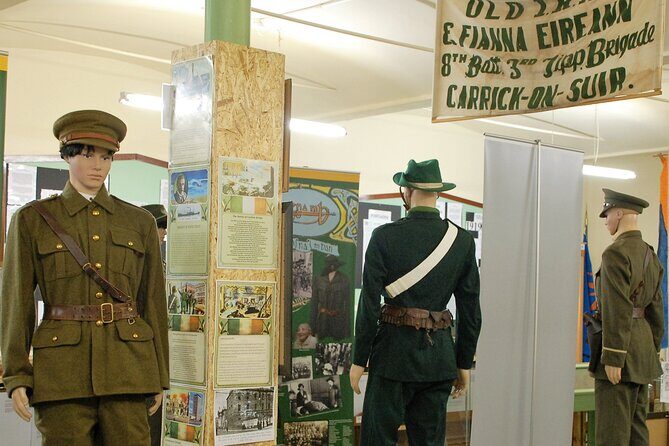
The driver is the secret ingredient. You’re not just looking at murals—you’re hearing first-hand stories of The Troubles from your driver, and that changes how you process what you see.
One thing to prepare for: your driver may steer conversation away from certain topics. If you feel the vibe is careful, go with it. Being silent and letting the driver lead is totally fine. The best way to handle this tour is to treat it like a guided walk through a sensitive archive.
Also, ask questions that focus on place and meaning, not arguments. If you keep your curiosity anchored to what you’re seeing at each stop, the tour will feel both informative and human.
Mural facts that make your photos better
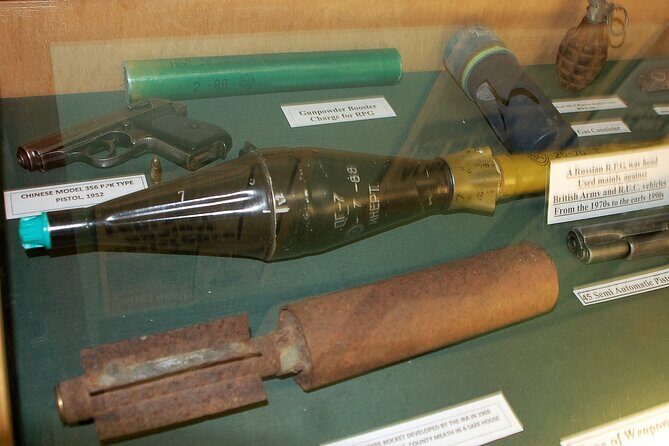
Belfast has an enormous mural presence, and this route is built around the idea that murals function as a community’s bulletin board. The tour notes that the Belfast Mural Guide estimated about 300 quality murals across the city, with more in different conditions and ages.
That matters because you’ll notice different styles and themes. Some murals commemorate, some critique, and some mark cultural and historical points that matter to specific communities.
When you’re photographing, I’d use this quick approach:
- Start wide to capture the whole wall.
- Then move in for faces, symbols, dates, and text blocks.
- If you can, take one photo that includes a nearby street element, so you remember where it sits in the neighborhood.
Getting value from a 2-hour schedule
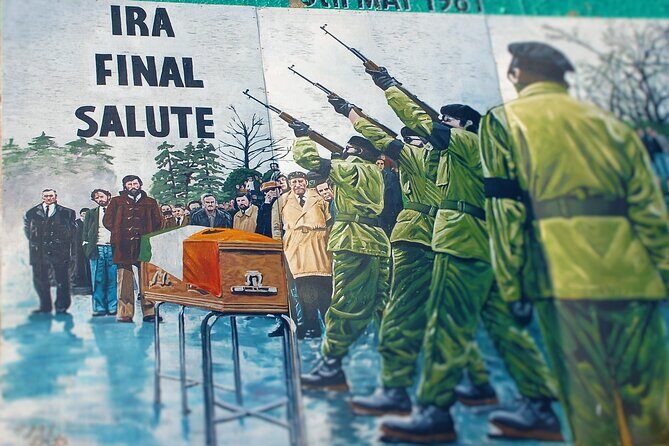
Because it’s about 2 hours with frequent short stops, you’ll get less time per location than a walking-only tour would. The tradeoff is you see a lot more in a day.
If you’re the type who wants to linger, you can still enjoy the tour. Just pick your “must shoot” stops—Peace Wall and the major mural walls—and be efficient with the rest. Your driver’s narration will help you feel satisfied even if you don’t spend ages at each point.
For first-time Belfast visitors, this kind of route is ideal because it gives you bearings. Later, you can choose where to return with longer time.
Who this tour suits best
This tour fits you if you want Belfast beyond postcard views. You’ll probably enjoy it most if you:
- Like history tied to real places
- Want street art with political and cultural context
- Prefer a private taxi format over public transit hopping
- Can handle serious topics with respect
If your goal is only light sightseeing or you’re looking for a purely upbeat photo tour, you may find the emotional tone heavier than you expect. Still, it’s described as including hope and a path forward, so it’s not only gloom.
Should you book Belfast Famous Black Taxi Tour Political Murals & Peace Wall?
If you have limited time and you want the clearest overview of Belfast’s mural and peace-wall story in one compact ride, I think it’s a smart choice. The value comes from the route design and the driver narration—this isn’t just driving past walls, it’s learning how Belfast reads itself.
Book it if you’re comfortable with thoughtful, serious history and you want your photos to have meaning. Consider another style of tour if you want something purely relaxed, or if you know you struggle with emotionally intense topics.
Either way, plan your mindset for a day that mixes art, memory, and hope—then you’ll get what this tour is built to deliver.
FAQ
How long is the Belfast black taxi tour?
The tour lasts about 2 hours.
Where does pickup happen?
Pickup is offered within a 1 km radius of Belfast City Hall. If you’re on a cruise ship, there is no direct pickup from the cruise port; you use the free shuttle to the Belfast City Hall pickup point.
Is this tour private?
Yes. It’s a private tour/activity, and only your group participates.
What’s included and what might cost extra?
The tour includes a city center pick up (up to 1 km from Belfast City Hall). It also notes train, airports, cruise ship and air b&b pickup surcharges that are paid on the day in cash only. Admission tickets for the stops listed are free.
What language is the tour offered in?
The tour is offered in English.
What’s the cancellation policy?
You can cancel for a full refund if you cancel at least 24 hours in advance. Free cancellation is available, and the cut-off is based on local time. There is also a note that the experience requires a minimum number of travelers; if canceled for that reason, you’ll be offered another date/experience or a full refund.