REVIEW · BELFAST
Private Belfast Explore Like a Local
Book on Viator →Operated by Giants Causeway Tours · Bookable on Viator
Belfast shows its layers fast. This private tour stitches together Belfast’s big sights with a human guide, so you’re not just walking past history-you’re getting the why behind it. I love the easy flow of hotel pickup and drop-off, and the fact that you get undivided attention in a 2 hours 40 minutes to 3 hours loop through multiple neighborhoods.
What I also really like is how the stops connect, from Queen’s Quarter’s Victorian roots to the political murals and the peace lines on the Falls and Shankill interface. Guides such as Barry and Joe are praised for asking-you-to-ask-anything energy, and you end up with a clearer picture of Belfast’s past and present than you would on your own.
One consideration: this tour covers the Troubles up close, and at least one past experience noted commentary that felt too strongly one-sided toward the IRA. If you want strict balance, just be ready to ask your guide to explain multiple perspectives as you go.
In This Review
- Key highlights you’ll actually feel
- Price and logistics: what you’re paying for in real life
- Getting the lay of the land around Queen’s Quarter and Botanic Gardens
- RISE, Albert Memorial Clock Tower, and Belfast’s “you can’t miss this” skyline
- Divis Tower: why this place is more than a view
- Peace lines and the Peace Wall: seeing separation as a daily reality
- Falls Road and Shankill Road: murals, cathedrals, and how Belfast speaks in symbols
- St Peter’s Cathedral on the Falls Road
- Bobby Sands mural and the hunger strike story
- Clonard Martyrs: commemoration in a walled garden
- Shankill Road: loyalist heartland and community structure
- Clonard Monastery and Divis Street murals: the wider map of Belfast identity
- From Belfast Castle to shipyard pride: a day that swings from old power to Titanic Quarter
- Belfast Castle and the Cavehill viewpoint
- Samson and Goliath cranes and the Titanic Quarter
- The Crown Bar finish and the “where people live” detour
- Admission tickets and what’s included versus not
- Should you book Private Belfast Explore Like a Local?
- FAQ
- How long is the private Belfast tour?
- Does this tour include hotel pickup and drop-off?
- Is the tour private?
- Is admission included for every stop?
- What language is the tour offered in?
- Is there an airport pickup option?
- What transport do I use during the tour?
- Can I cancel for a full refund?
Key highlights you’ll actually feel
- Hotel pickup in central Belfast saves time and lets you spend your energy looking, not navigating.
- Peace Wall experience with a message of peace and hope adds a personal moment to a heavy topic.
- Murals on the Falls and Shankill are explained as communication, not just street art.
- Guided context at each stop means Botanic Gardens and Queen’s University land with meaning, not as random sightseeing.
- Major Belfast landmarks in one loop: RISE, Divis Tower, Albert Memorial Clock Tower, cranes, and the Titanic Quarter area.
- Private format keeps the pace flexible, with your guide able to slow down or speed up on what you care about.
Price and logistics: what you’re paying for in real life
At $638.11 per person for a private outing lasting about 2 hours 40 minutes to 3 hours, this is not a budget tour. The value is in what you avoid: time spent figuring out routes, and the cost of going ticket-by-ticket without context.
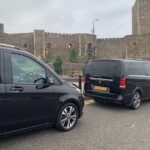
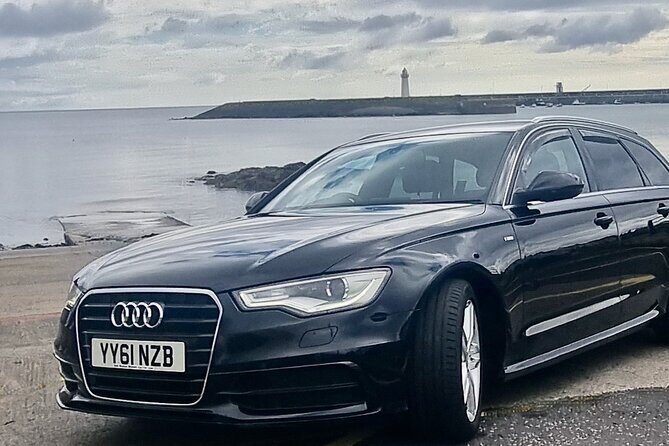
You get private transportation in an air-conditioned vehicle, plus hotel pickup and drop-off from central Belfast accommodations. Your driver handles navigation, which matters in a city where neighborhoods and street layout can change fast. You also get a mobile ticket, so you’re not scrambling with paper.
The itinerary is packed with short stops and photo moments, which is smart for a limited time window. If you’re the kind of traveler who wants a quick tour of the city’s key symbols without losing half a day, this format works.
Other Belfast city & sightseeing tours we've reviewed


Getting the lay of the land around Queen’s Quarter and Botanic Gardens
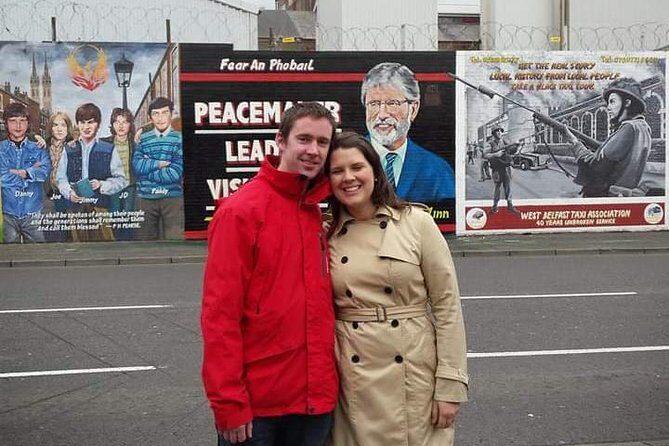
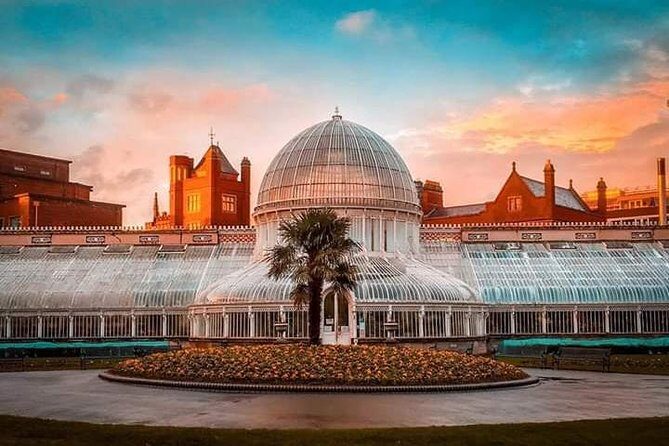
The tour starts in the south end of Belfast in the Queen’s Quarter area, with Botanic Gardens first. This is one of the best places to get your bearings because it’s beautiful and historic, but also very “used” by locals. You’ll see why the gardens are a meeting point for residents, students, and visitors.
A few details your guide can point out that make the place click:
- The gardens date to 1828, created in response to public interest in horticulture and botany.
- The collections included impressive plants from the southern hemisphere, with many still present.
- The Palm House is the big signature feature. Its foundation stone was laid in 1839 and work finished in 1840, and it’s known as one of the earliest curvilinear cast iron glasshouses.
If you visit during garden events, the area feels extra alive, and that’s a good reminder that history here is not frozen behind ropes.
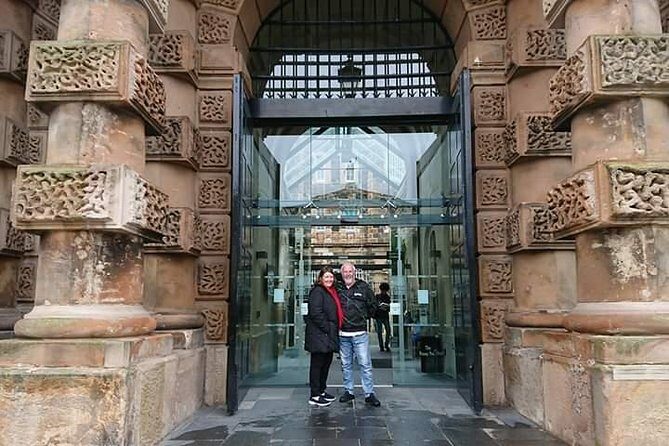
Right after that comes Queen’s University Belfast, where you’ll get a quick lesson in how Belfast built Catholic and Protestant higher education alongside broader UK and Irish education history. The university was chartered in 1845 and opened in 1849 as Queen’s College, Belfast. The Lanyon Building is a key anchor, designed by Sir Charles Lanyon.
This stop helps you understand why Queen’s Quarter feels like an intellectual hub, not just offices and students. It also sets you up for the next part of the day: Belfast’s symbols of modern life.
RISE, Albert Memorial Clock Tower, and Belfast’s “you can’t miss this” skyline
One of Belfast’s most recognizable modern artworks is RISE, the huge spherical metal sculpture by Wolfgang Buttress. It’s 37.5 meters high and sits near the Broadway roundabout, at the junction of the Westlink and M1. Since more than 80,000 cars average past that gateway each day, the sculpture is designed to be seen whether you want it or not.
Your guide can connect the nickname story you’ll hear locally, including why it’s sometimes called The Balls on the Falls and why the area is part of a bigger road improvement project. The construction timeline also matters: it took delays, shifted from an original plan in 2009 to completion in 2011, and became Belfast’s largest public artwork.
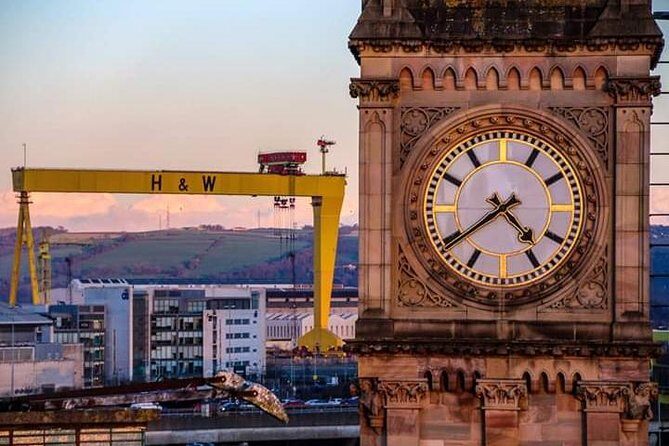
After RISE, you’ll also pass a classic Belfast landmark: the Albert Memorial Clock Tower in Queen’s Square. Completed in 1869, it’s one of the city’s best-known landmarks. It was designed from a competition where W. J. Barre won, but the contract was initially rerouted to Lanyon, Lynn, and Lanyon. Public outcry eventually led to Barre getting the prize.
Two small details that make it memorable:
- The tower leans due to being built on wooden piles around marshy reclaimed land, leading to the saying that it has the time and the inclination.
- A bomb explosion damaged it in 1992 near nearby River House, a reminder that even iconic monuments weren’t untouched.
You’ll likely feel a theme forming: Belfast keeps changing its skyline, while still carrying scars.
Divis Tower: why this place is more than a view
Next, you’ll stop at Divis Tower, tied directly to Belfast’s built environment and the Troubles. It’s a 20-floor, roughly 61-meter tower built in 1966 as part of the demolished Divis Flats complex. The complex housed about 2,400 residents in 850 flats.
What makes this stop heavy is the way the tower sits at the interface between Falls Road and Shankill Road, and how it became a British Army observation point during the Troubles. You’ll hear that the Army occupied the top floors in response to activity in the area, and access at the height of the conflict was only possible by helicopter.
Your guide may also point out the specific events connected to the tower:
- The death of Patrick Rooney, a nine-year-old, during August 1969 riots, when the RUC fired a Browning machine gun from an armoured car into the flats.
- The 1981 shooting of INLA sniper Emmanuel McClarnon from the top of Divis Tower.
And then, the later turn: after the armed campaign ended, the observation post was dismantled, and later the top floors were reinstated as residential properties with a refurbishment that included additional flats.
I like how this stop turns architecture into a map of conflict. It helps you understand why peace is not just a word here, it’s also a set of structures.
Peace lines and the Peace Wall: seeing separation as a daily reality
The heart of the tour’s emotional weight is the peace wall / peace line area. You’ll see what “This is what peace looks like” means in Northern Ireland: communities separated by barriers up to six meters high, gates that are still locked at night, and artwork on both sides.
Your guide should connect the street-level experience to the larger human toll. The tour materials point to more than 3,600 people killed during the Troubles, with about half in Belfast, and roughly 50,000 injured. Even if you already know these numbers, standing near a wall makes it feel immediate.
One reason this stop works well on a private tour: you can ask your guide what to notice. Some mural art here shifts from local messages to imagery that includes global conflict themes.
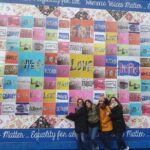
The tour also includes a specific interactive touch: you’ll be at the Peace Line & Peace Wall area where you can sign your name and leave a message of peace and hope. That’s one of those small moments that can reset the mood, and it gives you a personal takeaway beyond photos.
Other private tours in Belfast


Falls Road and Shankill Road: murals, cathedrals, and how Belfast speaks in symbols
From the peace lines, the tour moves into the Falls Road and Shankill Road area, and that’s where you’ll understand why murals matter so much here.
St Peter’s Cathedral on the Falls Road
You’ll visit St Peter’s Cathedral, a Roman Catholic cathedral for the Diocese of Down and Connor, built starting in the 1860s. It opened on 14 October 1866, and the twin spires were added in 1886.
What I like about this stop is that it shows Belfast’s religious architecture as something built for community life. It also has design details your guide can point out, like Scrabo sandstone with Scottish sandstone dressings, and a hammer-beam ceiling. The building’s history includes a later designation as a cathedral in 1986.
Bobby Sands mural and the hunger strike story
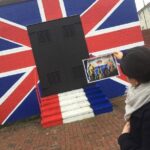
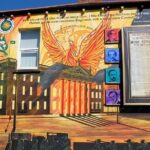
Then comes the Bobby Sands mural, described as Belfast’s most famous mural and a photo opportunity spot where you learn about Bobby Sands and the 1981 hunger strike. The mural symbolism includes the phoenix rising from the ashes and links to the 1916 Easter Rising imagery, plus the chain-breaking theme.
If you’re trying to understand why certain names and symbols still dominate street corners, this mural gives you a starting point fast.
Clonard Martyrs: commemoration in a walled garden
Next you’ll reach Clonard Martyrs Memorial Garden, associated with the birthplace area linked to the Provisional IRA formed in 1969. It’s at Bombay Street, Clonard, and the garden is enclosed by black iron gates with a phoenix motif.
This is not light sightseeing. The garden includes memorial inscriptions, a central black and white Celtic cross, and panels that state the memorial’s groups remembered, including volunteers and also civilian casualties from the Greater Clonard area.
Your guide can help you handle this respectfully and not treat it like a photo prop. If you tend to be uncomfortable with political topics, it helps to know you can spend more time reading than taking pictures.
Shankill Road: loyalist heartland and community structure
The tour then heads toward Shankill Road, described as the heartland of Ulster Loyalism and a working-class predominantly loyalist area. It runs westward from central Belfast for about 2.4 km and is lined with shops.
A crucial detail you’ll hear is that, in local terms, the area has different control patterns: the bottom half is associated with the UDA, and the top with the UVF. That’s one of those facts that helps explain why the murals and walls are not random decorations.
Clonard Monastery and Divis Street murals: the wider map of Belfast identity
Another stop near the Falls area is Clonard Monastery, run by the Redemptorists order. During the Belfast Blitz, more than 300 Protestants from the nearby Shankill area hid here in the crypt. That historical cross-community detail often surprises people, and it’s worth sitting with.
Then you’ll reach an area tied to the International Mural Wall on Divis Street, where you may spot themes of current and past political divisions and international solidarity. One specific detail noted is that there’s a Donald Trump mural here.
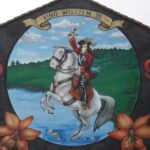
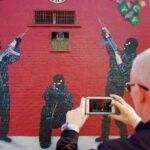
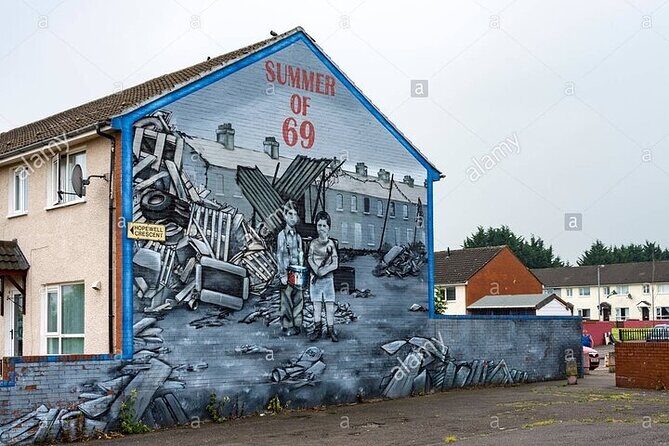
Murals in Belfast are more than art projects. The materials describe how murals became symbols of Northern Ireland since the 1970s, with roughly 2,000 documented and an estimate of about 300 quality murals in Belfast. The point is practical: each community uses murals to communicate what matters to them, whether that’s hunger strike memory, international revolutionary solidarity, or local tragedy.
You’ll also likely pass another Bobby Sands mural photo opportunity point tied to West Belfast’s Republican heartland. Having that repeated in different parts of the route helps you see how consistent the visual language is across streets.
From Belfast Castle to shipyard pride: a day that swings from old power to Titanic Quarter
After the heavier interface areas, the tour shifts gears into big landmarks and skyline views.
Belfast Castle and the Cavehill viewpoint
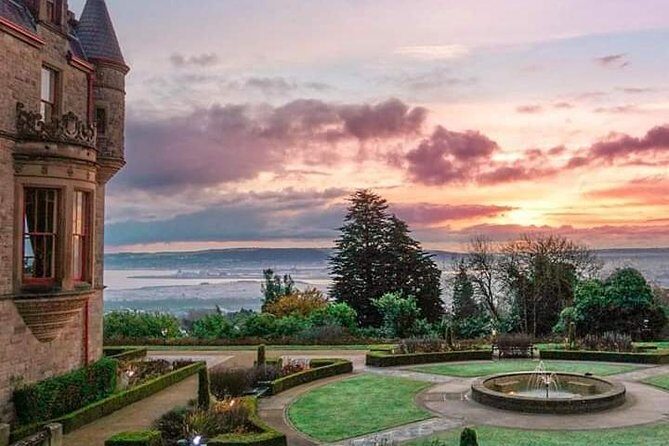
You’ll see Belfast Castle, set on the slopes of Cavehill Country Park, about 400 feet above sea level. The views over Belfast and Belfast Lough are part of why the castle matters.
This stop also includes the famous Cat Garden concept: nine cats made through sculptures, mosaics, and manicured planting. It’s built around a local story, and it’s a nice palate cleanser after the murals.
The castle story is also long and layered: an original Norman castle existed in the city center, burned in 1708, and the current building was constructed between 1811 and 1870 in Scottish baronial style by Charles Lanyon and his son’s firm. The castle later came to the city in 1934 and reopened after a major refurbishment.
One practical note: Belfast Castle is marked as admission ticket not included here, so you’ll want to decide on the spot whether you’re doing an interior visit or just enjoying the views outside.
Samson and Goliath cranes and the Titanic Quarter
Next, you’ll see the shipyard icons: Samson & Goliath cranes at Queen’s Island, Harland & Wolff. These twin gantry cranes dominate the skyline, and the details make them more than a postcard:
- Goliath is 96 meters tall, completed in 1969.
- Samson is taller at 106 meters, completed in 1974.
- They were built by German engineering firm Krupp.
- They’re named after Biblical figures.
A common misconception your guide may address is whether the cranes helped with Titanic. The info here points out they were built much later, so not connected to the Titanic directly.
From there, you’ll have a photo opportunity at SS Nomadic, the former tender launched in 1911 in Belfast. It’s now displayed in the Titanic Quarter and is described as the only White Star Line vessel in existence.
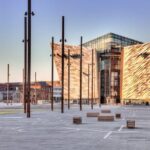
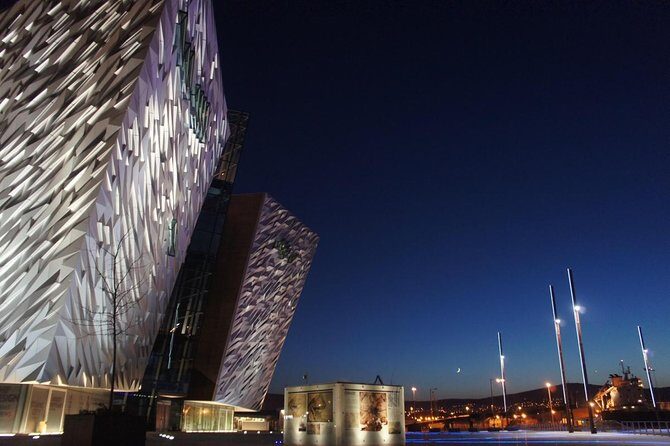
Finally, you’ll reach the broader area: Titanic Belfast in Titanic Quarter. The tour description frames Titanic Quarter as a waterfront regeneration zone with historic maritime landmarks, film studios, and the land-based Titanic attraction. Titanic Belfast admission is marked as not included in this tour package, so consider that when weighing value.
The Crown Bar finish and the “where people live” detour
At the end, the tour stops at The Crown Liquor Saloon (Crown Bar), described as one of Northern Ireland’s best-known pubs and an outstanding example of a Victorian gin palace, refurbished in 1885 and later times as well. It’s a solid finish because it turns the day’s heavy topics into something human and warm.
You may also pass by BT9 6RU, framed as Belfast’s most affluent address, where you can see the large mansions and get a quick look at how the city’s wealth sits beside its other layers.
Admission tickets and what’s included versus not
This tour includes admission tickets at most stops listed with admission included, but not all. Based on the provided stop notes:
- Admission ticket included: Botanic Gardens, Queen’s University, RISE, Divis Tower, Peace Wall stops, St Peter’s Cathedral, Bobby Sands mural, Clonard Martyrs, Shankill Road stop, Albert Memorial Clock Tower, Big Fish, Samson & Goliath cranes, Clonard Monastery, International Mural Wall Divis Street, Crown Liquor Saloon.
- Admission ticket not included: Belfast Castle, SS Nomadic, Titanic Belfast.
That mix is typical of a quick-hit city tour: some are built around paying for access (gardens, cathedral, certain memorial experiences), while others are primarily photo stops.
Price-wise, this only feels like a deal if you’re actually going to use the included admissions. If you plan to skip every not-included stop, you’ll want to confirm you’re still getting enough value from the guided context, transport, and the peace line and mural segments.
Should you book Private Belfast Explore Like a Local?
Book it if you want one tight afternoon that helps you understand Belfast fast: Victorian Belfast at Botanic Gardens and Queen’s University, modern symbols like RISE and the cranes, and the most important street-level context on the Falls and Shankill interface.
I’d especially recommend it for:
- First-time visitors who don’t want to stitch together transport and explanations across multiple neighborhoods.
- People who are curious about how murals and memorials function as messages, not just decoration.
- Travelers who like asking questions and getting a guide’s human perspective.
Consider passing or asking lots of questions if you’re strongly seeking balanced commentary only. Since the Troubles are covered in a very direct way, the guide’s tone can matter.
FAQ
How long is the private Belfast tour?
It runs about 2 hours 40 minutes to 3 hours (approx.).
Does this tour include hotel pickup and drop-off?
Yes. Free hotel and cruise ship pickup and drop-off are included for central Belfast accommodations.
Is the tour private?
Yes. It is a private tour/activity, so only your group participates.
Is admission included for every stop?
Not for every stop. Some stops are marked as admission ticket included, while Belfast Castle, SS Nomadic, and Titanic Belfast are marked as admission ticket not included.
What language is the tour offered in?
The tour is offered in English.
Is there an airport pickup option?
No. The tour does not offer airport pickup or drop-off.
What transport do I use during the tour?
You use a private vehicle with air-conditioning. The driver handles navigation.
Can I cancel for a full refund?
Yes, free cancellation is offered. You can cancel up to 24 hours in advance for a full refund. If you cancel less than 24 hours before the start time, the amount paid will not be refunded.
You Might Also Enjoy
More Private Tours in Belfast
More Tour Reviews in Belfast
- Titanic Belfast Entrance Ticket: Titanic Visitor Experience Including SS Nomadic
★ 4.5 · 3,698 reviews