REVIEW · BELFAST
Belfast Black Cab Taxi Private Tour 2hr with Original Guides
Book on Viator →Operated by Belfast famous black taxi tours · Bookable on Viator
Murals can explain a city fast. In a Belfast black cab for about two hours, you glide past wall-to-wall political art and get the street-level story behind it. I like that the tour stays private, so you can ask real questions as you move between Catholic and Protestant neighborhoods.
Two things I especially like: you get a tight, 2-hour overview that still hits the big turning points, and the guides keep it human, not textbook. One watch-out: the stops are brief, so if you want long museum-style time, you may wish you booked longer or paired this with another activity later.
The best part is how the route connects symbols to places you can actually see, from Divis to the Shankill. Even the quick photo moments matter here, because the murals are not just decoration; they’re a living timeline you can read while your guide narrates what changed and what didn’t.
In This Review
- Key highlights worth carving out time for
- Why a black cab tour works so well in Belfast
- Price and time: what $130.30 per person really covers
- Divis: where the streets tell you the war story
- International Mural Wall on Divis Street: changing art, constant message
- Bobby Sands mural: the personal names behind big politics
- Falls Road Library and the 900-year story your guide walks you through
- Clonard Martyrs Memorial Garden: community memory in quiet form
- Clonard Monastery and the peace talks context you won’t get from street views
- Peacewall Taxi Tours: the sign-your-name moment and what it implies
- Shankill Road: loyalist murals and the UVF/UFF foundations
- Pickup, timing, and how early starts can affect your day
- What the best guides do differently (and why it shows)
- Who should book this Belfast black cab private tour
- Should you book it?
- FAQ
- FAQ
- How long is the Belfast Black Cab Taxi Private Tour?
- Is pickup included, and where does it happen?
- Is this tour private or shared?
- Is the tour offered in English?
- Is the tour suitable for children?
- Does the price include food and drink?
- Is there any extra cost I should budget for?
- What is the cancellation policy?
Key highlights worth carving out time for
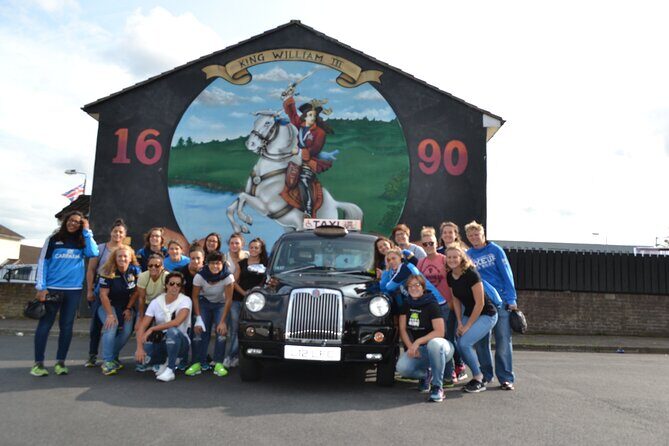
- Black cab format that works well for tight neighborhoods and short stop-offs
- Original guides who explain what the murals mean and why the street history still matters
- Divis Street International Mural Wall, with artwork that changes monthly
- Bobby Sands and the republican narrative tied directly to the walls in the area
- Clonard Monastery and secret peace-talk context, including mention of being bugged
- Peacewall Taxi Tours peacewall moment, where you sign a quote for peace with over a million other visitors
Why a black cab tour works so well in Belfast
Belfast is a city where the past is not locked behind glass. It’s on corners, on gables, on long stretches of wall. A bus tour can be too big and too fast. A black cab is better: you can stop where the story is, then move on without losing time wrestling with big vehicle turns.
Also, this is set up as a private tour for your group. That matters because the subject matter can be sensitive. You’ll get clearer context when you can ask follow-ups, and your guide can pace the conversation to your comfort level. If you want straight answers about what you’re seeing—why a wall looks like it does—this format is built for that.
One practical note: this tour is not listed as suitable for cruise customers. If you’re on a cruise schedule, check timing carefully before you count on it.
Other black taxi & cab tours in Belfast we've reviewed

Price and time: what $130.30 per person really covers
At about $130.30 per person for roughly two hours, you’re paying for transport in an iconic vehicle plus guided storytelling at several stops. What makes it good value is that it doesn’t try to be everything. It aims to give you a working map of Belfast’s divisions in a short time, with multiple mural locations and key sites linked to the Troubles.
Think of it as a high-impact orientation. In one ride, you’ll see both sides of the city’s story—from republican murals on the Falls Road side to loyalist murals around the Shankill. If you’re short on time and want the major threads explained clearly, the two-hour length is a feature, not a bug.
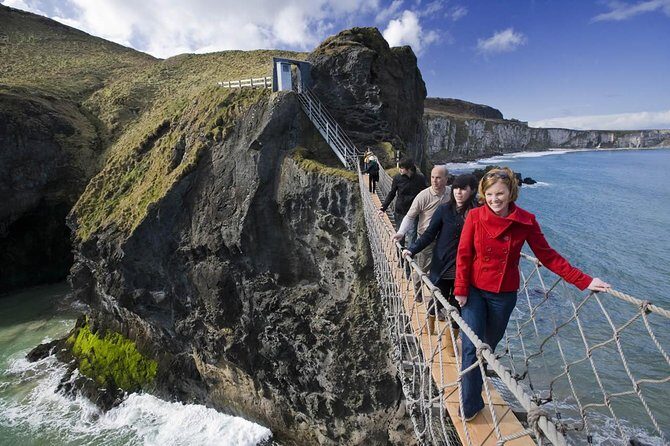
What’s not included is also part of the value equation. There’s no food or drink included, and there’s mention of an extra £8.50 ropebridge crossing. If that crossing is part of your plan on the day, budget for it so the experience doesn’t end with surprise add-ons.
Divis: where the streets tell you the war story
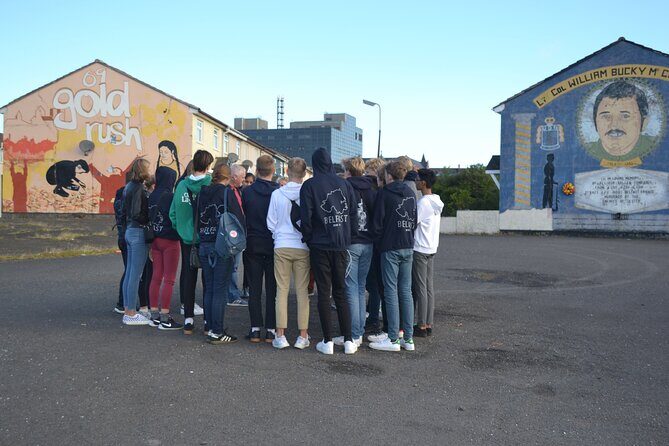
Your route begins at Divis, described as the mouth of republican Belfast. Even if you’re only there for a moment, you can sense why it became such a significant area in the Troubles. This part of town is tied to decades of conflict, and the details your guide shares help you interpret what you’re looking at.
Divis is also where the history is not abstract. One example built into the storytelling: an apartment complex top floor was used as a British army base until 2007. That one detail changes the way you read the area. You stop seeing buildings only as buildings and start seeing them as pieces in a long, complicated timeline.
What you’ll likely like here is how the guide connects past and present quickly. The drawback is that the stop is around ten minutes. That’s enough to absorb the context, but not enough for lingering. Go in with curiosity, and be ready to keep moving.
International Mural Wall on Divis Street: changing art, constant message
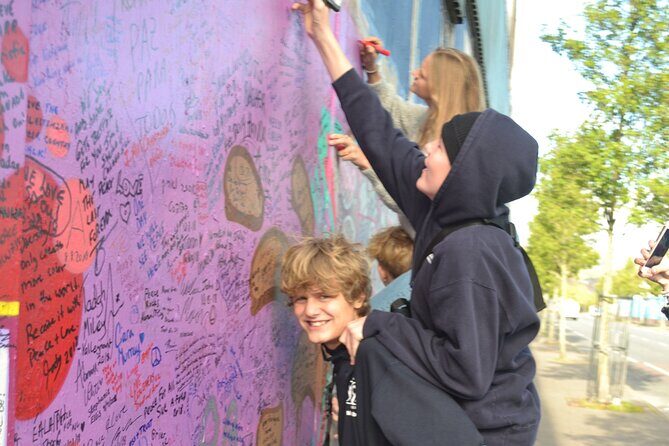
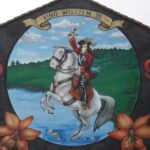
Next comes the International Mural Wall on Divis Street, where political murals are always shifting. The wall’s appeal is simple: it’s not fixed like a museum display. It’s part of how Belfast shows the world what it’s thinking right now.
You’ll get a guided read of the murals, but the deeper value is the “always changing” angle. It teaches you that political messaging doesn’t stop when the fighting slows. People still express identity, grievances, and solidarity through public art. If you’re the type who likes to understand what’s happening today—not just what happened decades ago—this stop does a lot of work for a relatively short time.
The stop is about ten minutes, so focus on the meaning your guide points out. Try not to treat this like a quick photo stop; it’s more like a short lesson you can visually verify.
Bobby Sands mural: the personal names behind big politics
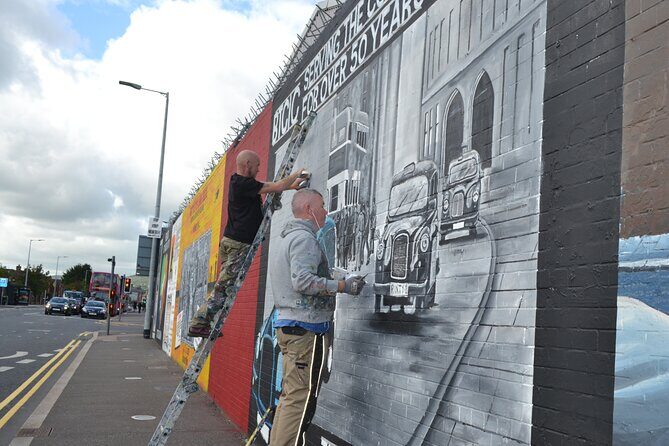
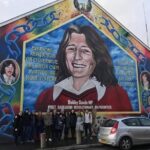
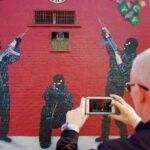
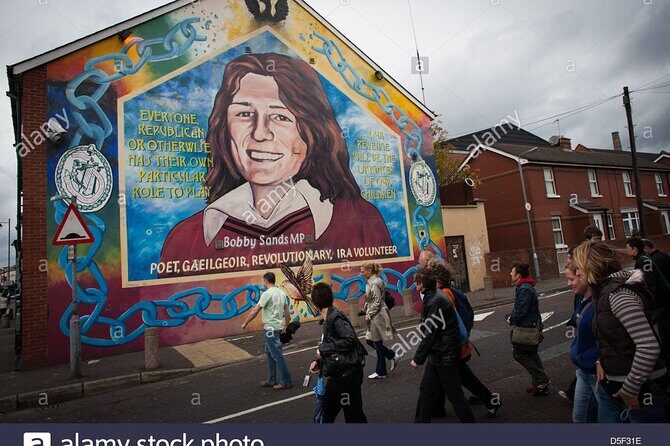
Then you reach the Bobby Sands mural, framed as the heart of republicanism. The tour links it to key events: the burning of Catholic homes in 1969 and the birth place of the modern PIRA. That’s heavy material, but the tour format keeps it grounded by connecting the mural to the place it occupies and the story it’s carrying.
What’s worth your attention is how a guide can make a name feel less like a headline and more like a turning point. Bobby Sands is not just a symbol; your guide will explain why murals around him became a kind of public memory.
This stop is about twenty minutes—longer than some others—which helps you slow down. You’ll likely spend that time understanding which details on the wall matter most and how they connect to broader movements.
Other private tours in Belfast



Falls Road Library and the 900-year story your guide walks you through
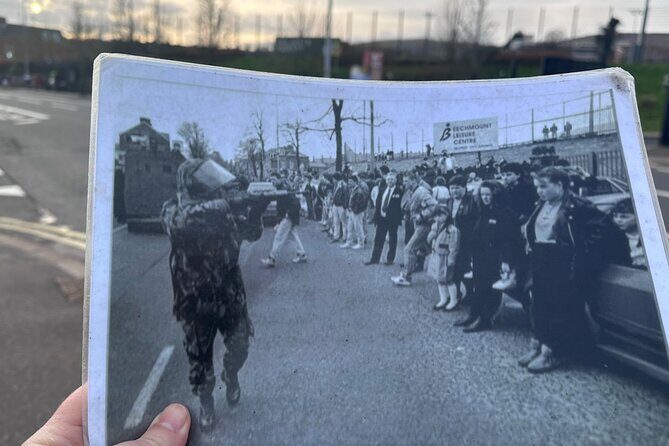
Across the area, you’ll stop at Falls Road Library. Your guide brings you to a key mural reference point, and the tour points out that Bobby Sands MP’s most famous mural is on the opposite gable on Sinn Féin headquarters.
This is one of those moments where Belfast’s politics and geography overlap. You’re standing at one site while the story’s centerpiece is literally across the way. The benefit is that your guide helps you connect lines between locations instead of treating them as isolated pictures.
The tour also mentions a big promised context: your guide will bring you through 900 years of Irish history. You shouldn’t expect this to be a history lecture for every century in full detail, but it gives you a framework: the Troubles were not created in a vacuum.
The stop lasts about twenty minutes, so it gives you time for questions. If you want a bit more clarity on how older events shaped newer conflict patterns, this is a good moment to ask.
Clonard Martyrs Memorial Garden: community memory in quiet form
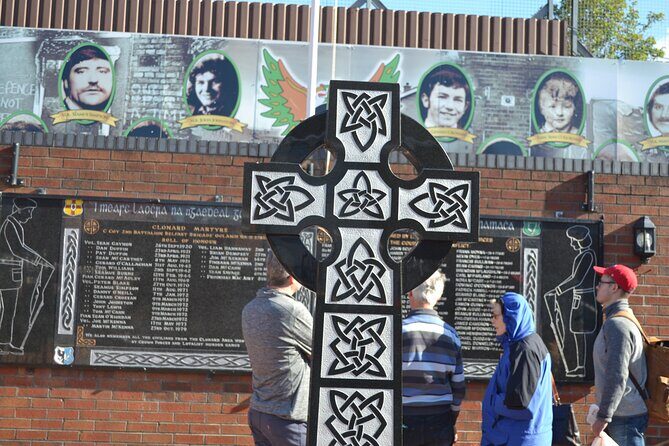
Next is the Clonard Martyrs Memorial Garden. This stop is different in tone from the mural walls. Instead of focusing on modern political visuals, it focuses on remembrance created by local community.
The garden exists to remember fallen dead, and it’s guided for about ten minutes. In a route like this, that brief quiet stop can be a reset button. You’re reminded that these aren’t just ideological arguments. They’re family histories and community losses that shaped how people talk about identity.
A small consideration: gardens and memorial spaces ask you to behave accordingly. If you’re visiting as a fast sightseeing sprint, slow down here for a few minutes.
Clonard Monastery and the peace talks context you won’t get from street views
After that, you’ll visit Clonard Monastery, described as dating back over 100 years and tied to secret peace talks involving Gerry Adams and John Hume. The tour adds a specific detail: those talks had been bugged by M15.
That detail is powerful because it explains how conflict politics kept operating even when major steps toward peace were being discussed. The stop is about ten minutes, but the context your guide shares can linger longer than the time you spend standing there.
If your guide is strong at organizing facts, this is often where the “how did it actually move toward peace?” questions get answered in a practical way. Even without a long stop, you’ll leave understanding that peace efforts had real risks, secrecy, and surveillance built into them.
Peacewall Taxi Tours: the sign-your-name moment and what it implies
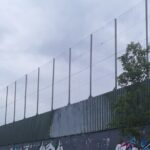
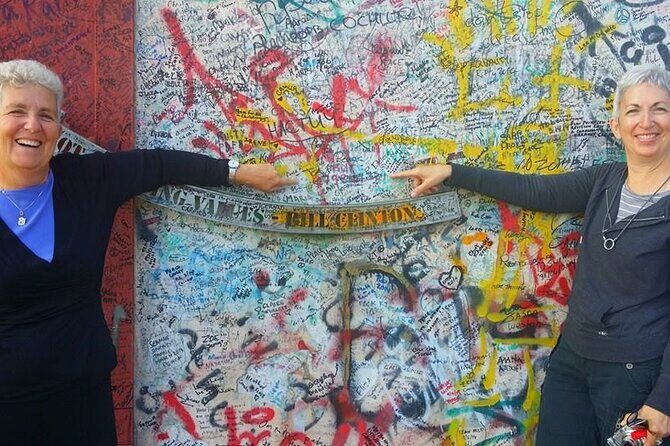
Your next highlight is Peacewall Taxi Tours, where you’ll see one of the large peace walls dividing communities. The tour notes that you can sign your name and add a quote for peace, and that over one million other tourists have done the same.
This stop works on two levels. First, you get a literal view of division: a wall you can point at. Second, you get a ritual of hope: people add their words to the same place, many of them visiting as outsiders learning the story.
The short stop is about fifteen minutes. Don’t rush through it. If you do sign your name, treat it like a moment of reflection, not just a souvenir. It’s one of the clearest reminders that people now come to mark peace publicly, even when the city’s history still runs right under the surface.
Shankill Road: loyalist murals and the UVF/UFF foundations
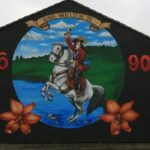
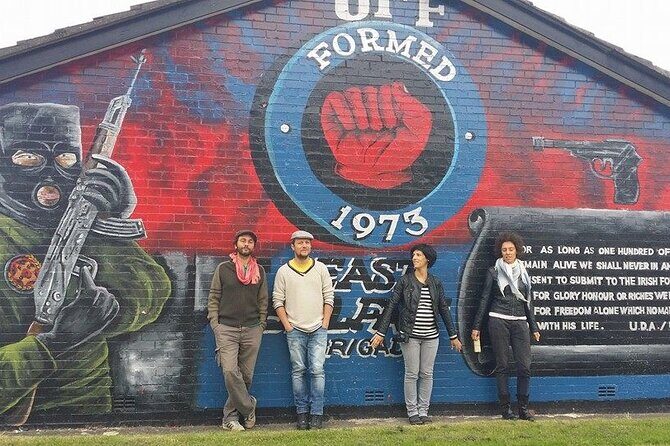
On the Shankill side, you’ll see the heart of loyalism. The tour frames this area as a birthplace linked to the UVF and UFF, and it emphasizes murals that depict history and Protestant cultural identity.
Your guide’s job here is to explain what the murals are communicating, and what those symbols mean in local context. In practice, this often comes down to how your guide balances details without turning the ride into a fight club. A strong guide will keep the focus on understanding: what’s represented, why it matters, and how it connects to the broader Troubles story you’ve been building all along.
This is the longest stop on the later part of the route—about twenty-five minutes—which helps you process what you’re seeing. It’s also a part of the route that can hit emotionally, especially if you’re sensitive to conflict-era symbolism. Give yourself permission to look longer at the sections your guide points out.
One review detail that matters for expectations: the everyday people in these neighborhoods may not feel like reconciliation is moving fast enough. That’s not something you can fix with a quick tour. But a good guide can help you understand why the murals remain important even today.
Pickup, timing, and how early starts can affect your day
Pickups are offered in Belfast city center, with free pickup within a 1km radius of Belfast City Hall. If you want to meet elsewhere, you can usually do it, but there may be a cash surcharge on the day.
The tour is listed with mobile ticketing and runs in English. The schedule shows a wide range of early start options (with suggested pickup times like 6:30AM, 7:00AM, 7:30AM, and later). Plan your day around that reality: if you’re rolling in from a late night, an early pickup can feel like a tax.
If you’re planning other Belfast sights afterward, remember you’ll still have time, but the tour is designed to be efficient. It’s not a full-day Troubles deep dive. It’s a focused orientation you can build on.
What the best guides do differently (and why it shows)
This kind of tour lives or dies by the guide’s storytelling. The reviews highlight guides such as Ricky and Mikey, and drivers like Sean, praised for thoughtful explanations and going above and beyond. That matters because murals can look similar at a glance. The names, dates, and symbols are what make them legible.
Good guides also keep both sides of the story in view without flattening either side. You’ll notice this as you move from republican-linked murals toward loyalist-linked walls. The goal isn’t to argue whose pain is bigger. The goal is to help you see why each community reads the past through its own public symbols.
If you’re hoping for a calm, balanced ride through complex material, this tour style is a good match. If you expect a fun party-style stop, you’ll be disappointed. But if you want understanding, you’re in the right place.
Who should book this Belfast black cab private tour
I think this tour is a strong choice if:
- You want the big Belfast story in about two hours
- You like street-level context tied to specific murals and sites
- You want a guide to explain both Catholic-republican and Protestant-loyalist neighborhoods
- You’re comfortable with emotional, politically charged history
It may be less ideal if:
- You want long stays at each site for reading or lingering
- You’re not interested in political art and symbolic history
- Your schedule is too tight for an early pickup window
Families can make it work too. The tour states it’s suitable for children, and child seats can be provided if you inform the operator before your tour. Service animals are allowed as well.
Should you book it?
If you’re in Belfast for a short stay and want a practical way to understand what you’re looking at, I’d book this. The value comes from the combination of black cab transport, guided context, and a route that connects key mural sites from Divis through Falls Road, Clonard, the Peacewall, and down to Shankill.
My only hesitation is timing: the stops are short, so the experience asks you to keep your attention switched on. If you’re okay with that trade-off, this is an efficient, memorable way to get your bearings quickly and understand why Belfast’s walls still matter.
FAQ
FAQ
How long is the Belfast Black Cab Taxi Private Tour?
The tour lasts about 2 hours.
Is pickup included, and where does it happen?
Yes. Free pickup is offered from within 1km of Belfast City Hall. You can also request to meet at another location, but a cash surcharge may be added on the day.
Is this tour private or shared?
It’s private. Only your group participates.
Is the tour offered in English?
Yes, the tour is offered in English.
Is the tour suitable for children?
Yes. It’s suitable for children, and child seats can be provided if you inform the operator before your tour.
Does the price include food and drink?
No. Food and drink are not included.
Is there any extra cost I should budget for?
The tour information notes an additional £8.50 fee to cross the ropebridge, if that part is relevant on the day.
What is the cancellation policy?
You can cancel for free up to 24 hours in advance for a full refund. If you cancel less than 24 hours before the start time, the amount paid is not refunded.
You Might Also Enjoy
More Tours in Belfast


More Tour Reviews in Belfast
- Titanic Belfast Entrance Ticket: Titanic Visitor Experience Including SS Nomadic
★ 4.5 · 3,698 reviews