REVIEW · BELFAST
Official World Famous Belfast Black Taxi Tour
Book on Viator →Operated by Giants Causeway Tours · Bookable on Viator
Some streets in Belfast don’t just look different, they feel different. This is a private black taxi tour built to help you see the murals and peace walls fast, with guided storytelling that connects art to the Troubles.
I like two big things here. First, you cover a lot of ground without playing hopscotch between neighbourhoods—your taxi does the driving. Second, your guide points out the meaning behind murals made by people on both sides, and they use 1970s-era photos and video to make the past real.
One consideration: this is heavy material. You’ll be standing at places tied to violence, prison protest, and memorials, so you’ll want a calm mindset and patience for questions.
In This Review
- Key highlights worth planning for
- Belfast in One Private Black Taxi: covering the right streets fast
- Divis and the Welcome Wall on the Falls Road: where murals start the story
- International Mural Wall on Divis Street: Hunger Strikers, Iron Lady, and world echoes
- Peace Walls: the separation barrier and what you can actually do with it
- A second peace-wall moment with names you’ll recognize
- Shankill Road: loyalist murals, bonfires, and the Bayardo Bar memory
- Clonard Martyrs Memorial Garden and the Falls Road memorial path
- 56 Sherbrook Cl: final armed-mural photo stop
- Price and value: is $130.34 a fair deal for this route?
- Who should book this Belfast black taxi tour
- Quick practical tips so your photos and questions land well
- Should you book it?
- FAQ
- How long is the Belfast black taxi tour?
- What’s the price per person?
- Is pickup included, and where do they pick you up?
- Is this tour private?
- What language is the tour in?
- How many stops and what kind of places do you visit?
- What time do tours start?
- Are service animals and children allowed?
Key highlights worth planning for
- Private taxi time-saver: you hit multiple sites in about 1 hour 30 minutes to 2 hours.
- Murals with context: guides explain stories tied to ex-prisoners, civil rights, and unrest.
- Peace Wall photo stops: you’ll see separation barriers and learn how they work day to night.
- Both sides, not one-note: republican and loyalist memorial gardens and mural walls appear across the route.
- Quick, photo-friendly pacing: most stops are around 10 minutes, plus longer moments at the Bobby Sands mural.
- Guides named Paula and Barry in the feedback: both get praised for clear explanations and answering questions.
Belfast in One Private Black Taxi: covering the right streets fast
Belfast’s mural and memorial sites are spread out. If you’re walking, you’ll burn time crossing interfaces and second-guessing routes. This tour fixes that with a private black taxi, so you’re moving when it matters and stopping when it helps.
The schedule is built for clarity. You’ll spend short bursts at major walls, memorial gardens, and key peace-wall stretches, with a guide explaining the story as you arrive. If you want photos, you get photo time at several stops, and your guide will show you where to stand for the best “this is the exact spot” effect.
And yes, guides can bring a bit of cracking good humor to hard topics. In the feedback I saw, guides such as Paula and Barry are described as warm, talkative, and ready for questions—useful when you’re trying to understand a conflict with too many names and dates.
Other black taxi & cab tours in Belfast we've reviewed

Divis and the Welcome Wall on the Falls Road: where murals start the story
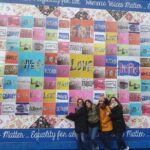
The tour begins at the Welcome Wall on the Falls Road, in republican West Belfast. This is a smart opening, because it sets the tone: murals here aren’t decoration. They’re memory boxes, arguments, and sometimes warnings, all painted where events once played out.
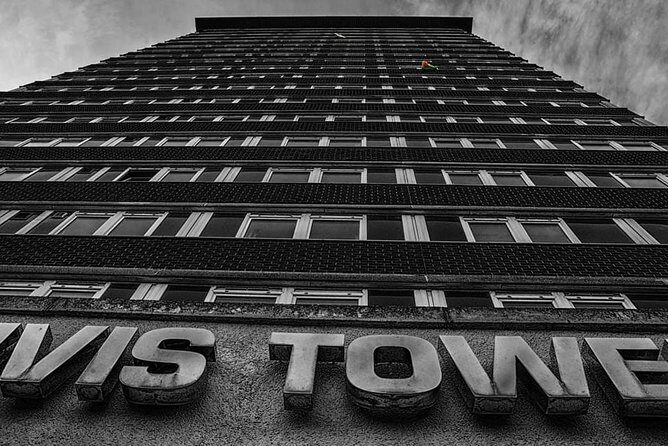
You’ll also see the wall art linked to what the guide frames as an 854-years-old republican struggle for Irish freedom. Next comes a big landmark: Divis Tower, which during the Troubles was used by the British Army as an observation tower and a snipers nest. Seeing that tower while you’re hearing mural stories makes the whole area feel “switched on,” not museum-distant.
Then you’ll move to the internationally known mural cluster tied to Divis Street. The value here is pacing. You’re not just looking at art; you’re being shown how different murals connect to civil rights, prison protest, and the lived atmosphere of the neighbourhood.
Possible drawback to keep in mind: the opening stop can feel emotionally intense fast. If you’re the type who needs a warm-up, give yourself a minute to breathe before the story starts running full-speed.
International Mural Wall on Divis Street: Hunger Strikers, Iron Lady, and world echoes
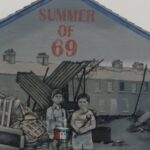
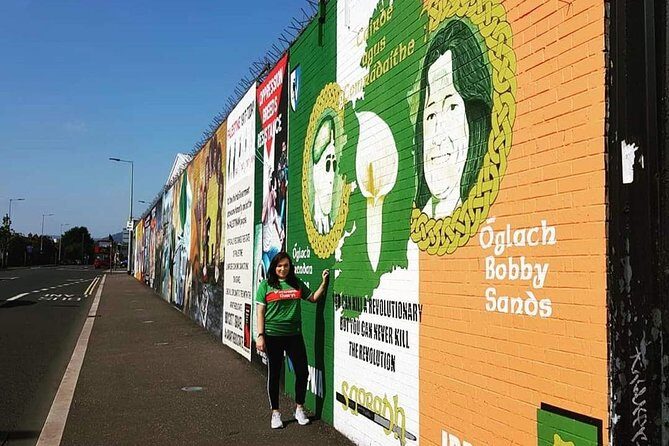
This stop focuses on one of the most photographed mural areas in west Belfast—and it’s not only Belfast stories. You’ll see the largest outdoor gallery of politically charged art in western Europe as the guide frames it, including portraits and references to major events.
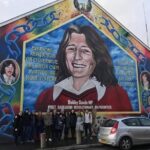
A standout theme is the Ten Hunger Strikers, including Bobby Sands, who became a revolutionary icon after his death in 1981. Your guide explains what those images mean beyond the headline—how hunger strikes turned prisoners into global symbols, and how murals kept the message alive in public space.
You’ll also hear about a specific political battle associated with Margaret Thatcher—often called the Iron Lady in the way the tour describes it. Then the murals expand outward to other conflicts and movements, including Palestine/Israel and the addition of a mural tied to George Floyd and Black Lives Matter.
You’ll likely notice how the wall works like a language. Mandela appears as another key figure, described here as an anti-apartheid revolutionary and political leader, and the guide connects that theme to the murals’ overall purpose: moral arguments made visible.
If you want a classic photo moment, your guide also points out the Peace Gates, explaining their significance before you snap pictures.
Peace Walls: the separation barrier and what you can actually do with it
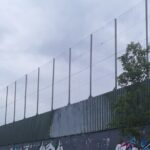
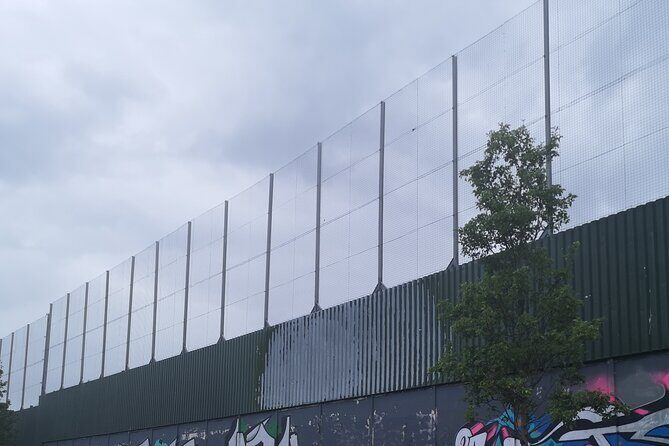
The tour then shifts from murals to the structures that changed daily life: the peace walls (also called peace lines) at interface areas. The guide explains that these barriers separate predominantly republican/nationalist Catholic neighbourhoods from predominantly loyalist/unionist Protestant ones. That detail matters, because the point isn’t abstract history—it’s how neighbourhoods physically experience separation.
You’ll learn that the walls can be made of iron, brick, and/or steel, and can reach up to about 25 feet (8 metres) high. Some parts have gates, which are sometimes staffed by police, allowing passage during daylight but closing at night. That helps you understand why the wall isn’t only a sight—it’s a schedule, a boundary, and a daily negotiation.
Here’s where the tour is unusually practical: you get a photo stop with explanation, and later you’ll visit another significant section where political leaders signed the wall.
A second peace-wall moment with names you’ll recognize
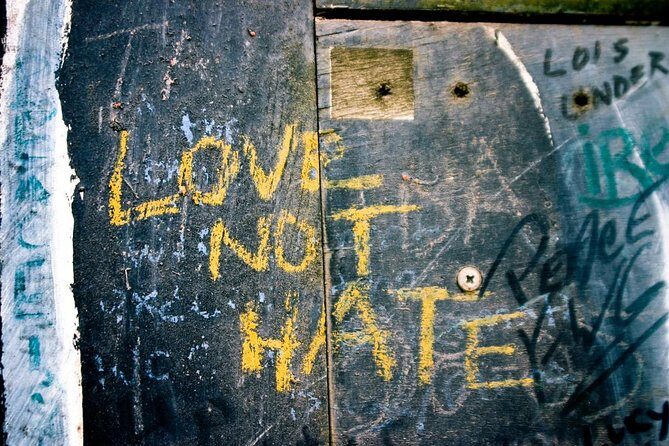
At a later stop, you’ll reach one of the largest sections of the peace wall where the US President Bill Clinton and the Dalai Lama signed it. There’s also a hands-on element: you can write your name and leave a message, plus take pictures to share later.
That mix—history you can read, plus a personal note you can add—makes the peace wall more than a barrier view. It becomes a living public record of what people hoped for.
- Titanic Belfast Entrance Ticket: Titanic Visitor Experience Including SS Nomadic
★ 4.5 · 3,698 reviews


Shankill Road: loyalist murals, bonfires, and the Bayardo Bar memory
Next up is the Shankill Road, described as the heartland of Ulster Loyalism. This change of street matters. The murals and memorials here aren’t mirroring the same symbols you saw on the Falls Road. They’re telling a different side of the same complicated story.
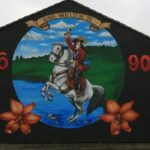
Your guide explains parts of loyalist tradition tied to King Billy and the House of Orange, and you’ll see murals from the Shankill area, including one featuring Stevie “Top Gun”. Flags decorate parts of the street scene, and the tour frames what that visual language signals in loyalist community identity.
You’ll also stop at the Bayardo Bar Memorial and hear how loyalists participated during the Troubles, according to the guide’s storytelling. As part of the memorial experience, you’ll see pictures connected to the Queen and UVF paramilitaries.
Two points make this section worth your attention. First, the guide doesn’t rush past symbols—he or she ties them to meaning in plain language. Second, you’re balancing the earlier republican memorial focus with loyalist memorial space, which helps you avoid a one-sided storyline.
If you’re sensitive to strong imagery, give yourself a few seconds before each memorial photo spot. Some of the visuals are blunt by design.
Clonard Martyrs Memorial Garden and the Falls Road memorial path
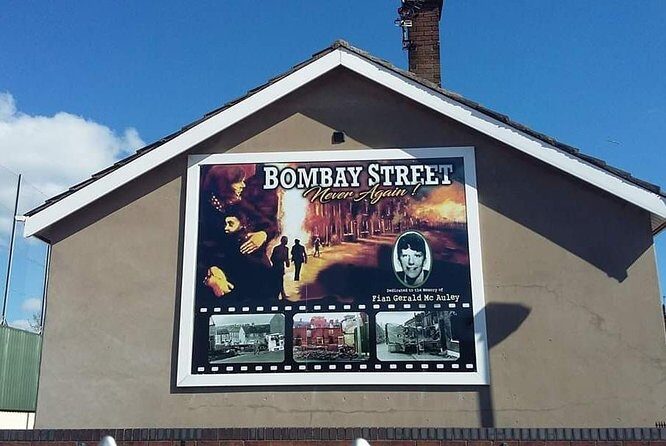
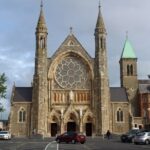
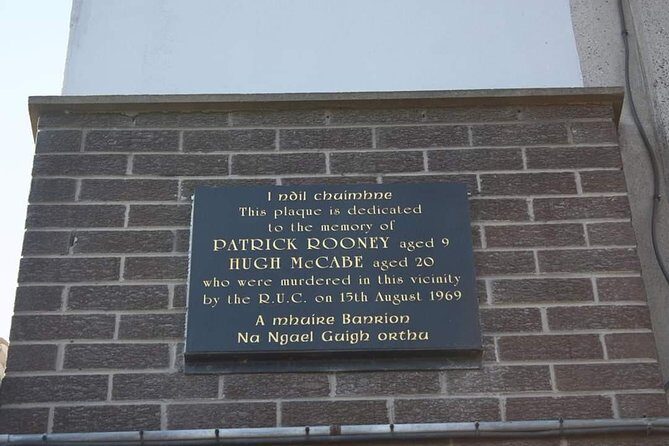
On the republican side again, you’ll visit the Clonard Martyrs Memorial Garden, described as an Irish Republican Memorial Garden. This is a calmer beat in the route, but not a soft one. It’s quiet attention to names, remembrance, and how political violence leaves long-term traces.
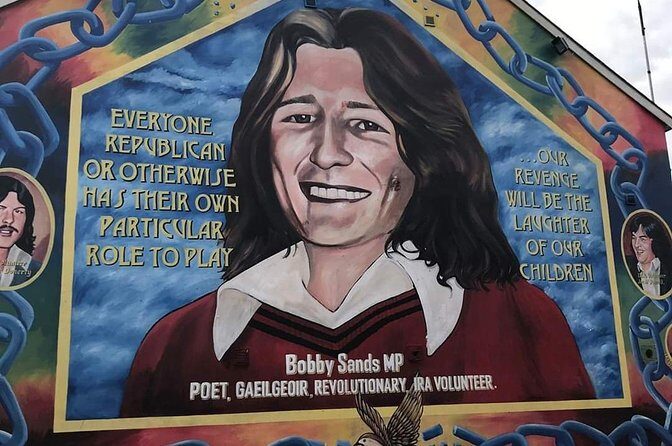
After that, you’ll head to one of the most famous mural points on the Falls Road: the Bobby Sands Mural. The tour describes this as at the political wing of the IRA at the office of Sinn Féin. That detail is important: the message isn’t only on a wall. It’s attached to an institutional place.
You’ll spend extra time here (about 15 minutes), which is a good sign. It means you’re meant to slow down, read what’s around the mural, and take photos without the whole area moving on top of you.
Then comes the Garden of Remembrance, specifically the IRA D Company Garden of Remembrance on the Falls Road. The tour highlights that it includes the names of IRA volunteers killed in action. This is the kind of stop where a guide’s context can make the names feel less like a list and more like a story of loss.
If you want photos, it’s smart to ask your guide where to stand so you don’t block others. Memorial gardens often attract stops-and-starts, and simple courtesy goes a long way.
56 Sherbrook Cl: final armed-mural photo stop
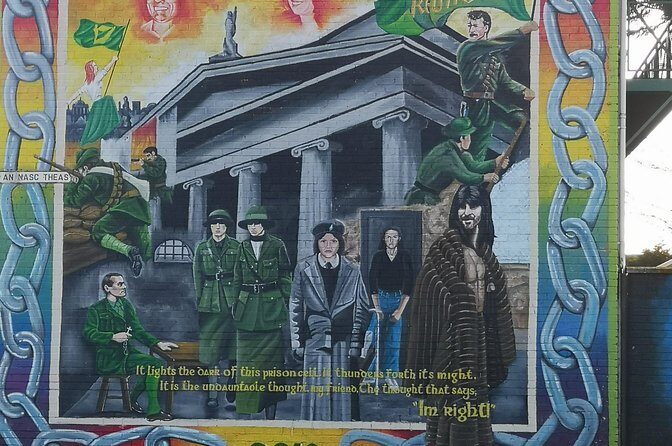
Near the end, the tour includes a quick photo stop at 56 Sherbrook Cl, aimed at murals showing armed loyalist paramilitaries. This is brief (around 5 minutes), but it rounds out the tour’s visual range: murals aren’t only portraits of leaders. They also show armed identity and political messaging tied to violence.
If you’re short on camera storage, make sure you’ve cleared space before this one. It’s a good “last chance” stop for crisp, direct mural photos before the taxi wraps things up.
Price and value: is $130.34 a fair deal for this route?
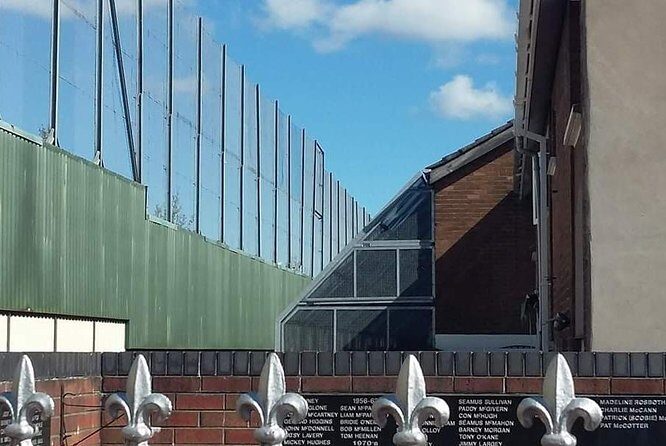
The listed price is $130.34 per person for a private tour in a black taxi, with guided stops and photo time across multiple sites. For an experience like this, the value isn’t just the taxi ride. It’s the way the tour compresses hard-to-map locations into a coherent path.
In practice, you’re paying for:
- Time saved: you don’t need to plan routes between the Falls Road and Shankill Road interface areas.
- Guided interpretation: murals come with meaning, and the guide explains it with photos and video from the 1970s onward.
- A structured pacing: lots of short stops, so you see key sites without one long drag.
That said, do factor in optional add-ons if they affect your day. The tour can drop you somewhere else for an extra fee (like continuing toward the Titanic Museum or Crumlin Road Gaol). If you’re arriving by cruise ship, there’s an extra charge from the cruise port. And if you want a luxury upgrade, the tour notes an optional Mercedes upgrade for an extra fee if available.
So the “value” calculation is really about your schedule. If you’ve got limited time in Belfast and you want maximum learning per hour, this is strong. If you’re staying nearby and only want one neighbourhood, you might consider a shorter focused walk or independent plan.
Who should book this Belfast black taxi tour
This works best for you if:
- you want a fast hit of major mural sites and memorial gardens in about 1.5 to 2 hours
- you like structured guiding when topics are politically complex
- you care about photography and want help finding the right spots
- you’re traveling with a small group that benefits from a private format
It may not be your best fit if:
- you’re uncomfortable with memorials and imagery tied to violence
- you need long reflective time at each site, because most stops are timed around roughly 10 minutes (with a longer pause at Bobby Sands)
The good news is that this tour’s pacing helps you keep moving, so the route doesn’t turn into an exhausting slog.
Quick practical tips so your photos and questions land well
A few small moves make a big difference:
- Bring layers. Belfast weather can change fast, even when the tour feels short.
- Plan for lots of reading-by-ear. Your guide explains meaning, so listen as much as you shoot.
- If you’re unsure what a symbol means, ask right away. The tour style here is built for questions.
- Keep your camera ready at each peace-wall and mural stop. Some viewpoints are only workable for a short moment.
Also, if you’re traveling with family, children must be accompanied by an adult, so plan one adult-per-child responsibility.
Should you book it?
I’d book this if you want a guided, photo-friendly route through Belfast’s murals and peace walls without the mental load of mapping the day. The private taxi format is the real engine here: it protects your time while giving your guide enough control to explain the story in order.
If you’re the type who likes the “why” behind the images—how ex-prisoners’ murals, hunger-strike symbolism, memorial gardens, and peace walls connect—this tour is built for you. Just come prepared for heavy themes, and you’ll get far more out of it than a quick look at wall art.
FAQ
How long is the Belfast black taxi tour?
It runs for about 1 hour 30 minutes to 2 hours.
What’s the price per person?
The price is $130.34 per person.
Is pickup included, and where do they pick you up?
Pickup is offered for free in central Belfast if requested. If you’re a cruise passenger, there’s an extra £20 each way cash for pickup from the cruise ship port.
Is this tour private?
Yes. It’s a private tour/activity, and only your group participates. There’s a maximum of 18 people per booking.
What language is the tour in?
The tour is offered in English.
How many stops and what kind of places do you visit?
You’ll visit multiple mural and memorial locations and peace wall viewpoints, including Divis, International Mural Wall areas on Divis Street, Peace Wall locations, Shankill Road stops, Clonard Martyrs Memorial Garden, the Bobby Sands Mural, and Garden of Remembrance sites.
What time do tours start?
Tour start times are 9am, 11am, 1pm, 3pm, and 5pm.
Are service animals and children allowed?
Service animals are allowed. Children must be accompanied by an adult.
You Might Also Enjoy
More Tours in Belfast

More Tour Reviews in Belfast
- Titanic Belfast Entrance Ticket: Titanic Visitor Experience Including SS Nomadic
★ 4.5 · 3,698 reviews